An AC compressor may need repair or replacement when professional testing confirms a compressor fault. But warm air, unusual sounds, short cycling, or a tripped breaker do not prove the compressor has failed. Those symptoms can also come from restricted airflow, a thermostat, electrical connections, duct problems, low refrigerant, or a blocked drain.
Call Bay Care at 302-245-3365 to schedule service.
AC compressor repair starts with a full-system diagnosis, not a guess based on one symptom. Bay Care checks the equipment and the home’s airflow, ductwork, and related components before explaining whether repair, replacement, or another fix best fits the system’s condition.
That distinction matters in a Delmarva home, where system age, repair history, efficiency, and coastal exposure can all affect the decision. Understanding what a technician evaluates can make the next step clearer.
What Does AC Compressor Repair Involve for a Delmarva Home?
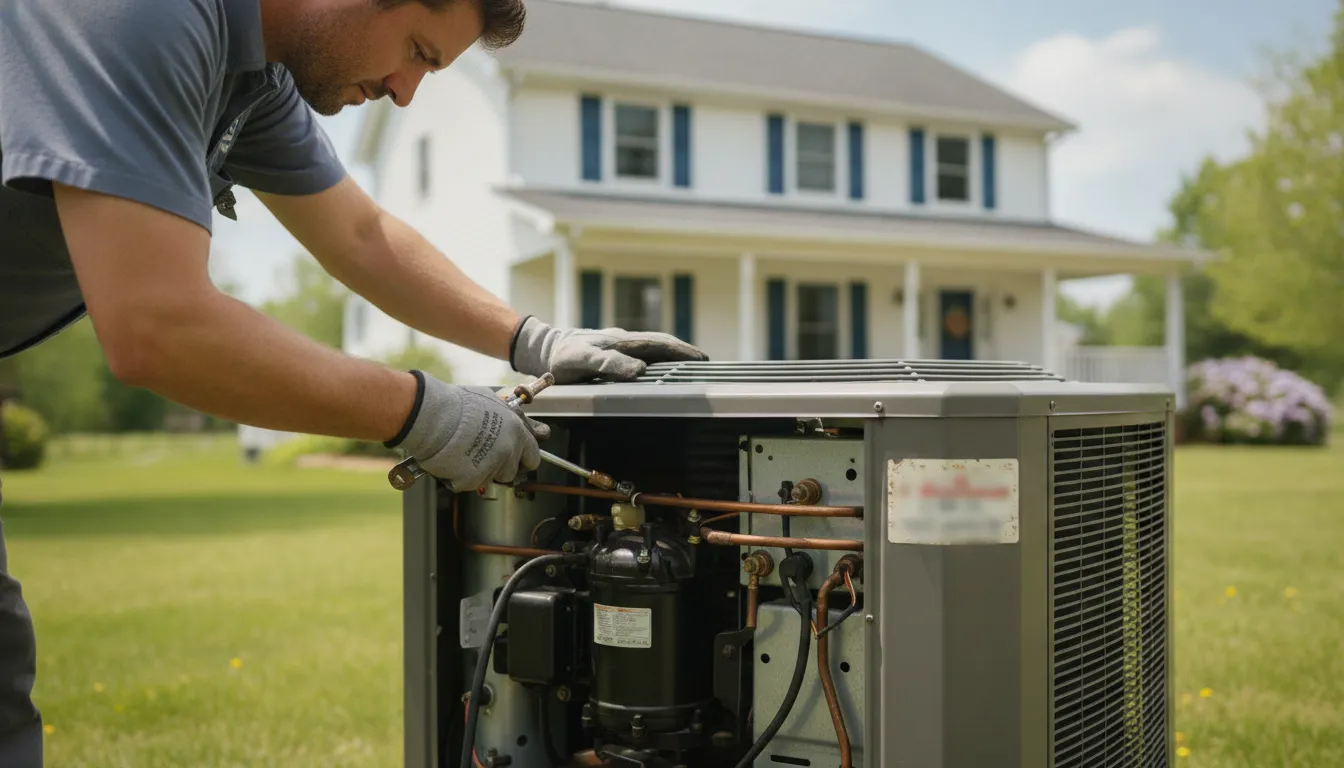
Bay Care approaches ac compressor repair as a diagnosis-first decision, not an automatic part replacement. A compressor problem can involve the compressor itself, but similar symptoms may come from airflow restrictions, electrical controls, refrigerant issues, ductwork, the thermostat, or a blocked drain. The right repair depends on testing the complete cooling system.
The compressor is the component that circulates refrigerant through the air conditioner so the system can move heat out of your home. If it is damaged, a technician may determine that a targeted repair is appropriate. In other cases, the compressor may be functioning while another component is causing the complaint. A system that blows warm air, cycles frequently, makes unusual sounds, or trips a breaker needs professional evaluation, but none of those symptoms proves compressor failure on its own.
How does diagnosis differ from repair?
Diagnosis means identifying the source of the problem before recommending a solution. Bay Care’s evaluation may consider the thermostat, filter and airflow, duct condition, electrical connections, refrigerant charge, coils, drain, and the compressor’s operation. For a Delmarva home, the technician should also consider the condition of the outdoor equipment and whether coastal exposure has contributed to corrosion elsewhere in the system. Salt-air damage can affect components and contribute to refrigerant leaks, but it does not automatically mean the compressor is damaged.
Repair may involve correcting the underlying cause, replacing a failed component, or addressing airflow and duct problems that are putting unnecessary strain on the equipment. If the compressor has failed or the system has several significant problems, replacement may be the more practical path. Bay Care weighs system age, repair history, efficiency, refrigerant considerations, and the condition of the full home comfort system rather than treating one symptom in isolation.
When replacement is appropriate, review AC installation and replacement options alongside the technician’s findings. That comparison can help you understand whether repairing the existing system or choosing a properly sized replacement better fits your home’s airflow, comfort, and long-term needs.
Which Symptoms Point to a Compressor Problem, and Which Do Not?
Warm air, unusual sounds, short cycling, breaker trips, and weak cooling can involve the compressor, but none proves compressor failure by itself. Bay Care separates compressor symptoms from airflow, thermostat, electrical, refrigerant, drain, and duct problems so Delmarva homeowners get a safe diagnosis before deciding on AC compressor repair.
Common signals and other possible causes include:
- Warm or weak air: A low refrigerant charge or leak may reduce cooling, but a clogged filter, restricted duct, thermostat problem, or airflow issue can produce a similar result. The U.S. Department of Energy recommends trained service for refrigerant leaks and recharging, rather than homeowner repair: DOE cooling guidance.
- Unusual humming, clicking, or rattling: Sound can come from the compressor, fan motor, loose hardware, or electrical components. The sound’s timing and location matter, so avoid treating one noise as a definitive diagnosis.
- Short cycling: Frequent starts and stops may reflect thermostat settings, airflow restrictions, sizing, controls, or other system conditions. The DOE notes that frequent cycling can wear compressor and fan controls and says electrical connections should be checked by a professional.
- Breaker trips: Repeated trips can indicate an electrical fault or an overloaded component. Resetting a breaker again and again is not a repair. Leave the system off and arrange service if the breaker trips repeatedly, you smell burning, or wiring appears damaged.
- Poor cooling: Leaking or constricted ducts, a blocked drain, a dirty filter, coil problems, or refrigerant conditions can all affect comfort. A compressor may be involved, but a whole-system inspection is needed to tell.
Homeowners can safely confirm that the thermostat is set to cooling. Replace a visibly dirty filter with the correct size, and check that outdoor equipment is not crowded by debris. Do not open electrical panels, handle capacitors, test live wiring, or add refrigerant. Those tasks carry serious risks and can damage the system.
If cooling has stopped or the system is making a concerning noise, emergency AC repair on the Eastern Shore can help determine the next safe step. Bay Care’s technician can evaluate the complete system instead of labeling every cooling complaint a compressor failure.
How Can a Technician Tell Whether Repair Is Possible?
Bay Care determines whether AC compressor repair is practical by evaluating the complete cooling system, not by treating one symptom as proof of compressor failure. A technician checks controls, airflow, electrical components, refrigerant conditions, and the compressor itself, then explains whether the finding points toward repair, further testing, or replacement.
- Confirm the complaint and operating conditions. The technician discusses when the problem occurs, whether the system cycles normally, and what the homeowner has observed. The thermostat is checked for proper settings and operation because a control issue can resemble a major equipment failure.
- Inspect the filter and airflow path. A restricted filter can reduce cooling performance and efficiency. The evaluation also considers supply and return airflow, visible duct problems, and constrictions. Leaking or obstructed ducts can create weak cooling even when the compressor is not the cause. Bay Care uses a whole-home view that includes equipment, ductwork, and the building envelope.
- Review electrical components safely. The technician inspects wiring, connections, capacitors, contactors, controls, and other relevant components for signs of damage or abnormal operation. Frequent cycling can involve worn compressor or fan controls, but only professional testing can distinguish that possibility from other electrical or control problems. Homeowners should not open panels or test energized equipment.
- Evaluate refrigerant and the coil. Cooling performance is considered alongside the condition of the evaporator and condenser coils. Low refrigerant or a leak can limit cooling and may be mistaken for compressor trouble. A trained technician must locate and address refrigerant problems rather than simply assuming the compressor has failed. In coastal Delmarva areas, corrosion-related coil damage may also be relevant, but corrosion alone does not prove compressor damage.
- Check the drain and surrounding system. A blocked condensate drain can create a separate operating problem and should be considered during a complete inspection. The technician also looks for conditions that could affect safe, reliable operation, including moisture, debris, and restricted airflow around the equipment.
- Assess compressor operation and the full repair decision. After the surrounding causes are evaluated, the technician tests compressor operation using appropriate professional procedures. The recommendation depends on the confirmed fault, the condition of the rest of the system, repair history, age, and expected performance. Keeping a routine HVAC maintenance schedule can make developing airflow, electrical, coil, and refrigerant problems easier to identify before they place additional strain on the system.
When Does Replacing the AC System Make More Sense?
Bay Care helps Delmarva homeowners weigh an AC compressor repair against replacement by looking beyond one failed part. System age, repair history, efficiency, refrigerant, and the condition of the equipment and home all matter. A compressor symptom does not automatically mean the entire air conditioner needs to be replaced.
| Repair-leaning factors | Replacement-leaning factors |
|---|---|
| The system is relatively young and has a sound overall condition. | The system is 15 years or older, which suggests considering replacement, especially when other concerns are present. |
| The repair is isolated, and previous repair needs have been limited. | Repeated breakdowns, rising repair needs, or a compressor problem occur alongside other equipment deficiencies. |
| The equipment still provides acceptable efficiency and dependable comfort after correction. | The system operates inefficiently, struggles to cool the home, or no longer fits the home’s airflow and comfort needs. |
| The refrigerant and major components can be serviced appropriately. | The system uses R-22 and has a significant leak or another major failure that changes the long-term value of continued service. |
R-22, also called HCFC-22, was widely used in residential air conditioners for decades. The EPA explains that new HCFC-22 can no longer be domestically produced or imported. Previously produced, reclaimed, recycled, or stored supplies may be used to service existing equipment under applicable rules. The EPA also states that homeowners are not required to replace or convert an existing R-22 system solely because it uses that refrigerant. Read the EPA’s guidance on repairing home air conditioners.
That distinction matters in Salisbury, coastal Delaware, and other Delmarva communities. An older system may still be repairable, but the decision should account for its total condition and future serviceability rather than the refrigerant label alone. Bay Care can also evaluate airflow, ductwork, insulation, and air sealing so a replacement is sized and matched to the whole home.
For more context, review how long an AC unit lasts in Maryland and explore AC installation and replacement options.
Call Bay Care at 302-245-3365 for a compressor repair or replacement assessment.
How Do Coastal Conditions Affect AC Equipment on Delmarva?
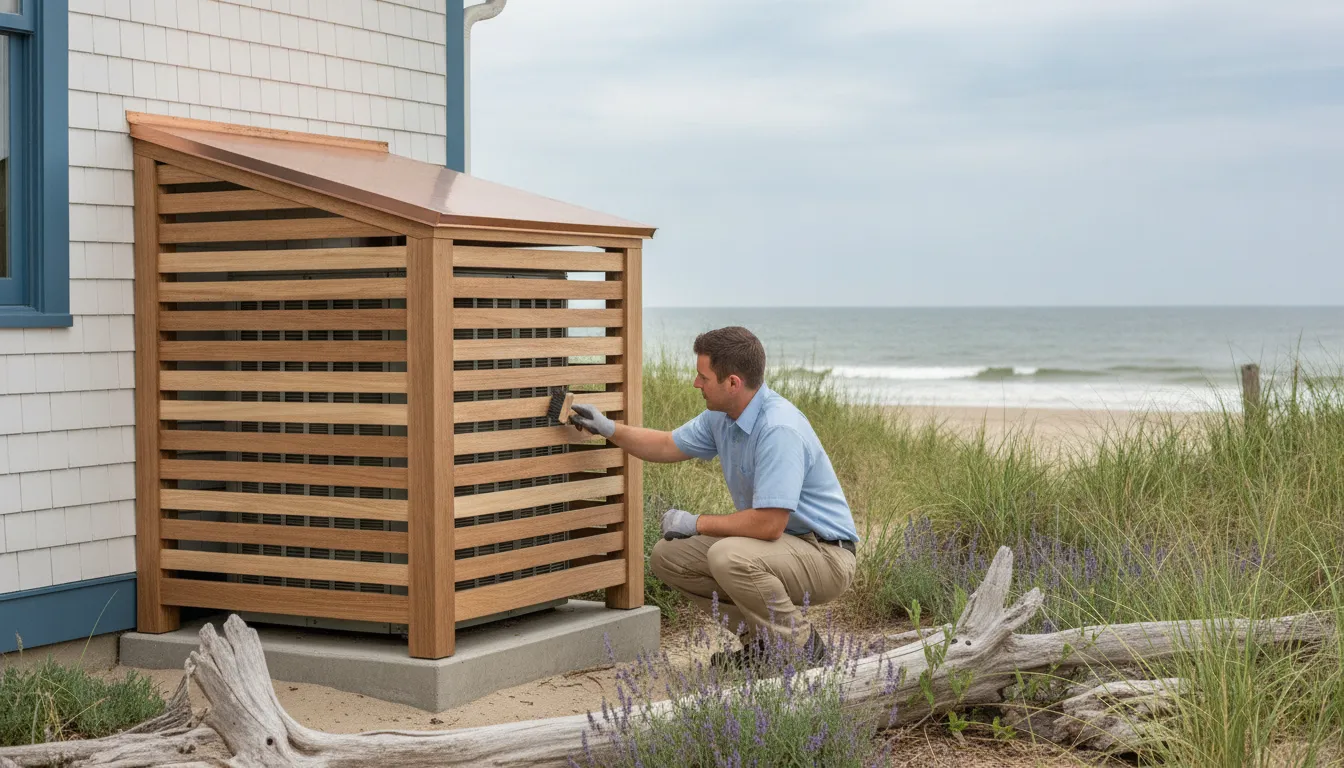
Bay Care helps Delmarva homeowners account for coastal exposure when evaluating AC problems. Salt air can accelerate corrosion on outdoor equipment, including coil surfaces and connections. That damage may contribute to refrigerant leaks and poor cooling, but it does not by itself prove that the compressor has failed or needs replacement.
Chlorides and other coastal pollutants can settle on an outdoor condenser and create pitting over time. Pitting can form small holes in metal components, including parts of the coil, allowing refrigerant to escape. A low refrigerant charge can then affect system performance and place additional strain on the equipment. Those findings call for a complete inspection, not an automatic conclusion about the compressor.
Look for visible rust, flaking metal, damaged coil fins, oily residue near a suspected leak, or a noticeable decline in cooling. These can be useful observations to share with a technician. For more detail, see these coastal HVAC corrosion warning signs. Avoid scraping corrosion, bending fins, opening the refrigerant circuit, or applying a household coating yourself. Refrigerant handling and electrical work require qualified service.
Bay Care can assess the outdoor coil, refrigerant circuit, electrical components, airflow, and the broader condition of the system. If coastal exposure is an ongoing concern, ask about coastal HVAC corrosion protection. A protective coating may help limit future exposure when it is appropriate for the equipment and applied as part of a professional maintenance plan.
Corrosion is one factor in the repair decision, alongside system age, leak location, repair history, and overall performance. A technician should confirm whether the issue is a repairable leak, restricted airflow, electrical fault, compressor problem, or a combination of conditions before recommending the next step.
What Should You Do Before Professional AC Service?
Before requesting ac compressor repair, Bay Care recommends a few safe observations that can help a technician understand what your system is doing. Check simple settings, protect the equipment from obvious obstructions, and record the symptoms without opening electrical panels or handling refrigerant. These details support a more focused professional evaluation.
- Confirm the thermostat settings. Make sure the system is set to cooling and that the desired temperature is lower than the current room temperature. If the thermostat display is blank, behaves unexpectedly, or shows an alert, note that information for the technician. Do not assume a thermostat issue proves the compressor has failed.
- Observe the filter without forcing access. If the air filter is easy to reach, look for heavy dust or visible blockage. Record what you see and replace it only if you can do so safely and know the correct filter type. Do not remove equipment panels to inspect internal components.
- Clear safe, accessible obstructions. Keep furniture, storage, vegetation, and other loose items away from registers and the outdoor unit. Only move objects you can remove without climbing, reaching into the equipment, or touching wiring. Do not wash, open, or disassemble the unit as part of this check.
- Write down the symptoms. Note whether the air feels warm or weak, when the problem began, whether it happens continuously or intermittently, and any humming, clicking, grinding, or other unusual sounds. Mention recent storms, power interruptions, or repeated starts and stops. A symptom is a service clue, not a remote diagnosis.
- Turn the system off if operation appears unsafe. Shut down the equipment and avoid further use if you notice burning smells, smoke, sparking, damaged wiring, leaking water near electrical components, or loud mechanical distress. Keep clear of the equipment and explain exactly what you observed when contacting Bay Care.
- Request the appropriate service. Contact Bay Care for a professional evaluation rather than attempting electrical or refrigerant work. If the loss of cooling creates an urgent safety or comfort concern, review emergency AC repair on the Eastern Shore and ask about the next safe step.
How Can Maintenance Reduce Future Compressor Trouble?
Bay Care helps reduce compressor stress by looking beyond the outdoor unit. Routine maintenance checks airflow, filters, coils, ducts, electrical components, and refrigerant conditions, while a whole-home review can identify comfort problems that make the system work harder. Maintenance cannot prevent every failure, but it can help identify developing issues earlier.
Start with the basics: replace or clean the air filter according to the manufacturer’s guidance, and keep return and supply vents open and unobstructed. A restricted filter or blocked airflow can make an air conditioner struggle to move heat. During service, a technician can also inspect indoor and outdoor coils for dirt that limits heat transfer. Check ductwork for leaks or restrictions, and look for signs that the system is not receiving the airflow it needs.
Refrigerant deserves professional attention. Low refrigerant is not simply something to top off without investigation. It may indicate a leak, and continued operation under abnormal conditions can place additional strain on the system. Bay Care can evaluate the equipment and help determine whether a refrigerant concern, coil issue, airflow problem, or electrical fault is contributing to compressor symptoms.
Homeowners near the Delmarva coast should also include corrosion awareness in their maintenance plan. Salt air and related pollutants can contribute to pitting on HVAC coils. In some cases, that corrosion can create openings that lead to refrigerant leaks. Bay Care’s coastal HVAC corrosion protection service is one option to discuss for exposed outdoor equipment. It does not replace inspection, cleaning, or proper system care.
A practical routine HVAC maintenance schedule should account for the equipment, building, usage, and local conditions. Reviewing insulation, air sealing, ventilation, and duct performance alongside the air conditioner helps address whole-home causes of uneven comfort and excess runtime.
Call Bay Care at 302-245-3365 or contact Bay Care to schedule service.
Frequently Asked Questions
Can an AC compressor be repaired?
Sometimes. The correct option depends on what testing finds, such as an electrical fault, a refrigerant issue, or internal compressor damage. A technician should also evaluate the system’s age, repair history, airflow, and overall condition before recommending repair or replacement.
How can you tell if an AC compressor is blown?
Warm air, unusual sounds, short cycling, a tripped breaker, or a humming outdoor unit can point to several problems, not just compressor failure. A qualified technician must inspect the electrical components and the complete cooling system to confirm the cause.
Is it worth fixing an AC compressor?
It may be, especially when the rest of the system is in good condition and the repair addresses a specific, serviceable fault. Replacement may deserve consideration when the equipment is older, repairs are becoming frequent, efficiency is poor, or other major components are also deteriorating.
How much does AC compressor repair cost?
There is no reliable price without an on-site diagnosis. The total depends on the actual failure, parts and labor involved, refrigerant requirements, system condition, and whether the compressor can be repaired or the equipment needs replacement. Bay Care can explain the findings and available options.
What should I do before scheduling compressor service?
Set the thermostat to cooling, observe whether the indoor fan runs, check whether the filter appears blocked, and note unusual sounds or when the problem occurs. Do not open electrical panels or handle refrigerant. Shut the system off if you notice burning odors, smoke, or unsafe electrical behavior, then request professional service.
Schedule Your AC Compressor Evaluation
Compressor symptoms can have several possible causes, so a professional evaluation can help clarify whether repair or replacement best fits your Delmarva home and existing system. Call Bay Care at 302-245-3365 to schedule AC compressor diagnosis and discuss your options with the team.