
When you are wondering whether you need AC unit repair, your air conditioner rarely fails without giving you clues first. Warm air from the vents, new operating sounds, water near the indoor unit, repeated starts, or a system that struggles to hold the thermostat setting all deserve attention. A single symptom may have more than one possible cause, so observation is useful, but it is not a substitute for testing.
Bay Care’s answer: Signs that may call for AC unit repair include weak or uneven cooling, unusual sounds, visible leaks, frequent cycling, or a sudden change in energy use. Bay Care can evaluate the equipment and surrounding airflow conditions to help identify the underlying issue, rather than guessing at a failed part.
Start by separating normal changes from warning signs, then consider what each pattern may indicate in your Delmarva home.
What Are the First Signs Your AC Unit Needs Repair?
Bay Care helps Delmarva homeowners separate an observable warning sign from a confirmed equipment failure. Weak cooling, unusual sounds, water near the indoor unit, or trouble starting can each point to a repair need, but no single symptom identifies the failed part. A professional evaluation can look for interacting problems instead of treating only the most obvious symptom.
One of the clearest signs is a noticeable change in comfort. Rooms may stay warm, airflow may feel weaker than usual, or the system may run for long periods without reaching the thermostat setting. Reduced performance can have several causes, including airflow restrictions, coil conditions, or refrigerant-system faults. Because those issues can create overlapping symptoms, avoid assuming that a refrigerant problem or compressor failure is certain based on comfort alone. A federal diagnostic guide notes that multiple faults can occur individually or together.
Pay attention to sounds that are new, persistent, or noticeably different from normal operation. Rattling, grinding, buzzing, or repeated clicking may warrant professional attention, especially when the noise accompanies poor cooling or frequent cycling. A change in sound does not prove that a specific motor, fan, or electrical component has failed, but it is useful information for the technician.
Visible moisture is another important clue. Standing water or water damage near the indoor unit may indicate a drainage problem, while ice or unusual condensation can accompany an airflow or refrigerant-related issue. Do not open energized equipment or handle refrigerant. If the unit will not start, check only the basic controls described in the next section; repeated breaker trips should not be treated as routine resets.
Keep a short record of when the symptom began, whether it occurs during every cycle, and what you hear or see. That history helps Bay Care focus its AC repair service on the underlying cause.
Why Is Your AC Running but Not Getting Cool?
Bay Care’s answer: An air conditioner that runs without cooling may have restricted airflow, a coil problem, a refrigerant-system fault, or a thermostat issue. Those symptoms overlap, so what you notice at the vent is useful information, but it does not identify the failed component by itself.
Start with airflow and thermostat clues
A dirty filter can limit the air moving through the system, making the equipment work harder while less conditioned air reaches the rooms. Weak airflow from several vents points toward a broader restriction. If only one room feels warm, the issue may involve a closed damper, a duct restriction, or air leakage rather than the cooling equipment alone.
Check that the thermostat is set to cooling, the set point is below the room temperature, and the displayed temperature seems reasonable. If the indoor fan runs but the air remains warm, note how long this has been happening and whether the problem affects the whole home. Do not assume a thermostat setting explains persistent symptoms.
Why refrigerant and coil faults need professional testing
Refrigerant-system faults can include an incorrect charge, a leak, a restriction, a defective expansion device, or fouled condenser and evaporator coils. More than one fault can exist at the same time, which makes guessing from symptoms unreliable. An incorrect charge can reduce cooling capacity and efficiency, while too little refrigerant may contribute to evaporator ice, reduced airflow, and worsening performance. See the air-conditioning diagnostics guidance for the technical explanation.
Turn the system off and arrange service if you see ice, notice repeated loss of cooling, or find conditions that are getting worse. Do not add refrigerant, open the equipment, or attempt electrical repairs. Bay Care can evaluate the airflow, coils, thermostat context, and refrigerant system together, then recommend a repair based on the actual cause rather than a temporary guess.
What Can You Safely Check Before Calling for AC Unit Repair?
Bay Care recommends keeping homeowner checks simple: confirm the basic settings. Look for visible airflow or drainage problems, and stop before you reach energized equipment or sealed refrigerant components. These observations can help a technician understand what changed, but they cannot confirm the cause of an AC problem.
- Check the thermostat. Confirm the system is set to cooling, the fan setting is appropriate for your preference, and the setpoint is below the current room temperature. If the display is blank, shows an error, or appears to read the room inaccurately, note that detail rather than repeatedly changing settings. Incorrect settings or temperature readings can contribute to an apparent cooling problem. A thermostat, circuit breaker, or condenser issue may affect whether an AC turns on.
- Inspect the filter without opening the equipment cabinet. If the filter is visibly loaded with dust, replace it with the correct size and airflow direction, following the manufacturer’s instructions. A restricted filter can make the system work harder and reduce airflow. Bay Care’s AC maintenance and inspection service includes filtration and blower inspection when a broader evaluation is needed.
- Look at the visible drain area. Check only accessible areas around the indoor unit for standing water, staining, or an obviously blocked drain outlet. Do not remove panels or pour chemicals into a line unless a qualified professional specifically directs you. A clogged drain or condensate overflow switch can stop cooling and may allow water damage to develop.
- Observe the breaker, cautiously. From outside the electrical panel, note whether the AC breaker is tripped. Do not open the equipment, touch wiring, or repeatedly reset a breaker. A breaker that trips again is a warning sign, not a routine reset. Leave it off and arrange professional service, especially if you notice heat, smoke, burning odor, or unusual sounds.
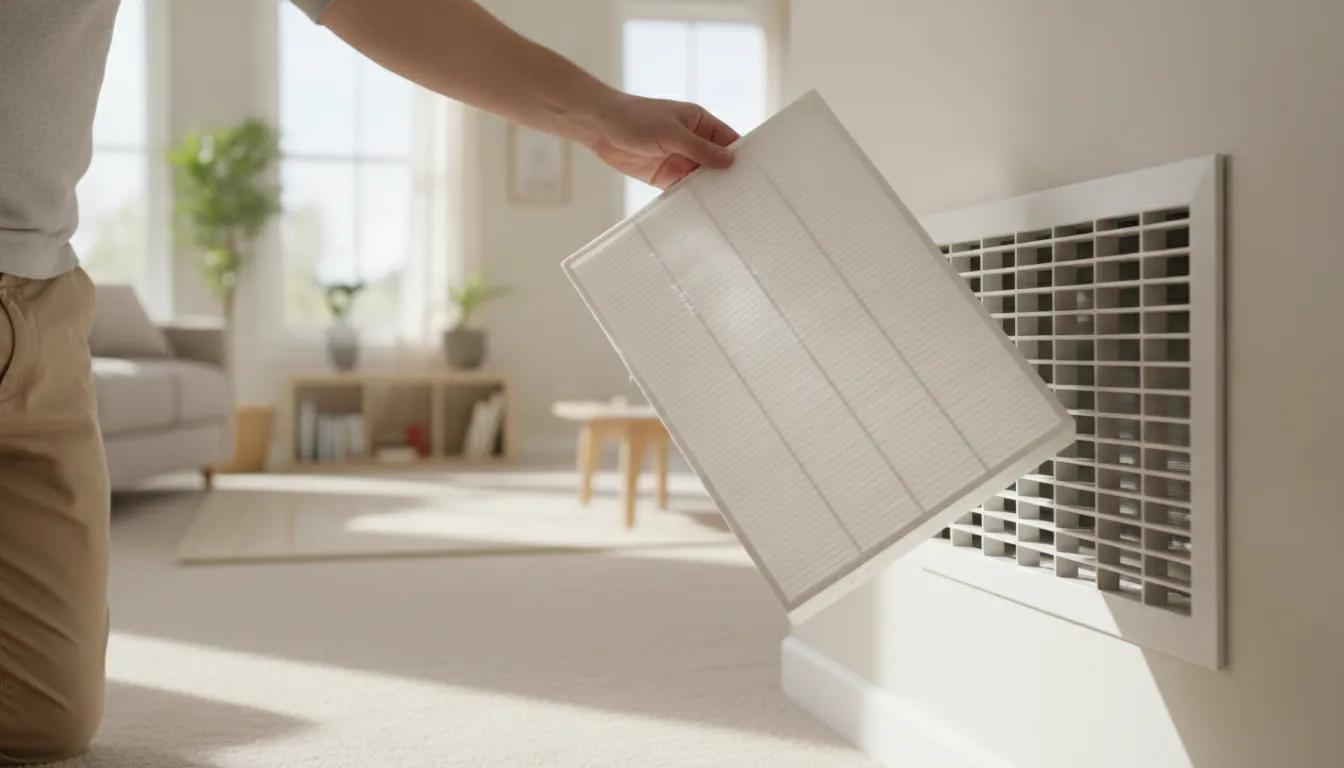
Caption: A visible filter comparison can reveal an airflow restriction without opening energized AC equipment.
Stop immediately if the next step would involve refrigerant, capacitors, electrical connections, coil access, or an invasive repair. Refrigerant-circuit service may release refrigerant and requires appropriate certification under EPA Section 608 rules: EPA explains when certification is required. Record what you observed and share it with Bay Care.
How Do Strange Noises, Water, or Short Cycling Point to a Problem?
Bay Care helps homeowners connect unusual AC behavior with the right next step, but a symptom alone does not prove which component has failed. Strange sounds, water near the indoor unit, repeated on-and-off cycles, or a breaker that trips again can indicate a developing problem that needs professional evaluation.
What can unusual sounds mean?
A new buzzing, grinding, rattling, squealing, or other persistent sound is worth noting, especially if it began suddenly or changes when the system starts. Loose panels, airflow restrictions, moving parts, or electrical and motor concerns can produce similar sounds. Because several causes can overlap, do not remove panels or reach into the equipment. If the noise continues after you turn the system off, arrange an inspection rather than guessing at the part involved. Persistent unusual noises merit professional attention.
Why might water collect near the indoor unit?
Standing water or visible water damage near the indoor AC unit can point to a drainage problem. A clogged drain, condensate overflow switch, or related issue may interrupt operation when excess water collects. Protect nearby flooring and belongings, then turn the system off if water is actively accumulating. Do not dismantle the drain assembly or work around energized equipment. A technician can determine whether the water is coming from the condensate system or another source.
When is repeated cycling or a tripped breaker urgent?
Short cycling means the system repeatedly starts and stops instead of completing a normal cooling cycle. Dirty filters or coils, a frozen coil, thermostat conditions, low refrigerant, and equipment sizing can all be possible contributors, so the pattern is not a remote diagnosis. Frequent cycling can also stress compressor and fan controls. Likewise, a breaker that trips repeatedly is a warning sign, not a routine reset. Leave it off and request professional service. For a genuine loss of cooling or immediate breakdown, see Bay Care’s emergency AC repair on the Eastern Shore resource.
When Is an AC Problem Really an Airflow or Whole-Home Issue?
Bay Care looks beyond the equipment cabinet when cooling symptoms point to a larger comfort problem. A warm bedroom, weak supply-air flow, or uneven temperatures does not automatically mean the AC unit itself has failed. Duct restrictions, air leakage, filtration, insulation, air sealing, and ventilation can all influence how effectively cooled air reaches living spaces.
Ducts can limit comfort even when the unit runs
Leaking, clogged, or constricted ducts can reduce airflow between the indoor equipment and the rooms it serves. You may notice that some rooms stay uncomfortable while others cool normally, or that certain registers have noticeably weaker airflow. Those patterns can justify inspecting the duct system instead of replacing an AC component based on symptoms alone.
Bay Care can evaluate whether duct condition and distribution are contributing to the problem. Sealing or correcting an accessible restriction may be more relevant than treating the outdoor condenser as the sole cause. The same evaluation can help identify whether a filter or blower issue is adding resistance to the system.
Filtration and the building envelope matter too
A clogged filter can restrict airflow and make the system work harder. Insufficient insulation or gaps in the air barrier can also allow heat into rooms after the AC has already done its job. Ventilation needs and indoor pressure differences may further affect comfort, especially in homes with additions, finished attics, or rooms far from the air handler.
For a broader explanation of these patterns, read about whole-home comfort problems. If the issue is intermittent or preventive inspection is overdue, AC maintenance and inspection can help document airflow, filtration, and equipment conditions before a small issue becomes harder to isolate.
What Happens During Professional AC Diagnostics?
Bay Care approaches AC diagnostics as a systematic search for the cause of the problem, not a guess based on one symptom. A technician reviews the system’s operation, checks conditions in sequence, and uses measurements to separate airflow, electrical, refrigerant, drainage, and equipment concerns. That root-cause approach helps determine which repair, if any, fits the evidence.
Testing starts with observable system conditions
The visit may include checking the thermostat call, startup behavior, indoor and outdoor components, condenser coil condition, filtration, blower operation, and condensate drainage. The technician can compare supply and return temperatures, then measure refrigerant pressure, amperage, and voltage. These readings provide context that a homeowner cannot get from simply listening to the system or feeling one vent.
Refrigerant faults can overlap. Incorrect charge, a leak, a restriction, a fouled coil, or another component problem may create similar cooling symptoms. The Building America diagnostic guide explains that accurate diagnosis requires an ordered inspection that accounts for testing conditions, rather than replacing a part based on a single observation: read the diagnostic guidance.
Refrigerant work requires the right safety boundary
Do not open the refrigerant circuit or attempt to add refrigerant yourself. EPA Section 608 rules prohibit intentionally venting refrigerants during air-conditioning service, and certification is required when work could breach the refrigerant circuit. If a leak is suspected, a qualified technician may use an approved method such as an ultrasonic test, gas-imaging camera, bubble test, or maintained leak-detection device. After a repair, verification testing can help confirm that the repair holds before refrigerant is added back where applicable. See the EPA refrigerant certification guidance.
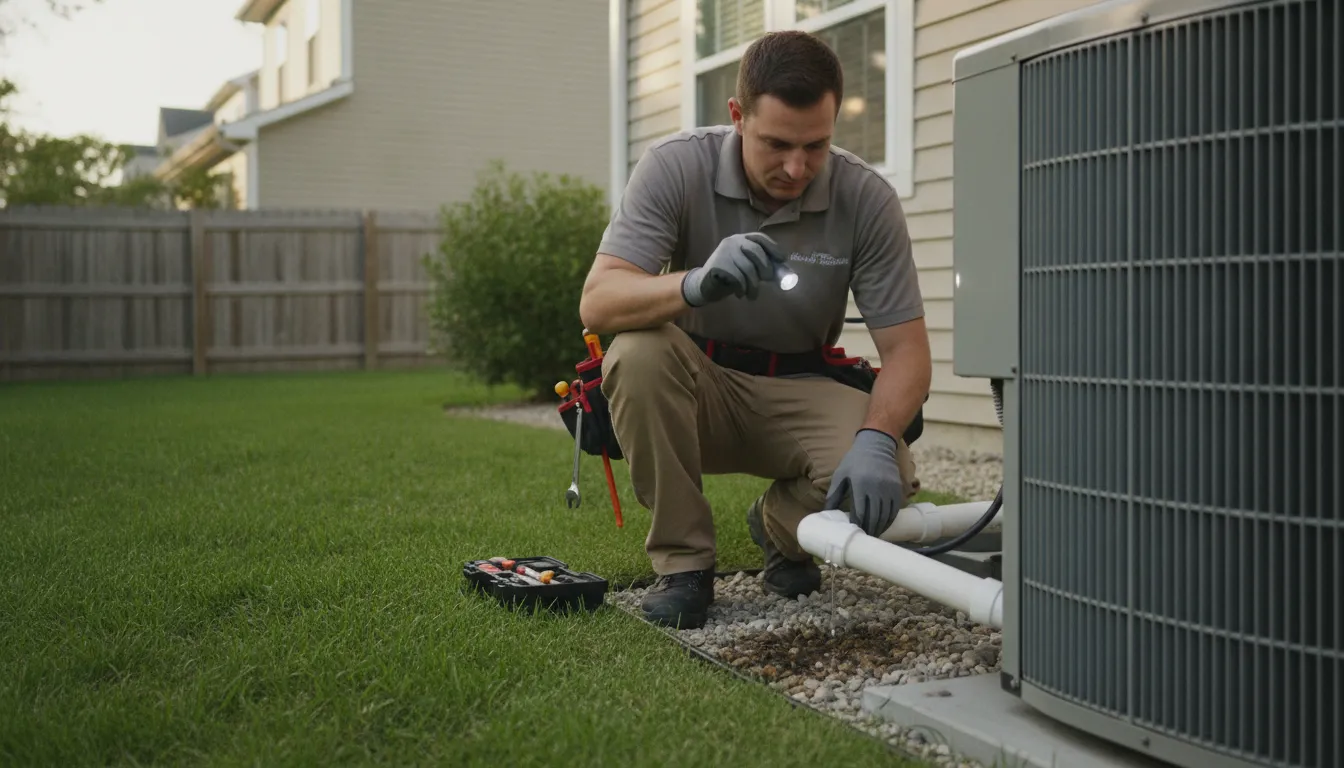
Caption: An outdoor condenser inspection is one part of a complete AC diagnostic process.
For dependable Bay Care AC repair service in Delmarva, the goal is to connect the test results to the root issue and explain the next step clearly.
Should You Repair or Replace an AC Unit?
Bay Care can help you compare AC unit repair with replacement by testing the system, identifying the root problem, and considering how the equipment performs in your home. A symptom alone does not prove that the compressor, coil, or another major component has failed. The better decision comes from the system’s measured condition, repair scope, reliability, and fit for your comfort needs.
| Repair may fit | Replacement may be worth discussing | What the technician evaluates |
|---|---|---|
| The problem is isolated and the rest of the system tests normally. | Several faults are interacting, or the system continues to lose performance after prior service. | Measured temperatures, refrigerant conditions, electrical readings, airflow, and operating behavior. |
| A qualified repair addresses the cause rather than temporarily masking the symptom. | The equipment no longer provides dependable comfort or fits the home’s cooling demands. | Whether the issue is the AC unit itself, ductwork, filtration, drainage, or another whole-home factor. |
| The system can return to safe, consistent operation after testing and repair. | Ongoing reliability concerns make continued service disruptive, even when one repair is possible. | Options that support comfort, efficiency, serviceability, and long-term expectations. |
There is no universal age rule that makes replacement automatically correct. Refrigerant faults can occur alone or in combination, and interacting faults can make accurate diagnosis difficult. That is why Bay Care approaches AC unit repair with a systematic inspection instead of treating one visible symptom as the entire problem.
If replacement becomes the more practical path, review Bay Care’s AC installation options and ask how the proposed equipment will address your home’s airflow and comfort needs. If repair remains appropriate, the same testing helps define the work clearly before it begins.
Call Bay Care at 302-245-3365 or contact Bay Care online to discuss your AC unit repair or replacement questions.
Frequently Asked Questions
What are some common signs that my AC system needs repair?
Watch for weak cooling, unusual operating sounds, frequent starts and stops, visible water, or a system that struggles to maintain the thermostat setting. One symptom does not confirm a failed part, but recurring changes from normal operation deserve attention.
Why is my AC running but not getting cool?
A dirty filter, incorrect thermostat setting, restricted airflow, blower issue, frozen coil, or refrigerant problem can produce this symptom. Check the thermostat and filter first, then arrange professional testing if cooling does not return or the problem keeps coming back.
What is the most common problem in an AC unit?
Restricted airflow is a frequent starting point, often related to a loaded filter or another duct and blower issue. Other possible causes include thermostat faults, drainage restrictions, frozen coils, and refrigerant leaks, which require a technician to confirm safely.
How do you diagnose AC problems?
Begin by recording what you observe, including when the symptom occurs and whether airflow or temperature has changed. A qualified technician then uses an ordered inspection and measurements to separate thermostat, airflow, electrical, refrigerant, drainage, and equipment concerns.
Can I attempt to repair my AC unit myself?
Safe homeowner checks include confirming thermostat settings, replacing a visibly dirty filter, and looking for obvious water around accessible drain areas. Do not open energized equipment, handle refrigerant, or attempt electrical or invasive repairs. Stop and call a professional when the basic checks do not resolve the issue.
What should I do if my AC system breaks down during extreme weather?
Contact a qualified HVAC professional promptly, especially if the system will not run, water is accumulating, or indoor conditions are becoming unsafe for someone in the home. While waiting, use fans if appropriate, close unused rooms, and avoid repeatedly restarting equipment that is making abnormal sounds.
Ready to Talk Through Your AC Repair Options?
When an AC symptom keeps returning or leaves part of your home uncomfortable, a professional conversation can help separate a repair need from an airflow or whole-home issue. Bay Care can help you understand the next practical step without guessing at the cause. Call Bay Care at 302-245-3365 to schedule AC repair guidance and discuss what you have noticed.


