
A cold climate heat pump is designed to provide useful heat at lower outdoor temperatures than a conventional heat pump, but the equipment label alone cannot tell you whether it will keep your home comfortable. For Delmarva homeowners, insulation, air leakage, ducts, system sizing, and backup heat all shape the result. Bay Care Heating & Air takes a whole-home view when helping homeowners consider heating options.
Contact Bay Care to discuss your heating options
What does a cold climate heat pump mean?
Bay Care recommends treating “cold climate” as a starting point for a technical conversation, not a guarantee of identical performance in every house. Ask for the specific model’s heating capacity and efficiency information at relevant outdoor temperatures, then compare those figures with the home’s calculated heating needs and the proposed backup plan.
A heat pump moves heat rather than producing it through combustion. In heating mode, it collects heat from outdoor air and transfers it inside. The amount of heat available and the unit’s operating conditions change as outdoor temperatures fall. Some modern systems can adjust output over a range of conditions, but the selected model and the building still determine how well the system meets demand.
When comparing proposals, distinguish between a product’s cold-weather capability and the design of the complete installation. A model may retain useful capacity in cold weather, yet the home can still have cold rooms if the equipment is poorly sized, airflow is restricted, ducts leak, or the system controls are not configured for the house. The installer should explain both the equipment data and the assumptions used to choose it.
How does a cold climate heat pump perform during a Delmarva winter?
Bay Care encourages Delmarva homeowners to consider the conditions their own home experiences rather than relying on a broad promise that any heat pump works in the cold. Seasonal weather can shift between damp, mild days and colder spells, so ask how the proposed model is expected to operate across that range and what will happen during the coldest hours.
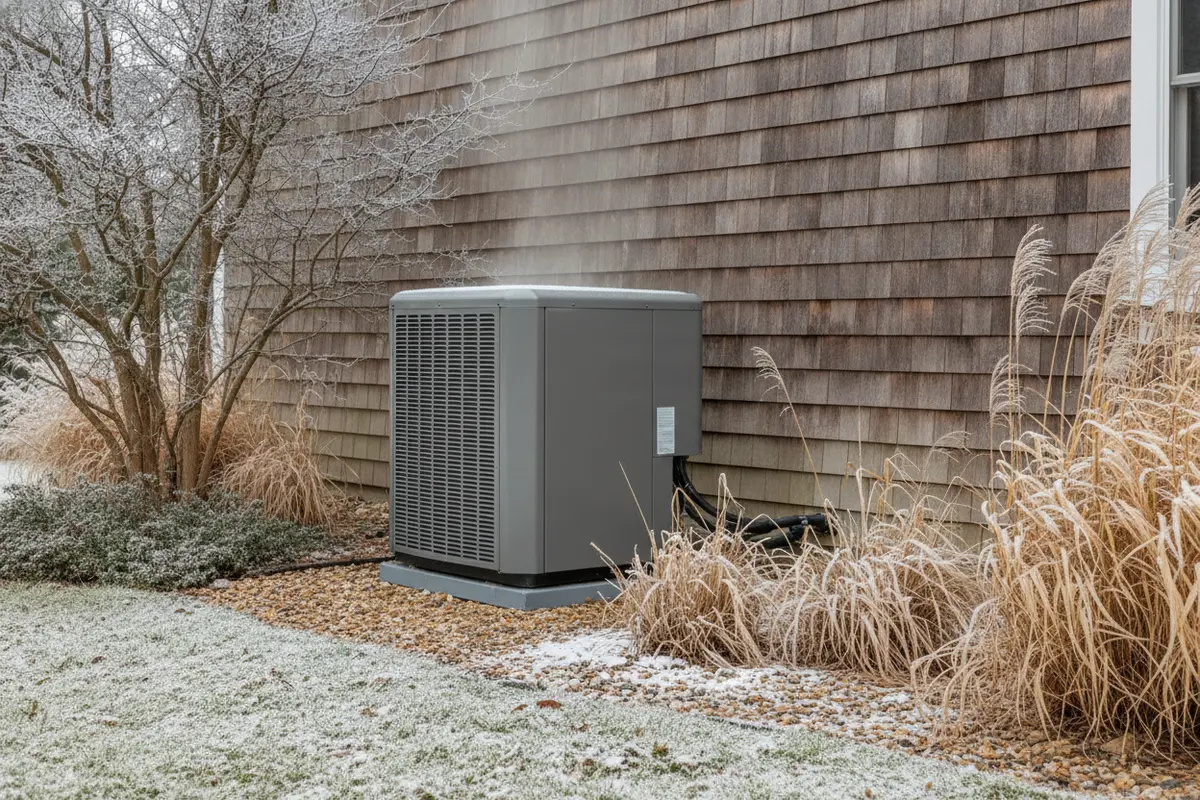
Cold, humid conditions can lead to frost forming on the outdoor coil. A heat pump may periodically run a defrost cycle to clear it. During that cycle, sounds or airflow can change briefly. That can be part of normal operation, but persistent ice buildup, repeated unusual noises, or a house that fails to recover its temperature should be assessed instead of assumed to be routine.
A National Renewable Energy Laboratory report describes field performance research on inverter-driven heat pumps, including measurements of power consumption, air temperatures, and airflow. It offers useful context for understanding what researchers may measure in real operating conditions, but it does not predict the result for every home or product. Read the NREL field performance report, then ask how the proposed model’s data applies to your house.
What should you compare in a system proposal?
Bay Care suggests comparing the design and operating plan alongside the brand and model. A useful proposal explains the home’s heating needs, the selected equipment’s capacity at low outdoor temperatures, how air will reach each room, and when supplemental heat may operate. Use the questions below to make the options easier to compare side by side.
| Proposal detail | What to request | Why it matters |
|---|---|---|
| Cold-weather capacity | Model-specific heating output at outdoor temperatures relevant to the home | Shows whether the heat pump can cover the expected load or needs supplemental heat |
| Efficiency information | Published ratings and model-specific performance data | Supports a more useful comparison than a general efficiency claim |
| Home heating load | Documented calculation and the assumptions used | Helps match system capacity to the building rather than floor area alone |
| Backup strategy | Type of supplemental heat, controls, and operating conditions | Sets expectations for cold periods and temperature recovery |
| Air distribution | Duct condition, airflow, leakage, and balancing needs | Equipment cannot deliver even comfort if air is not distributed well |
| Startup checks | Commissioning steps and how operation will be verified | Confirms the installed system is set up to operate as intended |
Ask each contractor to identify the assumptions behind estimates, especially if two proposals recommend different capacities or backup arrangements. You do not need to interpret every technical figure alone. You do need enough detail to understand what equipment is included, what work is planned, and what the contractor expects the system to do.
How do sizing and the home affect comfort?
Bay Care evaluates more than square footage because a home’s heat loss depends on the building and how it is used. Insulation, air leakage, windows, ceiling height, exposure, room layout, and local weather all affect heating demand. Understanding those conditions helps explain why two homes of similar size may need different equipment or air-distribution plans.
Ask how the contractor established the heating load. Find out whether additions, enclosed porches, renovated rooms, vaulted ceilings, and rooms with persistent comfort problems were considered. A number selected from square footage alone may not represent the home’s actual heating needs. If the assumptions are not clear, ask for a written explanation before comparing equipment sizes.
- Discuss the building shell. Air sealing and insulation may help address drafts and temperature differences. Changes should be planned with suitable ventilation and moisture management in mind.
- Describe room-by-room issues. Identify rooms that stay cold, whether doors are usually open or closed, and how the space is used. These details can affect an airflow or zoning discussion.
- Inspect existing ducts. Leaks, restrictions, and poor balance can undermine comfort even when the heat pump is operating. Bay Care offers duct sealing and duct repair as part of its home-performance capabilities.
- Consider an energy assessment. A home energy audit can help identify air leakage and insulation priorities where appropriate.
For example, imagine that the living room feels comfortable while a bedroom at the end of a duct run stays chilly. Simply selecting a larger heat pump may not address the reason for the difference. The evaluation may need to consider duct condition and airflow to that room, air leakage, insulation, and thermostat location. The next step should follow the identified cause rather than assume a single equipment change will solve every comfort problem.
What role does backup heat play?
Bay Care recommends getting the backup-heat plan in writing because its type and controls affect how the system responds to colder weather and recovery demand. Supplemental heat may operate when the home needs more heat than the pump can provide under particular conditions. The details vary by equipment and house, so ask what is included and what triggers it.
Ask whether the controls prioritize heat-pump operation, when supplemental heat can run, and whether it may operate while the system recovers after a thermostat setback. The answer depends on the equipment and control setup. A large change in the set temperature can create a different recovery demand from maintaining a steady temperature. Follow the manufacturer’s instructions and ask the installer how the specific controls are intended to work.
Backup heat is not a substitute for matching the system to the home. A proposal should explain the expected role of each heat source and the assumptions behind that plan. If one contractor proposes a heat pump with supplemental heat and another proposes a different configuration, compare the models, capacity information, controls, and design conditions rather than comparing only the equipment names.
Would a ducted or ductless system fit better?
Bay Care can help homeowners consider whether existing ducts, room layout, and comfort goals point toward a ducted or ductless configuration. Neither arrangement is automatically best for every home. The practical choice depends on usable air distribution, the spaces to be conditioned, equipment placement, and how the household wants to control temperatures.
A ducted heat pump may be worth considering when a home already has ducts in workable condition. The evaluation should include airflow, leakage, and whether the duct system can serve the rooms adequately. Repairing or sealing existing ducts may be part of the broader plan rather than treating the equipment as the only variable.
For a home without usable ducts, or an addition that is difficult to condition, a ductless HVAC system may be worth discussing. Ask how indoor units would serve each room, where equipment could be placed, and what electrical or installation considerations apply. A ductless system still needs thoughtful capacity selection and placement; one unit does not necessarily provide even comfort throughout a home with many separated rooms.

How can you set realistic expectations for energy use?
Bay Care recommends discussing the assumptions behind any operating-cost estimate. Energy use depends on the home’s heat loss, outdoor weather, electric rates, equipment performance, thermostat habits, and how often supplemental heat runs. Without reliable information about both existing use and the proposed system, a precise bill-savings promise is not a sound basis for choosing equipment.
If you have utility bills, bring them to the evaluation. Ask how the contractor’s estimate treats winter weather, thermostat settings, and backup heat. Also ask whether the comparison is based on the same comfort assumptions for each option. A lower projected cost is only useful if you know what was included and what could make the real result differ.
Home improvements may also affect the comparison. If an audit identifies air leakage or insulation concerns, ask whether addressing them before or alongside a system change could alter the heating load. Bay Care’s attic insulation service is one part of its broader home-performance offering. The right sequence depends on the house; an insulation project should not be presented as a universal requirement for every heat pump installation.
Can rebates or financing affect the decision?
Bay Care advises homeowners to confirm current program rules before counting a rebate or financing offer in a budget. Incentives can depend on customer eligibility, equipment, location, and program terms, which may change. Eligible Maryland Delmarva Power customers may have access to program-dependent rebates, so verify the current requirements with the program before relying on an incentive.
Bay Care shares information about available rebate programs. Ask which equipment and project details may qualify, what documentation is needed, and when an application must be submitted. Qualified buyers may also ask about 0% APR for 60 months on Bryant systems, subject to applicable terms. Review the current written terms and confirm that the offer applies to the specific proposal.
Keep the equipment proposal and incentive information separate in your comparison. First understand the installed system and scope. Then list any incentive as conditional until eligibility and funding are verified. This makes it easier to compare the underlying options without treating a potential rebate as guaranteed savings.
What should you ask before choosing a contractor?
Bay Care encourages homeowners to bring practical information to a consultation and ask for clear answers they can compare. Note which rooms have comfort issues, bring recent utility information if available, and ask the contractor to explain both the equipment and the house. A useful conversation should leave you with model details, design assumptions, and a clear outline of next steps.
- Which exact model is proposed, and what is its heating capacity at low outdoor temperatures?
- How was the home’s heating load determined, and what assumptions were used?
- What supplemental heat is included, and which conditions cause its controls to use it?
- Were ducts, insulation, air leakage, ventilation, and room comfort concerns reviewed?
- What installation and startup checks will verify airflow and system operation?
- Which rebates or financing terms may apply, and where can I confirm current eligibility?
- What maintenance and owner tasks does the equipment manufacturer recommend?
Bay Care serves homeowners across Maryland and Delaware on the Delmarva Peninsula and considers airflow, insulation, and ducts alongside HVAC equipment. Review the company’s heat pump options and heating services information as you prepare questions. If you are comparing proposals, request model numbers and written design assumptions so each option can be reviewed on similar terms.
How can you organize the decision after an evaluation?
Bay Care recommends making a short comparison sheet after each evaluation so important differences do not get lost in equipment labels. Record the model, documented load, cold-weather capacity information, backup arrangement, duct work, and any building improvements. Add the assumptions behind operating-cost estimates and note which incentives remain unconfirmed.
- Start with the home. List the comfort problems and building conditions discussed during the evaluation.
- Compare the system design. Check that each proposal explains capacity, air distribution, and supplemental heat.
- Clarify missing details. Ask the contractor to explain unclear assumptions or different recommendations in writing.
- Verify program terms. Confirm eligibility and current requirements directly before including a rebate or financing offer in your decision.
- Choose on fit, not a slogan. Select the option whose documented design and operating plan make sense for your home and comfort priorities.
Ask Bay Care about a cold climate heat pump evaluation
Frequently asked questions about cold climate heat pumps
Bay Care’s answers below offer a starting point, but the right solution depends on the home and selected equipment. For model-specific guidance, share the system details and the rooms or conditions that prompted your question during a heating evaluation.
Will a cold climate heat pump work in every Delmarva home?
No single system fits every home. Insulation, air leakage, duct condition, room layout, electrical considerations, and heating load all affect suitability. A home assessment and model-specific performance information are a better basis for a decision than the label alone.
Does the outdoor unit need to be cleared of snow?
Keep its air openings and surrounding area clear, following the manufacturer’s guidance. Do not chip ice from the coil or use tools that could damage it. If ice remains or the system seems to operate abnormally, contact a qualified HVAC professional.
Is frost on the outdoor coil always a problem?
No. Frost can form during heating operation, and the system may run a defrost cycle. Persistent ice, repeated performance trouble, or inadequate indoor heat deserves professional attention rather than an assumption that the condition is normal.
Should I turn the thermostat down overnight?
Follow the instructions for your equipment and thermostat. Large setbacks can increase recovery demand and may bring on supplemental heat in some system configurations. Ask the installer how the controls in your particular system are intended to work.
Can a heat pump replace a furnace?
It may be possible, but the answer depends on the home’s load, selected equipment, air distribution, and backup strategy. Ask the contractor to explain whether the proposed heat pump is designed to meet the home’s heating needs and what supplemental heat, if any, is planned.
What information should I bring to an evaluation?
Bring the model or age of existing equipment if known, recent utility information if available, and a list of rooms with comfort concerns. Mention renovations or additions and explain how you use the thermostat. These details help make the discussion specific to your home.
Cold-weather performance is a system-and-home question, not just a product label. With a documented heating load, clear backup plan, and attention to ducts and insulation, Delmarva homeowners can compare heat pump options with greater confidence.


