
A gas furnace can heat your Maryland home reliably, but safe operation depends on more than whether warm air comes from the registers. Combustion safety testing checks whether the furnace is burning fuel properly, receiving enough combustion air, and sending exhaust safely outdoors. It is a specialized question homeowners should ask before accepting a quick visual check as a complete safety evaluation. Ask Bay Care about whole-home energy efficiency and performance upgrades on the Delmarva Peninsula as part of a broader safety and comfort review.
Have questions about your furnace’s safety? Call Bay Care at (302) 245-3365 to schedule a professional evaluation.
Bay Care serves homeowners throughout Salisbury, Fruitland, Delmar, Hebron, Pittsville, Berlin, Cambridge, Easton, Princess Anne, and nearby Maryland communities. This guide explains what to expect from combustion safety testing, what a meaningful report should include, and how to respond if a technician identifies a venting or carbon monoxide concern. It is educational information, not a substitute for emergency help or an on-site diagnosis.
What Is Combustion Safety Testing for a Gas Furnace?
Combustion safety testing is a professional evaluation of a fuel-burning furnace and its venting environment. Bay Care looks beyond whether the unit starts and heats, checking combustion byproducts, draft, venting, combustion air, and possible carbon monoxide concerns. The goal is to identify unsafe operation before it becomes a serious indoor-air or equipment problem.
When natural gas or propane burns, the process creates heat and exhaust gases. A properly installed and operating furnace should contain those gases and move them through the flue or vent to the outdoors. A blocked vent, damaged heat exchanger, inadequate combustion air, negative pressure, or burner problem can change that path.
Testing is therefore different from asking, “Does the furnace turn on?” It asks whether the furnace operates safely under the conditions present in the home. That distinction matters where a furnace, water heater, exhaust fan, fireplace, tight building envelope, and duct system may interact.
The Building America Solution Center describes combustion-appliance-zone testing as a way to evaluate whether an appliance has adequate combustion air and vents properly when the surrounding space is under pressure conditions that can affect performance. The exact procedure depends on the appliance and applicable standard, so a homeowner should expect a qualified professional to explain the method rather than rely on a one-size-fits-all checklist.
What Does a Professional Combustion Safety Test Check?
A complete combustion safety test may include a visual inspection, ambient carbon monoxide monitoring, gas-leak screening, draft or spillage checks, and combustion-analyzer measurements. Bay Care should connect those observations to the furnace, vent connector, chimney or flue, combustion-air openings, and surrounding home conditions so you receive an explanation, not only a pass-or-fail statement.
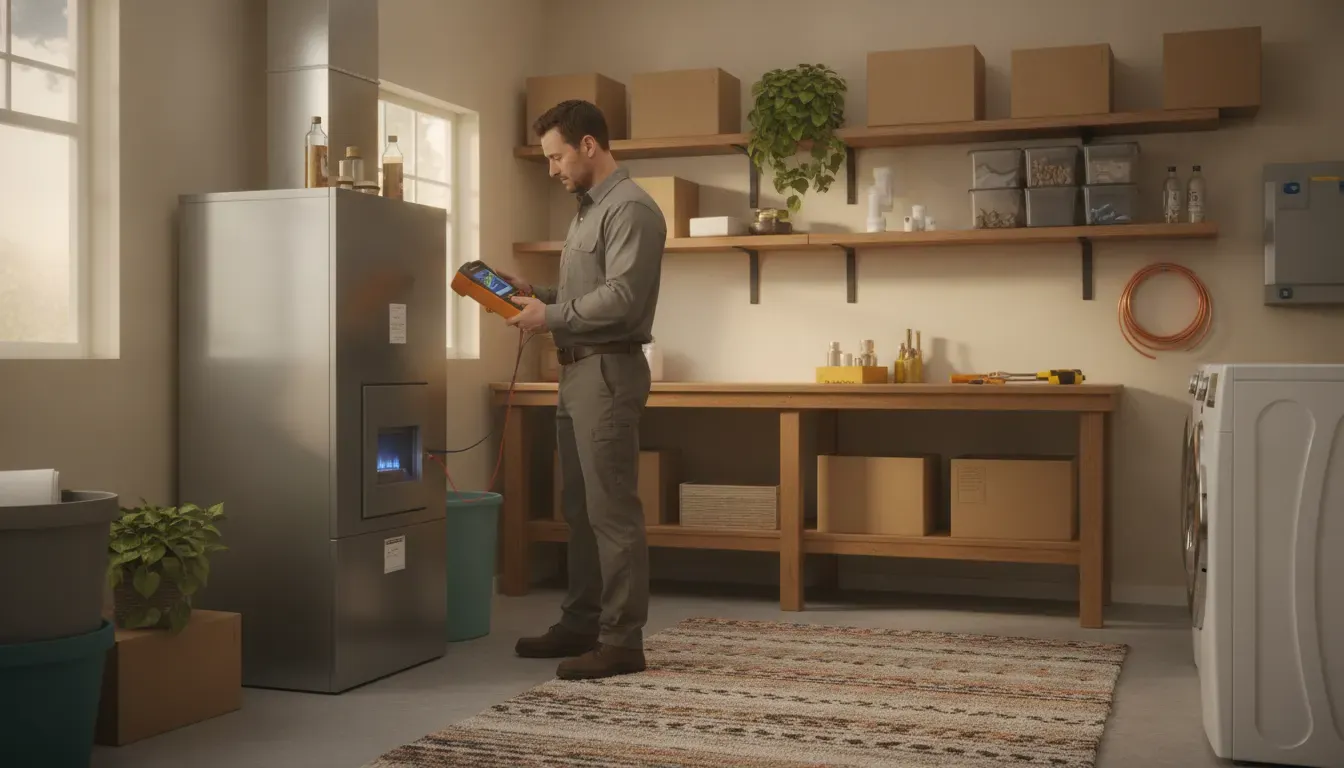
A professional furnace inspection should connect the appliance, venting, and surrounding conditions.
- Appliance condition: The burner area, cabinet, heat exchanger access, wiring, controls, and visible signs of damage or overheating.
- Flame and combustion behavior: Whether the burners ignite and operate consistently, and whether analyzer readings indicate a combustion issue that needs further diagnosis.
- Venting and draft: Whether the vent connector and flue appear intact, properly configured, unobstructed, and able to carry exhaust away from the living space.
- Spillage or backdraft risk: Whether combustion gases leave the intended venting path when the home is placed under realistic pressure conditions.
- Combustion air: Whether the appliance has the air supply it needs, especially when it is installed in a closet, basement, utility room, or tightly sealed portion of the home.
- Ambient carbon monoxide: Whether CO is detected in the surrounding air during the evaluation. Any elevated reading calls for immediate attention and a safety-first response.
A report should identify what was measured, what was observed, what was not tested, and what action is recommended. A good technician will not ask you to interpret a raw number without explaining the instrument, appliance type, test conditions, and relevant manufacturer or industry requirements.
Why Can a Routine Furnace Tune-Up Miss Combustion Safety Problems?
A routine tune-up can confirm that major components operate, while combustion safety testing evaluates how the furnace, venting, and home pressures interact. Bay Care uses the broader context to help identify risks that a basic start-up check may not reveal.
Many maintenance visits focus on cleaning, electrical checks, filter condition, temperature rise, and basic operation. Those steps matter, but they do not necessarily answer whether exhaust spills into the room when exhaust fans run, whether a vent is drafting correctly under worst-case conditions, or whether combustion readings are within appropriate limits.
Home performance conditions can change over time. New insulation, air sealing, replacement windows, kitchen exhaust, bath fans, or a different water heater can alter pressure relationships. That is one reason a combustion safety evaluation may be appropriate after a major home improvement, when symptoms appear, or before heating season.
Want a second opinion on a furnace safety concern? Contact Bay Care Heating & Air to discuss the next step.
What Carbon Monoxide Warning Signs Should Maryland Homeowners Know?
Carbon monoxide is colorless and odorless, so a working alarm and prompt attention to symptoms or alarm events are essential. Bay Care recommends leaving the home and calling emergency services if a CO alarm sounds, then arranging qualified HVAC evaluation after the immediate danger is addressed.
Do not ignore a carbon monoxide alarm, even if the furnace appears to be heating normally. Headache, dizziness, nausea, weakness, confusion, and unusual fatigue can have many causes, but they require urgent attention when they occur with a fuel-burning appliance or alarm event.
Move outdoors and call 911 or the fire department if an alarm sounds or anyone feels seriously ill. Do not re-enter until emergency responders say it is safe. After the immediate emergency, a qualified professional can assess the furnace, venting, combustion air, and other fuel-burning appliances.
Install CO alarms according to the manufacturer’s instructions and applicable local requirements. The U.S. Consumer Product Safety Commission and EPA provide general carbon monoxide safety guidance, but emergency response should come first.
What Does a Combustion Analyst Certification Mean for Service Quality?
A combustion analyst certification can indicate focused training in combustion measurement and safety diagnostics, but homeowners should still ask what the technician will test and document. Bay Care can explain the scope of its combustion safety process and the findings from an on-site evaluation.
Ask whether the technician will measure ambient CO, check draft and spillage, evaluate combustion air, document analyzer readings, and explain any recommended repair. You can also ask how the findings relate to the furnace manufacturer’s requirements and applicable safety practices.
Certification is one trust signal, not a substitute for clear documentation. Look for a company that is licensed and insured, transparent about scope, and willing to explain what the test can and cannot prove.
When Should You Schedule Combustion Safety Testing?
Schedule combustion safety testing when you notice unusual odors, soot, flame changes, venting concerns, CO alarm events, or changes to the home’s pressure and air-sealing conditions. Bay Care also recommends considering an evaluation before heating season and after significant HVAC or home-performance work.
Consider asking about a test when:
- You are buying a home with a gas furnace or other combustion appliances.
- You have completed insulation, air sealing, window, or ventilation work.
- You notice rust, soot, unusual flame appearance, or repeated equipment shutdowns.
- A CO alarm sounds or someone reports symptoms that could indicate exposure.
- The home has a new exhaust fan, range hood, fireplace, or tightly sealed building envelope.
- You want documented baseline readings before a furnace replacement or major repair.
Emergency symptoms or an active alarm require immediate action, not a routine appointment. Once the emergency is addressed, a qualified professional can help identify contributing equipment or building-performance issues.
What Happens If the Test Finds a Problem?
If testing identifies a combustion, venting, or carbon monoxide concern, Bay Care should explain the immediate safety step, the likely cause, and the recommended repair or follow-up test. The correct response may be shutting down equipment, improving venting or combustion air, repairing the furnace, or involving another qualified professional.
Do not keep operating equipment that a qualified professional has identified as unsafe. Ask for a written summary of the finding, the reading or observation that supports it, and the next step needed to confirm safe operation after the repair.
Some problems involve the furnace itself. Others relate to vent sizing, chimney condition, combustion air, return-air pressure, exhaust fans, or interactions among several appliances. A whole-home review can be useful when the condition is not isolated to one component.
For homeowners planning broader efficiency improvements, Bay Care’s whole-home energy-efficiency and performance upgrades on the Delmarva Peninsula can connect HVAC, airflow, insulation, air sealing, ventilation, and indoor air quality considerations.
Protect your Maryland home before heating season. Call Bay Care at (302) 245-3365 to schedule combustion safety testing.
Questions Maryland Homeowners Ask About Combustion Safety Testing
How long does combustion safety testing take?
The time depends on the furnace, other combustion appliances, venting layout, and testing scope. Bay Care can explain the expected appointment length after learning more about the home and the concern you want evaluated.
Is combustion safety testing the same as a furnace tune-up?
No. A tune-up focuses on maintenance and operation, while combustion safety testing evaluates combustion, venting, draft, spillage, combustion air, and carbon monoxide conditions. Bay Care can help determine whether you need one service or both.
Can a carbon monoxide detector replace professional testing?
No. A home alarm is an important safety device, but it does not replace professional evaluation of appliance combustion and venting. Bay Care recommends treating every alarm event seriously and arranging qualified follow-up.
Should I test other appliances besides my furnace?
If the home has a gas water heater, fireplace, boiler, or other combustion appliance, ask Bay Care whether the evaluation should include it. Multiple appliances can interact through shared venting and pressure conditions.
What should a combustion safety report include?
A useful report should describe the appliances evaluated, test conditions, observations, measurements, limitations, and recommendations. Bay Care can review what the results mean and what should happen before equipment returns to normal operation.
Can home improvements change combustion safety?
Yes. Insulation, air sealing, windows, exhaust fans, and ventilation changes can alter pressure relationships. Bay Care’s whole-home approach considers how building performance and HVAC equipment work together.
What should I do if my CO alarm sounds?
Leave the home and call 911 or the fire department if a carbon monoxide alarm sounds. After emergency responders say it is safe, contact Bay Care for qualified furnace and venting follow-up.


