Commercial HVAC maintenance is more than a quick filter change. For a Delmarva business, a useful plan checks the equipment, airflow, controls, drainage, and the building conditions that affect comfort and reliability. The right scope depends on the system, how the building is used, and what inspection findings show.
Request a commercial HVAC maintenance conversation
What should commercial HVAC maintenance cover?
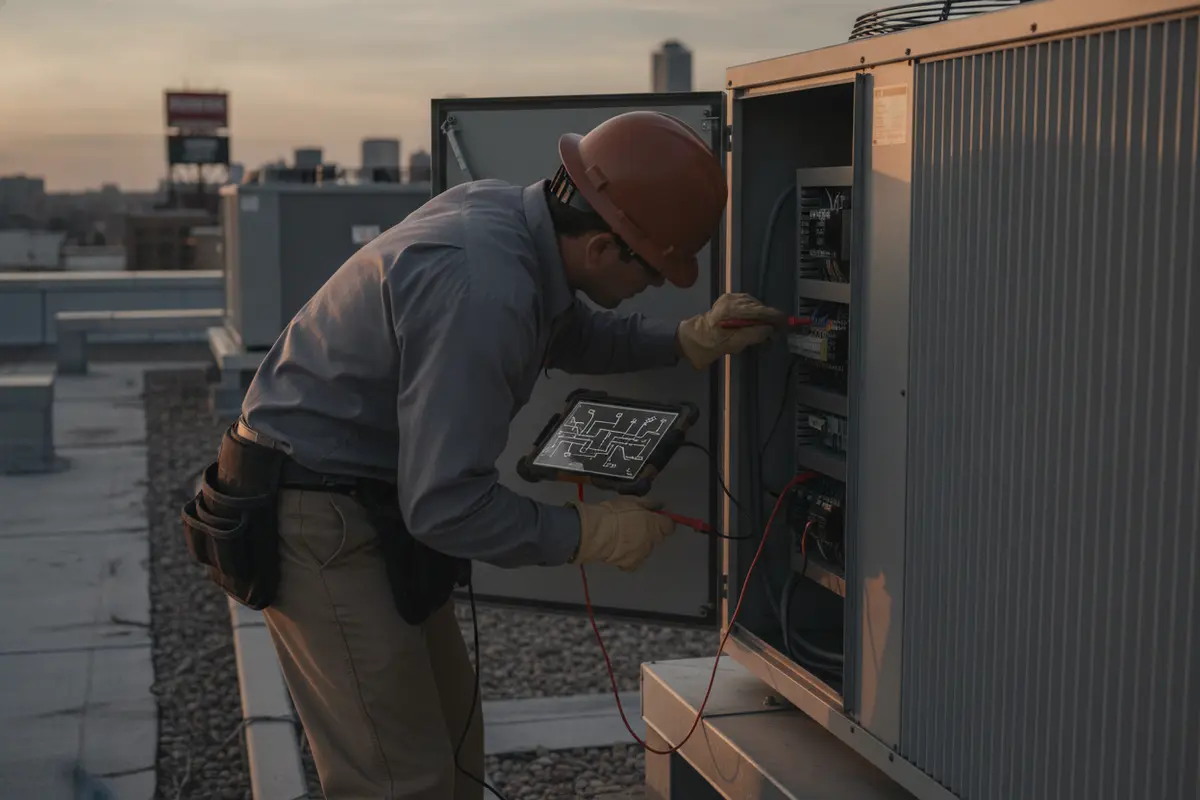
Bay Care Heating & Air recommends thinking about commercial HVAC maintenance as a documented review of the full heating and cooling system, not a single task. A qualified technician can evaluate the equipment, operating conditions, and related airflow concerns, then explain what needs attention now and what can be monitored or planned. The goal is to leave with clear findings and next steps.
The precise checklist varies. A packaged rooftop unit, split system, boiler, heat pump, and ventilation system have different components and service needs. The equipment manufacturer’s instructions, site conditions, and applicable codes also matter. Ask for a scope tailored to the actual equipment rather than assuming every building needs the same visit.
- Equipment condition: Look for visible wear, loose or damaged components, unusual noise, corrosion, and signs of overheating or water exposure.
- Air movement: Review filters, accessible coils, fan operation, return and supply paths, and obvious obstructions.
- Controls: Confirm thermostats or building controls respond as expected and review schedules and setpoints with the site contact.
- Drainage and moisture: Check condensate drains and pans where present for blockage, leakage, or evidence of overflow.
- Electrical and safety items: Inspect appropriate connections and safety controls using procedures suited to the equipment.
- Operating results: Record relevant measurements and compare them with manufacturer specifications or the system’s established baseline.
Maintenance is also a chance to identify what a routine visit cannot resolve. A persistent hot or cold area might involve a control setting, a blocked grille, a duct issue, insulation, or the building envelope—not just the unit itself. Bay Care’s commercial HVAC services address business heating and cooling needs, while a broader assessment can help investigate comfort issues that cross system boundaries.
How should the maintenance plan fit the building?
Bay Care Heating & Air can help a business shape maintenance around its equipment and operating demands. A small office, restaurant, retail space, and multi-zone facility may use different systems and schedules. The useful starting point is an equipment list, a conversation about occupancy and comfort problems, and a review of service history—not a one-size-fits-all calendar.
Before setting a schedule, gather the model and serial numbers when accessible, the system type, approximate installation date if known, and any warranty or maintenance documents. Note which areas are occupied at different times and whether the building has kitchens, server rooms, high-traffic entrances, or rooms with special temperature requirements. These details can affect filter loading and equipment runtime.
Ask the service provider to explain which tasks are recommended at each visit and why. Some checks may be needed more often because of heavy use, dusty conditions, coastal exposure, or equipment instructions. Other work may be seasonal or triggered by a condition found during inspection. Have the technician distinguish routine maintenance from repair work and explain any additional approval needed before proceeding.
For example, a shop with a single rooftop unit may schedule access before opening and ask the technician to record the filter size and thermostat schedule. A restaurant might need to coordinate around cooking hours and discuss grease, heat, and the condition of nearby outdoor equipment. A multi-tenant building may need unit-by-unit notes and a process for collecting tenant complaints before the visit. These are planning considerations, not automatic service requirements; let the system design and inspection determine the appropriate scope.
It can help to assign one facilities contact to collect reports and make approvals. If occupants report a comfort issue, ask them to include the room, time of day, and whether the system was heating or cooling. A set of specific observations is easier to investigate than a general report that the building feels uncomfortable. The contact can also compare recurring complaints against service records without assuming that every new symptom has the same cause.
| Maintenance area | What to review | Why it matters | Useful record |
|---|---|---|---|
| Filters and airflow | Filter condition and fit, airflow restrictions, accessible supply and return paths | Restricted airflow can affect comfort and system operation | Filter type and size, condition, replacement or follow-up recommendation |
| Heating and cooling components | Visible condition, fan and coil condition where accessible, operating response | Finds wear or performance concerns before they become harder to plan around | Equipment identification, observations, readings when taken |
| Controls and schedules | Thermostat response, operating schedule, setpoints, zone complaints | Controls should reflect the building’s use and occupied hours | Changes discussed and any unresolved control issue |
| Drainage and moisture | Drain pan and line condition where applicable, leaks or staining | Water problems can damage nearby materials and interrupt operations | Condition, action taken, and any moisture concern to monitor |
| Safety and electrical items | Relevant safety controls, wiring and connections, access and clearance | Supports safe operation and identifies items needing qualified repair | Inspection notes and urgent or deferred recommendations |
| Building-level comfort | Hot or cold zones, odors, drafts, unusual humidity, ventilation concerns | Symptoms may involve ducts, insulation, ventilation, or room use | Location, timing, occupancy conditions, and next diagnostic step |
Use the table as a discussion guide, not a substitute for manufacturer instructions or a technician’s assessment. The U.S. Department of Energy’s Better Buildings Solution Center describes preventative maintenance as a way for building operators to maintain commercial HVAC equipment and points to ACCA Standard 180 for minimum inspection and maintenance requirements: Preventative Maintenance for Commercial HVAC Equipment.
A comparison becomes more useful when it separates observation from action. “Filter dirty” is a starting point; record the filter dimensions and condition, whether it was changed, and any recommendation about checking it again. “Zone too warm” needs a location, approximate time, occupancy, and thermostat setting. This level of detail helps the next person understand what was actually checked and whether the same issue recurred.
Which commercial HVAC maintenance checks are easy to overlook?
In Bay Care’s whole-building view, commercial HVAC maintenance should include more than the mechanical cabinet. Problems with the building’s airflow, ventilation, moisture, or insulation can contribute to recurring comfort complaints. A visit should capture these observations and clarify when a separate diagnostic evaluation is appropriate.
Filter fit and access. A filter that is the wrong size or seated poorly may allow air to bypass it. Confirm the filter type and dimensions from the equipment or existing records, and ask how often its condition should be checked under the site’s actual use. Do not assume that a universal replacement interval fits every business.
Outdoor equipment and coastal exposure. Salt air and weather can affect outdoor components, especially at properties near the coast. Keep the area around equipment accessible and tell the technician about visible corrosion or recurring deterioration. Bay Care offers coastal HVAC corrosion protection; the suitability of any protective treatment depends on the equipment and site assessment.
Drainage and signs of moisture. Water staining, musty odors, or recurring drain issues deserve attention. Record where and when the problem appears. An HVAC maintenance visit can identify equipment-related concerns, but persistent moisture may require additional investigation beyond the unit.
Ventilation and indoor air quality. Ask whether ventilation equipment and controls are operating as intended for the space. Occupancy patterns may have changed since the system was installed. If concerns include dust, odors, or uneven ventilation, discuss whether a focused evaluation is warranted. Bay Care’s indoor air quality options offer a starting point for discussing related needs.
Ducts, insulation, and building pressure. A room that never reaches the setpoint may have a duct restriction or leakage, a building-envelope problem, or a system capacity issue. A technician can note symptoms and recommend a suitable next step. If the investigation points to leakage, see Bay Care’s information about duct sealing. An energy audit can also help examine interacting building conditions.
Timing can reveal a pattern that a quick walk-through misses. A warm conference room only during afternoon meetings may have a different set of contributing conditions than an office that stays cold throughout the day. Note whether exterior doors are frequently opened, whether equipment runs outside normal occupied hours, and whether a room’s use has changed. Share observations without trying to diagnose the cause; the technician can decide which checks are appropriate.

How can a business prepare for a service visit?
Bay Care Heating & Air can make a commercial maintenance visit more productive when the business shares equipment records, access details, and specific symptoms in advance. A short preparation checklist helps the technician understand what matters to occupants and gives the business a clearer written record to use after the visit.
- List the equipment. Note the locations of units, thermostats, and mechanical areas. Include model or serial information if readily available.
- Collect history. Gather past service reports, warranty information, filter details, and notes about repeat repairs or comfort complaints.
- Describe problems precisely. Record which room is affected, what time it occurs, whether the space is occupied, and whether the issue is heating, cooling, odor, noise, or moisture.
- Arrange safe access. Identify who can open secured areas, roof access requirements, business hours, and any site rules. Keep equipment access clear.
- Identify operational limits. Tell the provider about sensitive rooms, opening hours, tenant coordination, or activities that cannot be interrupted.
- Agree on authorization. Decide who can approve additional diagnostic work or repairs, and ask how recommendations will be presented before work beyond the agreed scope begins.
For a business with multiple units, label each unit and match service notes to that label. This makes it easier to spot repeat issues and compare findings over time. If more than one person manages the property, choose a contact who can share occupant feedback and receive the service report.
Before the appointment, send a concise priority list rather than a long, unstructured description. For example: “Unit 2 serves the east offices; the two rooms nearest the exterior wall are warm after 2 p.m.; the issue began last week.” Mention if the problem is intermittent and whether anything changed, such as a revised schedule or a room being used more often. This does not replace an on-site assessment, but it helps focus the conversation.
Confirm logistics as well as symptoms. A rooftop unit may require escorted roof access, a key, or coordination with a property manager. Let the provider know about tenant notification procedures, restricted areas, or times when equipment noise could disrupt business. If a visit must be divided among several spaces, make a practical access plan so the technician is not left waiting while critical areas remain unavailable.
Questions about heat pumps, AC equipment, or heating equipment can also be organized by system type. Bay Care provides information about commercial and residential cooling services and heating services. For a particular building, use these pages as context and request recommendations based on the equipment actually installed.
How should you use the service report?
Bay Care recommends treating the maintenance report as an operating record, not simply a receipt. A useful report identifies the equipment reviewed, the work performed, notable findings, and any next steps. Keep reports in one place so the business can track repeat concerns and make informed repair or replacement plans.
After the visit, check that the report includes:
- Equipment identifiers and the areas or units inspected.
- Tasks completed, plus any task that could not be completed and the reason.
- Observations and measurements that were taken, with enough context to interpret them.
- Items that require prompt attention, repairs recommended, and conditions to monitor.
- Any follow-up diagnostic work, estimate, or access requirement.
- Recommended maintenance timing and the reason for that timing, including equipment guidance or site conditions.
Separate urgent safety concerns from routine improvements and longer-term planning. Ask the provider to explain the consequence of delaying each recommended repair and whether temporary operation is appropriate. Do not treat a maintenance report as a guarantee that no future breakdown will occur; it is a record of the inspection and work completed at that time.
For a clear follow-up process, assign a status to each recommendation: needs prompt discussion, schedule a separate assessment, monitor, or include in a future budget review. Ask for a description of the finding and the basis for the recommendation, then note who will make the next decision and by when. This simple tracking prevents a report from becoming a file that no one revisits, while preserving room to seek clarification before approving additional work.
If a report identifies a possible efficiency or rebate opportunity, confirm eligibility and current program details before building them into a budget. Bay Care’s rebates information can help start that conversation. Program terms and qualifying equipment can change, so verify what applies to the specific site and project.
When is maintenance not enough?
Commercial HVAC maintenance can identify conditions and support routine care, but it cannot correct every underlying problem. Bay Care Heating & Air suggests considering further diagnosis when the same comfort complaint returns, equipment repeatedly shuts down, water appears, unusual sounds persist, or the system cannot keep the occupied space comfortable.
Maintenance is not a replacement for prompt attention to a suspected safety issue. If occupants notice smoke, a burning smell, or another immediate hazard, follow the building’s emergency procedures and contact the appropriate qualified help. For less urgent recurring symptoms, write down when they occur and which areas are affected before arranging a service discussion.
Some needs may call for a repair, controls work, duct investigation, ventilation assessment, or broader energy evaluation. Bay Care offers energy audits as part of its broader home and building performance work. An audit or additional diagnostic service is not automatically required at every maintenance visit; it is a potential next step when the symptoms point beyond routine equipment care.
When a repair or replacement is being considered, compare the documented equipment condition, recurring service history, operating needs, and business disruption involved. Make sure the proposal addresses the cause of the issue as well as the immediate symptom. Ask what is included, what is excluded, and which decisions can wait for a planned budget cycle.
For example, one isolated complaint after a schedule change may call for checking the controls and confirming occupied hours before considering a larger project. A recurring leak, repeated shutdown, or a persistent problem across several zones may call for a separate diagnostic plan. The point is not to decide in advance what work is needed; it is to make sure the next recommendation responds to documented evidence and the building’s operating priorities.
Talk with Bay Care about your commercial HVAC maintenance needs
Frequently Asked Questions
Bay Care Heating & Air can help Delmarva businesses discuss a maintenance scope that reflects their installed equipment and building use. These common questions can help prepare for that conversation, but the equipment instructions and on-site findings should guide the final plan.
How often should commercial HVAC maintenance be scheduled?
There is no single schedule that fits every commercial system. Follow manufacturer instructions and consider runtime, occupancy, environment, equipment type, and service history. Ask the technician to explain the proposed visit timing for each piece of equipment and adjust the plan if inspection findings or operating conditions change.
Does commercial HVAC maintenance include replacing filters?
Filter review is a common maintenance consideration, but whether replacement is included depends on the agreed scope and the filter’s condition. Confirm the correct filter type and size, who supplies it, and how its condition should be monitored. A site with heavy use or airborne dust may need a different approach than a lightly used office.
Can maintenance prevent every breakdown?
No. Inspection and routine care can identify some developing concerns and support more informed planning, but they cannot guarantee that equipment will not fail. Age, operating conditions, unexpected component failure, and other factors still matter. Keep service records and address clear warning signs rather than assuming a recent visit rules out a problem.
Should employees change commercial HVAC settings themselves?
Businesses should set a clear policy for who may adjust thermostats or building controls. Frequent or uncoordinated changes can make it harder to understand comfort complaints and operating schedules. Ask the service provider to review appropriate settings with the person responsible for the building, especially if occupancy hours or room use have changed.
What should a business do before a maintenance appointment?
Share equipment information and past service reports, describe recurring issues by location and time, arrange safe access, and identify the person authorized to approve additional work. Keep the area around equipment clear where possible. These steps help the technician focus the visit and make the findings easier to act on.
Does a commercial building need an energy audit as part of maintenance?
Not necessarily. Routine HVAC maintenance and an energy audit serve different purposes. Maintenance focuses on equipment condition and operation; an audit can examine a broader set of building energy and comfort factors. Consider an audit when recurring concerns suggest interactions among HVAC, ducts, insulation, air sealing, or ventilation.
A clear maintenance plan gives your business a practical record of equipment condition and a better basis for prioritizing follow-up. For a building in Maryland or Delaware, share its system details and comfort concerns with Bay Care before choosing the next step.