Commercial HVAC repair can affect far more than temperature. A heating or cooling problem may disrupt work, create uncomfortable conditions for customers, or make it harder to manage indoor air quality. For Delmarva business owners, a clear plan starts with recognizing the issue, documenting what the system is doing, and knowing when to call a qualified professional.
Call Bay Care to discuss commercial HVAC repair
What counts as a commercial HVAC repair problem?
Bay Care Heating & Air serves residential and commercial customers across the Delmarva Peninsula. A repair issue can involve a failed component, a control problem, poor airflow, unusual operating behavior, or a system that no longer maintains the conditions a building needs. The first useful step is to describe what changed rather than assume which part failed. Commercial HVAC repair begins with useful observations, not a guess about the cause.
Commercial systems vary by building, equipment, and use. A light-commercial space may rely on rooftop equipment, split systems, heat pumps, or more than one type of heating and cooling. The right diagnosis depends on the actual installation and its symptoms. Review Bay Care’s commercial HVAC services page to learn about the company’s commercial service offering.
Watch for recurring temperature swings, rooms that do not match the thermostat, weak or uneven airflow, unusual equipment sounds, unexpected cycling, water around equipment, or persistent odors. One symptom does not identify a cause. For example, a room that feels stuffy could involve air distribution, ventilation, occupancy, filtration, or controls. Note the location, time, and conditions when the symptom occurs. A symptom that appears only during a busy afternoon may call for a different set of questions than a problem present all day.
How can you protect comfort and business uptime?
Bay Care recommends treating comfort and uptime as connected planning concerns, not as separate checkboxes. A timely, well-documented service request gives a technician a clearer starting point and helps a manager plan around the affected areas. It also helps the business distinguish an isolated interruption from a recurring pattern that deserves a broader review. A concise timeline can help the provider prioritize the impact without overstating what is known about the cause.
When an HVAC problem appears, first consider whether occupants are safe and whether the space can continue operating comfortably. Follow your facility’s internal safety and continuity procedures. If there is smoke, a burning smell, suspected gas, electrical danger, or another immediate hazard, keep people clear and contact the appropriate emergency service or utility as your procedures require. Do not open equipment panels or attempt electrical or fuel-system work.
For a non-emergency service request, record:
- Which rooms, zones, or parts of the building are affected.
- Whether the problem involves heating, cooling, airflow, controls, or a combination.
- When it began and whether it is constant or intermittent.
- Any recent changes in occupancy, schedules, construction, or equipment use.
- Thermostat settings and any displayed alerts, if visible without opening equipment.
- Whether staff have noticed noise, moisture, odors, or repeated cycling.
This record helps a technician understand what the system was doing before arrival. It can also help a manager communicate which areas matter most to daily operations. If conditions worsen, update the service provider instead of assuming the original description still covers the problem. If one zone is affected, note whether neighboring rooms share the same equipment or remain comfortable; do not try to rebalance the system by blocking vents.
What should you tell the HVAC technician?
Bay Care can use a precise description to focus the initial assessment on the building’s actual symptoms. A report such as “the conference room is warm after lunch, while the office area is comfortable” is more useful than “the system is broken.” Share access instructions, equipment locations, operating schedules, and any known constraints that could affect the visit. Explain what a normal day looks like so the technician can compare it with the conditions when the complaint occurs.
Commercial HVAC technicians need to identify malfunctioning systems and determine an appropriate repair. The U.S. Bureau of Labor Statistics describes these duties in its overview of heating, air conditioning, and refrigeration mechanics and installers. A clear symptom history supports the diagnostic process, but it does not replace an on-site inspection.
Before the appointment, identify a staff contact who can explain the symptoms and approve access to relevant areas. If equipment is on a roof or in a restricted room, arrange authorized access. Keep service areas clear when possible. Do not ask an employee to reset equipment repeatedly, bypass controls, or perform steps they are not trained to do.
It can help to distinguish what someone directly observed from what they inferred. “Water was visible under the indoor unit at 10 a.m.” is a direct observation; “the drain line is blocked” is a diagnosis. Share both the observation and any actions taken, but label assumptions as assumptions. If the system serves tenants, departments, or separate work areas, appoint one person to gather the reports so the technician receives a consistent account.
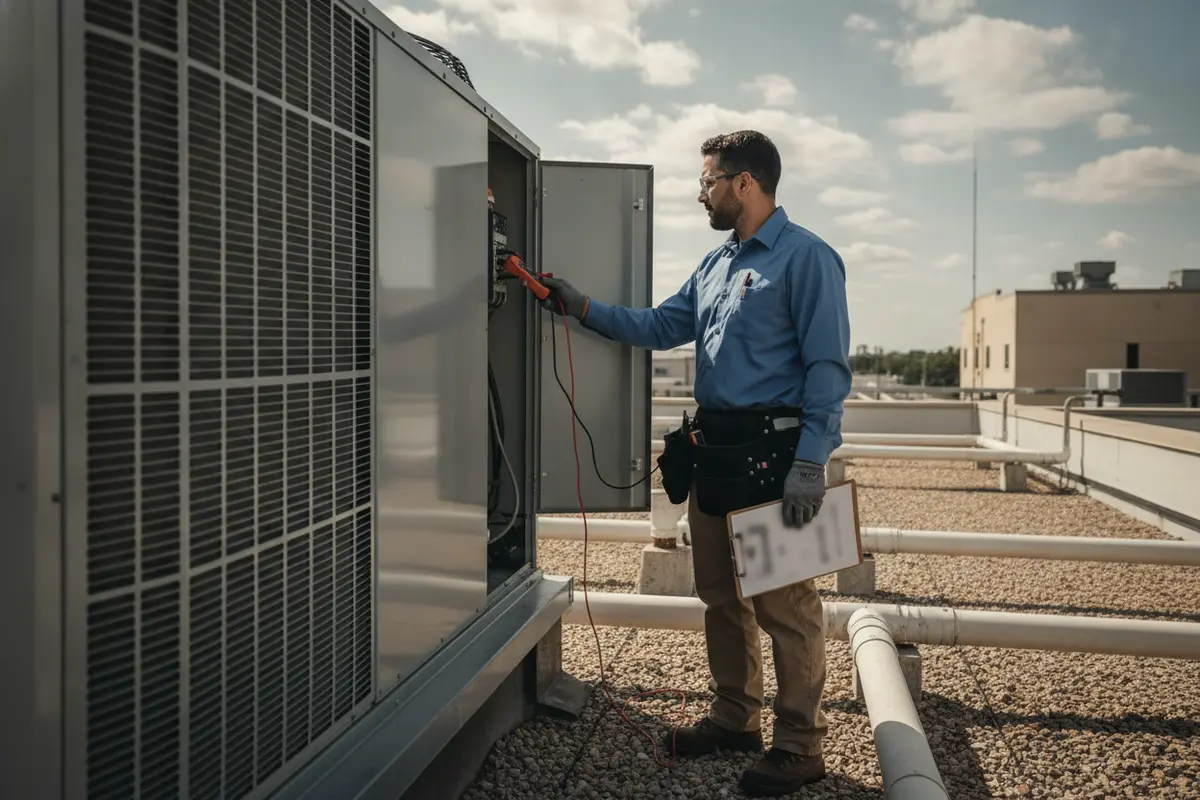
How should you manage indoor air quality during a repair?
Bay Care takes a whole-building view of comfort, airflow, ventilation, and indoor air quality. During a repair issue, managers should note whether complaints occur in one room or throughout the facility, and whether they coincide with occupancy, odors, dust, or changes in ventilation. Those details can help distinguish a localized comfort concern from a broader building condition. Sharing the pattern is useful, but it is not proof that the HVAC equipment is the source.
A heating or cooling repair does not automatically resolve every indoor air quality concern. Filtration, ventilation, moisture control, duct condition, housekeeping, and occupant activity may all be relevant. Avoid promising staff that a particular repair will resolve an odor or health concern until the source has been assessed. For concerns involving illness or hazardous exposure, follow the relevant health and safety guidance and use the appropriate qualified specialists.
Simple observations can still help: note when a smell is present, whether it follows a schedule, and which rooms are affected. Do not cover supply or return vents to compensate for uneven temperatures. If the issue seems related to air distribution, Bay Care’s duct repair information describes one area of building airflow work; a commercial site should be evaluated according to its own system and needs. Staff can also report whether the concern occurs when the room is occupied, after cleaning, or during particular operating hours.
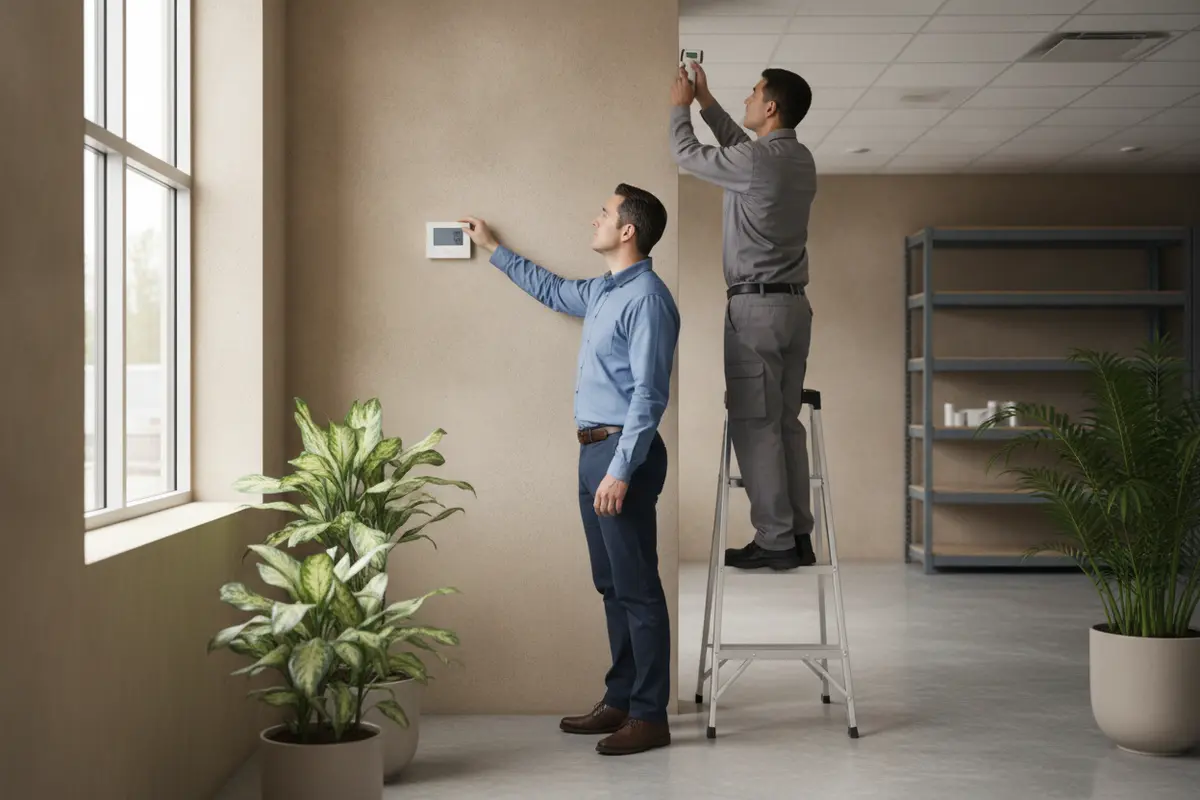
Which records help with repair planning?
Bay Care encourages businesses to keep service information together so that new symptoms can be compared with prior visits. Records are useful whether a facility has one system or several. A short, consistent log can show which areas recur, what work was completed, and which operating conditions were present when a problem occurred. This is especially helpful when the person reporting a concern is not the person who meets the service technician.
Keep copies of work orders and note the date, reported symptoms, affected zones, equipment identification when available, findings, work performed, and any follow-up recommended by the technician. Include dates when filters or other scheduled maintenance were completed if that information is available. Store manuals, warranty documents, and control-system information where authorized staff can find them. Avoid changing or annotating the technician’s description in a way that obscures the original findings; add your own notes separately.
These notes can support a more informed conversation about repair options. They are not a substitute for the technician’s findings, and an old repair does not prove that a new symptom has the same cause. If the system serves multiple tenants or departments, keep a simple record of who reported the issue and whether it continued after service.
A practical log does not need special software. A shared spreadsheet or facilities folder can include the report date, area, conditions, actions taken, service visit, and follow-up status. Use consistent names such as “front office” or “Unit 2” rather than switching between informal room names. When a new report arrives, check whether a related work order exists and share it with the person coordinating the visit.
How do you decide between repair and a larger plan?
Bay Care can help a business understand the reported condition and the available service path, but the decision depends on the equipment, diagnosis, operating needs, and repair scope. Ask what the technician found, what work is proposed, what remains uncertain, and whether follow-up is recommended. Compare options using the same building priorities rather than relying on a single symptom or a general rule. For commercial HVAC repair, the useful comparison is the documented condition and operational fit, not a blanket age cutoff.
| Situation | Useful next step | What to clarify |
|---|---|---|
| New, isolated symptom | Arrange a diagnostic service visit and share a symptom timeline. | What was inspected, what was found, and whether the symptom needs monitoring. |
| Repeated issue in the same zone | Provide prior work orders and ask about recurring conditions. | Whether the issue appears related to equipment, controls, airflow, or building use. |
| Multiple areas affected | Explain the scope and timing of complaints across the building. | Whether the assessment should include shared equipment or distribution concerns. |
| Repair decision with operational impact | Review the proposed work and how it fits the facility’s needs. | Scope, parts or follow-up considerations, expected service process, and alternatives if offered. |
| Repeated disruptions or aging equipment concerns | Discuss repair planning and whether a broader system assessment is appropriate. | Condition, service history, facility priorities, and planning horizon. |
A table cannot determine whether repair or replacement is right for a specific system. Ask for a clear explanation of the observed condition and the limits of what can be concluded from the visit. For equipment planning, Bay Care’s commercial HVAC service page is a relevant starting point for a service conversation.
When comparing proposed paths, write down what must be addressed now, what could be monitored, and what would trigger another review. Ask whether the proposal addresses the reported symptom or includes additional work, and request clarification about any assumptions. Then weigh the scope against building use: a disruption during customer-facing hours may have different consequences from an issue in an intermittently used storage area. Keep budget approval, purchasing rules, and any tenant communication in the facility’s normal process.
How can maintenance records support repair readiness?
Bay Care’s whole-home performance perspective emphasizes that equipment, airflow, insulation, air sealing, and ventilation interact. In a commercial building, an ongoing record of service and operating concerns helps managers spot patterns that deserve attention before they become a bigger interruption. Preventive maintenance is not a guarantee against breakdowns, but organized planning makes it easier to communicate needs and schedule appropriate attention. Repair history is one useful part of that picture, not a replacement for a current assessment.
Set a recurring calendar reminder to review service records, open recommendations, unusual comfort complaints, and seasonal operating plans. Assign a staff contact to keep records current. If your facility has multiple units or zones, label them consistently in reports so technicians and managers can identify the same area over time. Bay Care’s preventative maintenance information can help start a discussion about planned service, while the appropriate scope depends on the commercial system and site.
For larger building-performance questions, consider whether a broader assessment is appropriate rather than treating every concern as an isolated repair. Bay Care offers energy audits and indoor air quality services; the right scope for a commercial facility should be discussed directly in light of its systems and requirements. Keep this distinction clear when setting expectations: an audit or other broader review is not the same as a repair visit for an active equipment problem.
What should a Delmarva business know about after-hours help?
Bay Care provides after-hours assistance and emergency services, but a business should not assume a particular response time. Before a problem occurs, identify how staff should report an urgent issue, who can authorize access, and who can communicate with occupants. Confirm current service arrangements and the appropriate contact route directly with the provider. The goal is a clear internal process, not an assumption that every after-hours situation will have the same response.
Facility managers can prepare a short after-hours information sheet with the site address, authorized contacts, equipment locations, access instructions, and any relevant safety procedures. Keep it current when staff or building access changes. Tell employees how to report changing conditions and when to follow the facility’s emergency procedures rather than wait for HVAC service.
For a non-urgent issue that occurs outside business hours, document what happened and whether the condition continued. For a hazard, prioritize people and follow emergency procedures. Bay Care’s contact page is available for service inquiries, and its service area information can help local businesses confirm coverage. When calling, be ready to share the location, equipment access details, affected spaces, and whether conditions have changed since the initial report.
How can you prepare for a commercial HVAC repair visit?
Bay Care can make better use of a service visit when a business has a contact person, symptom notes, and safe access ready. Preparation does not require technical knowledge. It means gathering the information that explains the building’s priorities and makes it possible to inspect the relevant equipment and areas. A few minutes of coordination can prevent avoidable delays caused by locked rooms, unclear reports, or missing work-order history.
- Choose one staff contact to describe symptoms and coordinate access.
- List affected rooms, when the issue began, and whether conditions change over the day.
- Gather recent service records, equipment details, and visible control alerts.
- Clear the path to accessible equipment and arrange authorized access to restricted locations.
- Identify operational constraints, such as customer-facing areas or hours when noise matters.
- After the visit, save the work order and note any next steps or monitoring requested.
When you request service, explain whether the concern is urgent and what parts of the facility are affected. Avoid self-diagnosing the cause. Bay Care’s commercial HVAC service information and direct contact channel can help you discuss the next step. You can also identify a backup contact in case the person who normally handles facilities is unavailable.
Before the visit, consider what the business needs to communicate to staff or customers. A manager may need to arrange access to a room, move a scheduled activity, or tell occupants how to report changes. Do not promise a repair outcome before the system has been assessed. Afterward, share confirmed instructions with the relevant people and retain the service report alongside the earlier notes.
Contact Bay Care to discuss your facility’s HVAC needs
Frequently Asked Questions
Bay Care serves commercial customers across Delmarva, and the answers below outline practical ways to report a concern and prepare for a conversation. They are general guidance, not a diagnosis of a particular building or a promise about scheduling. For a site-specific answer, share the equipment details and symptoms with the service provider.
When should a business request commercial HVAC repair?
Request a professional assessment when a system stops maintaining expected conditions, develops unusual behavior, or repeatedly affects the same area. If there is an immediate safety concern, follow facility emergency procedures and contact the appropriate emergency resource.
What information should I provide when reporting a problem?
Share the affected rooms or zones, when the issue began, whether it is constant or intermittent, thermostat settings or visible alerts, and any unusual sounds, odors, or moisture. Previous service notes can also help establish context.
Can an HVAC repair fix every indoor air quality complaint?
No. Air quality and comfort concerns may involve ventilation, filtration, moisture, ducts, occupancy, or other building conditions. Describe the symptoms and ask what the assessment covers instead of assuming a repair will address every concern.
Does after-hours availability mean a guaranteed response time?
No response time is promised here. Bay Care offers after-hours assistance and emergency services; contact the company directly to confirm current arrangements and explain the situation.
Should we repair a system or plan for replacement?
That depends on the diagnosis, equipment condition, repair scope, operating priorities, and planning horizon. Ask the technician to explain the findings and any available options so you can weigh them against the facility’s needs.
What should we do after the repair visit?
Save the work order, record what was reported and completed, and note any recommendations or follow-up. If the same issue returns, share the history and describe how the current symptoms compare.
What is the best next step for your facility?
Bay Care encourages a practical approach to commercial HVAC repair: start with a clear report, safe access, and reliable records. Connecting comfort complaints to building use and prior service history helps Delmarva businesses have a more focused conversation about repair needs. It also keeps future planning grounded in what technicians observe about the system and what the facility needs to operate.
Choose a staff contact, gather the available history, and explain which areas matter most to daily operations. Then ask what the assessment found, what the proposed work covers, and whether follow-up is appropriate. With that information in hand, your business can make a more informed decision about its next step.