
High energy bills often stem from leaky ducts that can waste over thirty percent of your cooling power. Choosing between a ductless mini-split vs central air conditioning is the first step toward a more efficient home in Delmarva.
Ductless mini-split vs central air conditioning comes down to three factors: your home’s existing ductwork, your budget, and whether you need whole-home or room-by-room cooling. Central air is the standard for homes with ducts and delivers consistent temperatures throughout every room. Ductless mini-splits are ideal for homes without ducts, room additions, or when you want independent temperature control in each zone. They avoid the energy losses that ducts create and also provide both heating and cooling from a single unit.
Call Bay-Care Heating & Air at 302-245-3365 for a free consultation and estimate on your new system. Our NATE-certified technicians serve homeowners across the Delmarva Peninsula.
Many homeowners feel overwhelmed by the technical details of modern HVAC options. You need to know how each system works before you can decide which one fits your specific needs. This guide breaks down every factor so you can make an informed choice with confidence.
Ductless Mini-split Vs Central Air Conditioning: What Is a Ductless Mini-Split and How Does It Differ from Central Air?
A ductless mini-split system delivers conditioned air directly into individual rooms through wall-mounted indoor units connected to an outdoor compressor by a small conduit. Central air conditioning pushes cooled or heated air through a network of ducts hidden in walls and floors, treating the entire home as a single zone.
Most homes on the Delmarva Peninsula use one of two main approaches to stay comfortable year-round.
How central air works
A central air conditioning system relies on a large unit to cool your whole home at once. It pulls air from your rooms, cools it down, and sends it back through a system of vents. This approach typically requires existing ductwork to function. While it is a common choice for new builds, it can be hard to add to older homes or new sunrooms.
The ductless mini-split design
A ductless mini-split skips the ducts entirely. It has two main parts: a unit outside and one or more air handlers inside. These two parts connect through a small conduit that carries the power line and drain. This design works well for room additions or older homes where running new ductwork is impractical.
Heating and cooling in one system
A major advantage of a ductless mini-split is year-round versatility. These units are heat pumps, meaning they provide both cooling in summer and heating in winter from a single outdoor unit. They move heat rather than generate it with fuel, making them highly efficient in moderate climates like the Eastern Shore.
A whole home approach
At Bay-Care Heating & Air, we do not just look at your HVAC equipment. We use a Whole Home approach that evaluates your airflow, insulation, and air sealing alongside your heating and cooling needs. Our team helps you decide between a ductless mini-split system or a central unit to get the best results for your home and budget.
Is Installing a Ductless Mini-Split or Central AC More Disruptive?
Ductless mini-split installation takes one to two days with minimal disruption to your home, requiring only a three-inch hole through an exterior wall per indoor unit. Central air installation can take three to seven days or longer, especially if ductwork must be installed, which involves cutting into walls, ceilings, and floors.
The installation process differs dramatically between these two systems. Here is a side-by-side breakdown:
- Ductless mini-split: Mount the indoor air handler on a wall, drill a small conduit hole, connect the outdoor unit. No structural changes. One technician can finish a single-zone system in under a day.
- Central air with existing ducts: Remove the old unit, place the new outdoor condenser, connect to the existing ductwork. Typically a one to two day job with minimal disruption.
- Central air without existing ducts: Install a full duct network behind walls, in attics, and through crawl spaces. This requires drywall cuts, framing work, and multiple trade visits over several days.
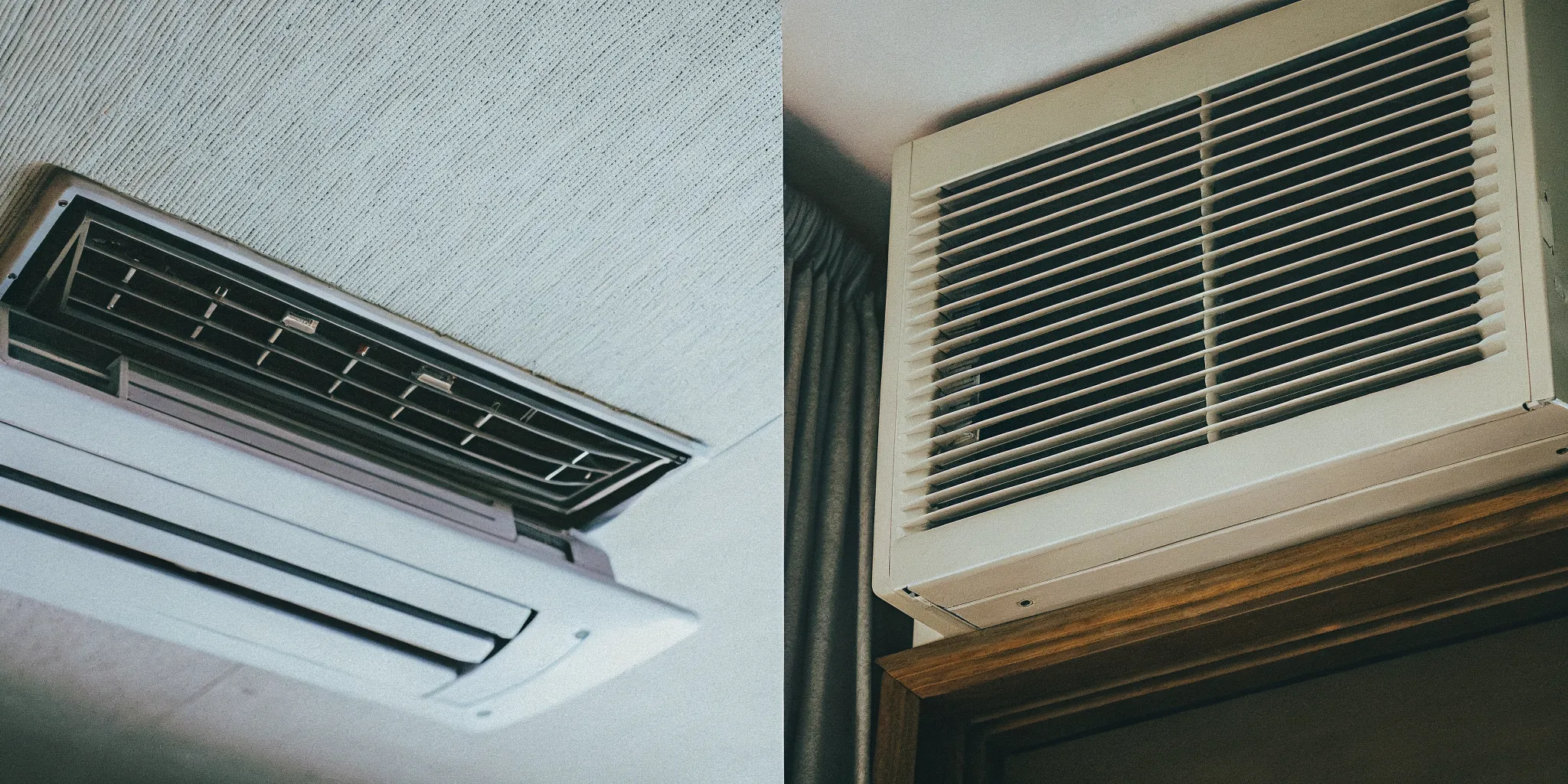
For homeowners on Delmarva with historic homes in Salisbury, Easton, or Cambridge, ductless mini-splits are especially appealing. Adding ducts to century-old construction is expensive and invasive. A mini-split preserves the original walls and trim while delivering modern comfort.
The outdoor unit placement also matters. Coastal properties in Bethany Beach, Rehoboth Beach, and Ocean View need corrosion-resistant equipment or protective coatings to handle salt air. Bay-Care applies specialized coastal corrosion protection coatings to every mini-split and central AC we install in coastal Delaware communities.
How Do Ductless Mini-Splits and Central AC Compare on Energy Efficiency?
Ductless mini-splits typically achieve higher SEER ratings (20-30 SEER) than central air systems (14-21 SEER) because they eliminate duct losses. The U.S. Department of Energy notes that duct losses can account for more than 30% of energy consumption in forced-air systems, giving ductless systems a built-in efficiency advantage.
Efficiency is one of the most important factors in the ductless mini-split vs central air conditioning decision. Let us look at the numbers:
- SEER ratings: Ductless mini-splits commonly reach 20-30 SEER. High-efficiency central systems top out around 21 SEER.
- Duct losses: Leaky ducts in attics and crawl spaces can waste 20-30% of conditioned air. Mini-splits deliver air directly to each room with zero duct loss.
- Zoning: Mini-splits let you cool only occupied rooms. Central air conditions the entire home even when rooms are empty.
- Heat pump advantage: Both options can use heat pump technology, but mini-split heat pumps tend to perform better in moderate cold since each zone has independent control.
| Factor | Ductless Mini-Split | Central Air Conditioning |
|---|---|---|
| Typical SEER | 20-30 | 14-21 |
| Duct losses | None | 20-30% possible |
| Zoning | Per-room independent | Whole-home (single zone) |
| Heat pump option | Standard | Available |
| Best for efficiency | Homes with leaky or no ducts | Homes with tight, insulated ducts |
Delmarva Power offers rebates up to $15,000 for eligible Maryland customers who install qualifying high-efficiency heat pump systems. Both ductless mini-splits and high-efficiency central heat pumps may qualify. The upgrade from an older system can also reduce monthly utility bills significantly.
For homeowners focused on whole-home energy efficiency, combining a ductless mini-split with improved attic insulation and air sealing delivers the best results. Bay-Care’s Whole Home approach addresses all these factors together.
Best Use Cases for Mini-Splits on the Eastern Shore
Mini-splits excel on the Eastern Shore in homes without existing ductwork, room additions, sunrooms, converted garages. And upstairs bedrooms in older homes, and coastal properties where running ducts through salt-prone crawl spaces is risky. Central air remains the better choice for new construction and homes with well-maintained duct systems.
Certain situations clearly favor one system over the other. Here is a practical guide for Delmarva homeowners:
Choose a ductless mini-split when:
- Your home was built before 1950 and has no existing ductwork.
- You are adding a sunroom, bonus room, or garage conversion.
- You want to cool only a few rooms instead of the whole house.
- You live in a multi-story Victorian or Colonial in Salisbury, Easton, or Berlin where adding ducts would damage historic features.
- You need a backup cooling or heating source for a home office or bedroom.
Choose central air conditioning when:
- Your home already has well-maintained, sealed ductwork.
- You are building a new home or doing a full renovation.
- You want a single thermostat and consistent temperature throughout.
- You prefer the concealed look of vents over wall-mounted indoor units.
- Your home has a forced-air furnace that can pair with a central AC coil.
Call 302-245-3365 to schedule a free in-home consultation. A Bay-Care technician will evaluate your home and recommend the right system.
Cost Comparison: Upfront and Over 10 Years
A single-zone ductless mini-split costs $3,000 to $5,000 installed, and a multi-zone system runs $5,000 to $15,000 depending on the number of indoor units. Central air installation ranges from $4,000 to $8,000 with existing ductwork or $8,000 to $15,000 with new ducts. Over ten years, mini-splits often have lower operating costs due to higher efficiency and zoning flexibility.
| Cost Factor | Ductless Mini-Split | Central Air Conditioning |
|---|---|---|
| Single-zone installed | $3,000-$5,000 | $4,000-$7,000 (with ducts) |
| Multi-zone / whole-home | $5,000-$15,000 | $8,000-$15,000 (new ducts) |
| Annual energy cost | $400-$700 | $600-$1,000 |
| Lifespan | 15-20 years | 15-20 years |
| 10-year total estimate | $7,000-$22,000 | $10,000-$25,000 |
Financing is available. Bay-Care offers 0% APR for 60 months on qualifying Bryant systems for qualified buyers. Our duct sealing services can also improve your central AC efficiency without replacing the whole system.
If your existing central AC is more than 12 years old, comparing repair versus replacement costs makes sense. Sometimes a mini-split addition for the rooms you use most is a smarter investment than replacing a whole central system.
Bay-Care’s HVAC Service and Replacement Guide for Eastern Shore Maryland Homeowners covers all your options in detail, including rebates and financing.
Frequently Asked Questions
Can a ductless mini-split cool an entire house?
Yes, a multi-zone ductless mini-split system can cool an entire house. Each room or zone gets its own indoor air handler connected to a single outdoor unit. This setup works well for homes without existing ductwork and gives you independent temperature control in each room.
Is a ductless mini-split cheaper to run than central air?
Ductless mini-splits are generally cheaper to run than central air because they eliminate duct losses, which can waste 20-30% of conditioned air. Higher SEER ratings and zoned operation also reduce energy consumption, especially when you cool only occupied rooms.
How long do ductless mini-splits last compared to central AC?
Both systems typically last 15-20 years with proper maintenance. Ductless mini-split units need monthly air filter cleaning, while central systems require filter changes every three months and annual professional tune-ups.
Does Bay-Care Heating & Air install ductless mini-splits on Delmarva?
Yes, Bay-Care Heating & Air installs ductless mini-split systems across Delmarva, including Salisbury, Easton, Cambridge, Bethany Beach, Rehoboth Beach, and Lewes. We are a Bryant Factory Authorized Dealer with NATE-certified technicians serving both Maryland and Delaware communities.
What rebates are available for mini-split or central AC installation?
Delmarva Power offers rebates up to $15,000 for eligible Maryland customers who install qualifying high-efficiency heat pump systems. Bay-Care can help you determine which systems qualify and handle the rebate paperwork for you.
Ready to Choose the Right System for Your Delmarva Home?
Deciding between ductless mini-split vs central air conditioning does not have to be overwhelming. The right choice depends on your home’s layout, your existing ductwork, your efficiency goals, and your budget. Bay-Care Heating & Air serves homeowners across Delmarva with over 50 years of combined team experience. We are a Bryant Factory Authorized Dealer with NATE-certified technicians who take a Whole Home approach to every installation.
Schedule your free consultation today. Call 302-245-3365 or contact us online to speak with an expert. We offer 0% APR financing for 60 months on qualifying Bryant systems for qualified buyers and a $69 diagnostic charge for service calls. Let us help you find the perfect HVAC solution for your home.


