When the furnace stops producing heat on a cold day, it can be hard to tell whether you need an immediate service call or a simple safe check. This emergency furnace repair guide helps Delmarva homeowners protect people and property, recognize warning signs, and give a technician useful details without attempting risky repairs.
Request emergency furnace repair from Bay Care
What should you do first when the furnace stops heating?
Start with people and immediate hazards, not the furnace cabinet. Bay Care Heating & Air serves homeowners across Maryland and Delaware, and recommends treating unusual odors, an active carbon monoxide alarm, or signs of fire as safety issues before troubleshooting. If there is no immediate danger, make only the simple observations below, then arrange service if heat does not return.
- Check everyone in the home. If anyone has a headache, dizziness, nausea, confusion, unusual weakness, or other sudden symptoms that could point to carbon monoxide exposure, get everyone and pets outside to fresh air. Call 911 or the local fire department from outside and follow their instructions. Do not re-enter until responders say it is safe.
- Respond to a carbon monoxide alarm. Leave the home promptly, even if no one feels ill. Call 911 or the fire department from outside. Do not silence the alarm and assume the danger has passed, and do not return until the home has been checked and cleared.
- Leave if you smell gas or see smoke or fire. Do not operate lights, appliances, thermostats, or other switches. Get outside and call 911 or the gas utility from a safe location. Avoid trying to locate the leak or relight equipment.
- If there is no danger, note what the system is doing. Is the display blank? Does the furnace start and stop? Is air moving through the vents, and does it feel cool? These observations can help the service team understand the call.
Carbon monoxide cannot be reliably detected by sight or smell, so an alarm and symptoms matter more than whether you notice an odor. Never use an oven, range, outdoor grill, or fuel-burning outdoor heater to warm a home. These are not safe substitutes for a working heating system.
When is emergency furnace repair a safety issue?
Emergency furnace repair is appropriate when a loss of heat creates a health or property risk, or when the equipment shows signs that it should not be operated. Bay Care Heating & Air can help Delmarva homeowners arrange a response, but a suspected gas leak, fire, or carbon monoxide event requires emergency responders or the utility first. Do not wait for a routine appointment if an immediate hazard is present.
| What you notice | What to do now | What to avoid |
|---|---|---|
| CO alarm sounds or people feel suddenly unwell | Move everyone outside and call 911 or the fire department | Do not re-enter, reset the alarm, or investigate indoors |
| Gas odor, smoke, sparks, or visible fire | Leave the building; call 911 or the utility from outside | Do not touch switches, use a flame, or try to restart the furnace |
| Heat is out and indoor temperatures are falling | Contact an HVAC provider and consider moving vulnerable people to a warm location | Do not use an oven, grill, or outdoor heater indoors |
| Water is leaking near equipment or a pipe has burst | Keep clear of electrical hazards; shut off water only if the shutoff is accessible and safe, then seek appropriate help | Do not touch wet electrical equipment or open the furnace |
| No heat, but no alarm, odor, smoke, or other immediate hazard | Try the basic checks in this guide and request service if the issue remains | Do not remove panels or work on fuel, wiring, or safety controls |
Emergency repair programs also recognize that a failed essential system can create a safety or health concern. For example, the Tennessee Housing Development Agency describes its Emergency Repair Program as addressing essential systems or critical problems that pose an immediate danger to life, safety, or health. That program is specific to Tennessee and is not a local Delmarva resource, but its description reinforces why a loss of heat deserves prompt attention when safety is at stake.
Read the Tennessee Housing Development Agency’s Emergency Repair Program description.
Which safe checks can you make before calling?
Bay Care Heating & Air recommends limiting homeowner checks to controls and visible conditions that do not require opening equipment. If anything feels unsafe, stop and call for help. A thermostat setting or tripped breaker may explain a no-heat call, but repeated resets or work inside the furnace can create new risks and should be left to a qualified technician.
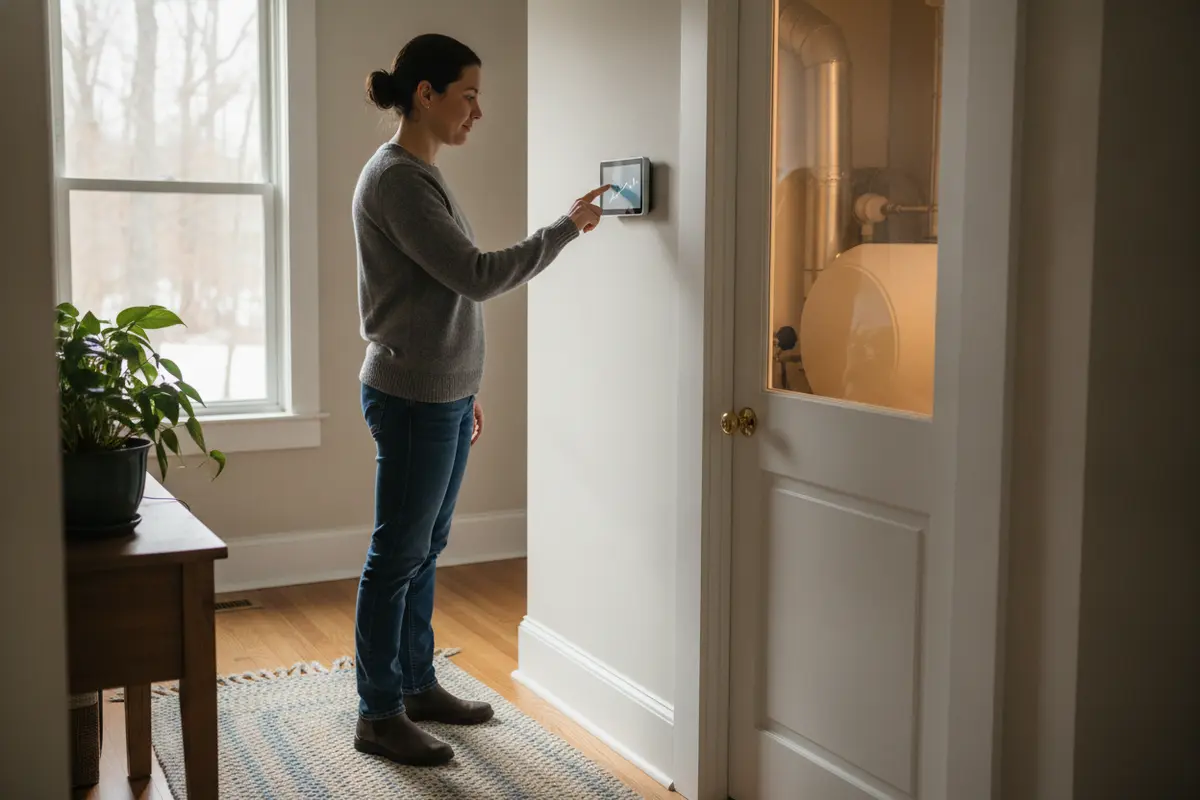
- Confirm the thermostat setting. Make sure it is set to heat and that the set temperature is above the current room temperature. If the display is blank, check whether its batteries need replacement, if applicable.
- Check the furnace switch from a safe position. Some systems have a nearby switch that resembles a light switch. If you can clearly identify it and there is no odor, water, smoke, or other hazard, confirm it has not been turned off accidentally. Do not touch exposed wiring or remove a cover.
- Look at the circuit breaker once. If the breaker is visibly tripped and the area is dry and safe, you may reset it once. If it trips again, leave it off and call for service. Do not keep cycling it.
- Check the air filter only if it is easy to reach. A heavily loaded filter can restrict airflow. Replace it with the correct size if you already have one. Do not operate the system without its filter or reach into the equipment.
- Look for obvious blocked vents. Move furniture, rugs, or other objects away from supply and return grilles. Do not close many vents to force more heat into a particular room.
These checks do not diagnose a failed ignition system, motor, control, fuel supply, or heat exchanger. If the furnace still does not heat, stop troubleshooting. Bay Care’s heating repair service covers heating problems that require professional diagnosis. Homeowners can also review the basic symptoms in the gas furnace no-heating guide, but should not attempt a repair based on a symptom list.
How can you protect pipes and people while the heat is out?
When indoor temperatures fall, water pipes in colder parts of a home may be at risk, especially near exterior walls, crawl spaces, garages, or unheated areas. Bay Care Heating & Air advises homeowners to treat a long outage as both a comfort issue and a possible property concern. If you cannot keep the home safely warm, arrange a warm place for household members rather than using unsafe combustion devices indoors.
- Keep interior doors open so available warmth can move through the home, unless doing so would create another safety concern.
- Open cabinet doors below sinks on exterior walls to let room air circulate around plumbing. Keep household chemicals and cleaning products away from children and pets.
- If a pipe appears frozen, do not use a torch, open flame, or high-heat device to thaw it. If a pipe leaks or bursts, avoid wet electrical areas. Shut off the main water supply only if you can reach it safely, and contact a plumber.
- If you are leaving the home because it is too cold, consider the risk to plumbing and ask a qualified local professional what steps fit your home’s layout and conditions.
- Keep children, older adults, people with health concerns, and pets in mind when deciding whether to wait at home. Move to a safe, warm location if needed.
Do not try to compensate for a failed furnace with a barbecue, camp stove, generator, or patio heater inside or in an attached garage. Such equipment can create carbon monoxide and fire hazards. If a CO alarm activates, leave and call emergency responders rather than continuing to manage the temperature indoors.
What information should you gather for an emergency furnace repair call?
A short, accurate description helps the service team understand the situation and prepare for the visit. Bay Care serves communities across the Delmarva Peninsula, including Salisbury, Fruitland, Delmar, Laurel, Berlin, Easton, and nearby Maryland and Delaware communities. When you contact a provider, share the address and the exact conditions rather than guessing at the cause.
- State the immediate concern first. Mention whether there is an active CO alarm, gas odor, smoke, water leak, or health concern. If any of these are happening, leave and call emergency responders or the utility before arranging HVAC service.
- Describe the heating system if you know it. Note whether it is a gas or oil furnace, boiler, or heat pump. If you are unsure, say so; do not open equipment to find a label.
- Explain the timeline. When did the heat stop? Did it fail all at once or become intermittent? Did you notice a noise, odor, or display change first?
- Report what you observed, not a diagnosis. Examples include “the thermostat display is blank,” “the furnace starts and stops,” or “the vents blow cool air.” Include any safe checks you tried and whether a breaker tripped again.
- Share household and access details. Explain if vulnerable occupants are affected, whether the home has multiple heating zones, and how the technician can reach the equipment. Keep pets secured and provide a clear path if possible.
Bay Care’s contact page is available to request help. If you are outside the company’s listed Delmarva service communities, confirm coverage when you call. You can also review Bay Care’s service areas to see the communities it serves.

When should you request emergency furnace repair instead of waiting?
Request emergency furnace repair when a heat outage creates an immediate safety, health, or property concern, or when warning signs mean the system should remain off. Bay Care Heating & Air can help homeowners across its Maryland and Delaware service area with heating needs, but dispatch timing depends on the situation and availability. If you are unsure whether the issue is an emergency, describe the symptoms and ask what to do next rather than restarting equipment repeatedly.
Use these distinctions to make the call:
- Call emergency responders or the utility first for an alarm, suspected carbon monoxide exposure, gas odor, smoke, or fire. Do not wait for an HVAC appointment to address an active hazard.
- Request prompt HVAC help when the furnace has stopped in cold weather, the indoor temperature is dropping, occupants cannot safely wait, or plumbing may be exposed to freezing conditions.
- Arrange a routine heating appointment when the system still operates safely but has a recurring performance issue, uneven rooms, or unusual operation without an immediate hazard. Ask the provider whether the symptoms warrant an earlier visit.
If you have a heat pump rather than a furnace, the symptom and equipment differ. Bay Care has a separate guide for a heat pump that is not heating. For recurring seasonal concerns, its heating maintenance information explains the preventive service option. Neither replaces a safety response when an alarm or suspected fuel issue is present.
How can you prepare for the technician’s visit?
Once a visit is arranged, a few simple steps can make the assessment easier without asking you to perform repairs. Bay Care Heating & Air takes a whole-home view of comfort, so information about airflow, the thermostat, and the spaces affected can help distinguish a single-equipment problem from a broader comfort concern. Do not restart a system that has been shut down for a suspected safety issue.
- Make a clear, safe path to the thermostat and heating equipment. Do not move heavy equipment or enter an unsafe crawl space or attic.
- Keep notes about which rooms are cold, whether air is moving, when the problem began, and any sounds or display messages you observed.
- Gather the system paperwork or model information only if it is already accessible. Do not remove panels to find it.
- Tell the technician about past repairs or recurring symptoms, if known, and mention any water near the system or recently tripped breaker.
- Ask what the assessment includes, what needs attention now, and whether any follow-up work is recommended. Request an explanation before authorizing additional work.
Some heating problems connect to airflow, ductwork, insulation, or other home conditions. Bay Care’s duct repair and attic insulation services are examples of broader home-performance options to discuss when appropriate. They are not substitutes for restoring heat or addressing an active furnace hazard.
Call Bay Care at 302-245-3365 to request heating service
Frequently Asked Questions
Should I keep resetting a furnace that will not start?
No. A single safe check of a breaker may be reasonable if there is no hazard, but if it trips again, leave it off and contact a professional. Repeatedly resetting equipment can mask a fault and is not a repair.
Can I use my oven or a portable outdoor heater to warm the house?
No. Do not use an oven, grill, camp stove, generator, or outdoor heater indoors or in an attached garage. These devices can create carbon monoxide and fire hazards. Move people to a safe warm location if necessary.
What should I do if the carbon monoxide alarm stops sounding?
Do not assume the home is safe because an alarm becomes quiet. Leave the building and contact 911 or the fire department. Follow responder instructions and do not return until the home is checked and cleared.
Is no heat always an emergency?
Not every heating problem presents an immediate danger, but a cold home can become urgent when temperatures are falling, people are vulnerable, or pipes may be at risk. An alarm, gas odor, smoke, or symptoms that could signal carbon monoxide exposure require an immediate safety response.
Should I try to relight a furnace pilot?
Do not attempt to relight equipment when you smell gas, hear an alarm, see smoke, or feel unsafe. Follow the equipment manufacturer’s instructions only when there is no hazard and you are certain the procedure applies to your system; if uncertain, leave the furnace off and request service.
When heat fails, protect people first, avoid unsafe workarounds, and share clear observations with the service provider. If the problem creates a safety or property concern, request help promptly and let a qualified technician diagnose the furnace.