
2026 guidance for 2025 installations and current Delmarva Power programs.
If you are searching for federal tax credits for HVAC upgrades in 2026, start with one important distinction: a federal credit that applied to qualifying equipment placed in service by the end of 2025 is not automatically available for a new 2026 installation. Maryland homeowners on the Delmarva Peninsula may still be filing a 2025 return for an eligible earlier project. Separate utility incentives may be available for qualifying work completed now. A whole-home review can also show whether insulation, air sealing, ductwork, or ventilation should be addressed with the HVAC system. Read Bay Care’s whole-home energy efficiency guide before comparing upgrade options.
Call Bay Care at (302) 245-3365 to review your HVAC upgrade questions.
What changed for federal tax credits for HVAC upgrades in 2026?
For most homeowners, the key 2026 change is that Section 25C, the Energy Efficient Home Improvement Credit, does not apply to qualifying property placed in service after December 31, 2025. A new 2026 heat pump, central air conditioner, furnace, or similar upgrade should not be advertised as eligible for the former federal credit without a new, applicable rule.
The One Big Beautiful Bill Act accelerated the end of several residential energy incentives. In its current FAQ, the Internal Revenue Service says the Section 25C credit is not allowed for property placed in service after December 31, 2025. The same IRS guidance says the Residential Clean Energy Credit under Section 25D is not allowed for expenditures after that date. Those are federal tax rules, not Delmarva Power rebate rules.
That means the popular older headline, “save up to $2,000 under the former federal statute for a heat pump,” needs a date attached to it. That historical maximum was not a guaranteed benefit for a system installed in 2026. The credit also was never a point-of-sale discount or a promise that the IRS would send every homeowner the maximum amount.
The IRS notes that its FAQs provide general information and can be updated. Tax law and a homeowner’s eligibility depend on the taxpayer’s facts, the property, the installation date, and the documentation. Use this article as a planning guide, then confirm a prior-year claim with a tax professional and current IRS instructions.
Can you still claim federal tax credits for HVAC upgrades from 2025?
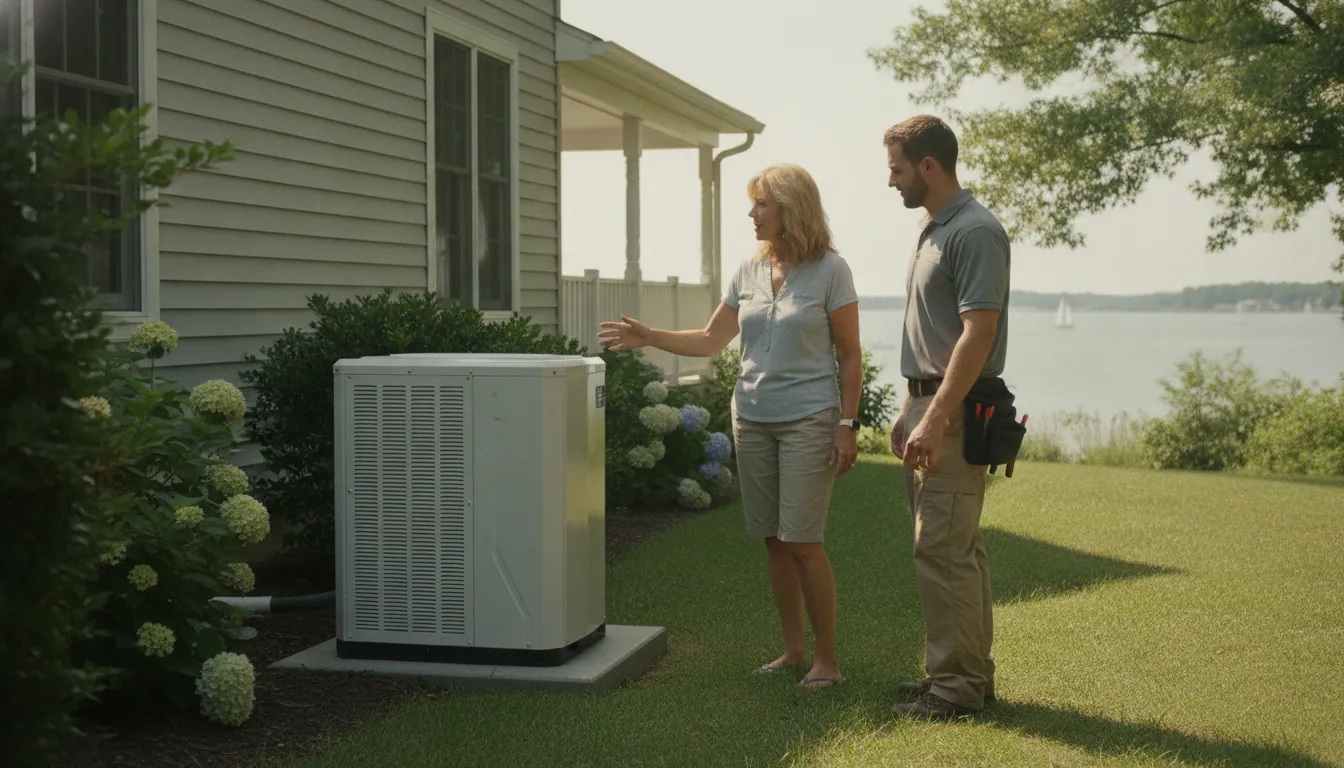
Possibly. If qualifying HVAC property was placed in service on or before December 31, 2025, a homeowner may be able to claim the applicable 2025 credit on a 2025 federal tax return. Eligibility is not based only on when equipment was purchased. Product standards, manufacturer information, home use, qualified expenses, tax liability, and the IRS filing rules all matter.
In tax language, “placed in service” generally means the improvement was installed and ready for use, not simply ordered or delivered. A deposit on a heat pump in December 2025 does not by itself prove that the system qualified for the 2025 tax year. Keep the final invoice, installation date, model numbers, and any manufacturer or efficiency documentation.
The IRS Energy Efficient Home Improvement Credit page describes the prior credit as applying to qualifying improvements made to an existing home in the United States, generally a main home. Its guidance also states that the credit was nonrefundable. It could reduce federal tax liability but could not exceed the applicable tax liability, and unused credit could not simply be carried to a later year.
For 2025 equipment, the IRS and ENERGY STAR also highlighted qualified-manufacturer requirements. Do not rely on a sales label that says “high efficiency.” Match the exact equipment to current eligibility documentation, including the manufacturer information required for a 2025 return. If you are unsure whether your project was completed in time, ask your installer for the records and ask a tax professional how the placed-in-service date affects your return.
If your system was installed in 2026, do not backdate the project or treat a 2025 purchase as a 2025 installation. The safest approach is to keep federal tax questions separate from the incentives offered by your utility or state program.
Which HVAC equipment qualified for the 2025 credit?
For the 2025 tax year, the former Section 25C rules covered specific categories such as qualifying electric or natural gas heat pumps, heat pump water heaters, central air conditioners, and certain furnaces or boilers. Each category had its own efficiency standard and dollar limit. A new system qualified only if the exact product and installation met the applicable requirements.
The former federal credit commonly covered these HVAC-related categories when the equipment met the rules in effect for the installation year:
- Air-source heat pumps: Potentially eligible for a credit of up to 30% of qualified costs, subject to the applicable annual and equipment limits.
- Central air conditioners: Potentially eligible for a lower equipment-specific limit when the exact model met the required efficiency criteria.
- Furnaces and boilers: Some high-efficiency natural gas, propane, or oil equipment could qualify under the 2025 rules, subject to product requirements.
- Heat pump water heaters: A separate equipment category with its own cap and eligibility requirements.
- Home energy audits: A qualifying audit could have a separate, limited credit when the audit and report met IRS requirements.
Geothermal heat pumps belonged to a different federal credit category, so they should not be casually grouped with the air-source heat pump rules. Likewise, ductless and ducted systems cannot be judged from the system name alone. The model certification, efficiency rating, installation date, and tax-year rules control.
Bay Care can help Maryland and Delaware homeowners document the HVAC side of a project, compare equipment choices, and identify whole-home concerns such as airflow or insulation. Bay Care cannot decide whether a taxpayer is legally entitled to claim a federal credit. For that decision, use the IRS guidance and a qualified tax professional.
How much could the 2025 HVAC credit be worth?
For a qualifying 2025 project, the former federal statute generally allowed 30% of eligible costs, subject to category caps. Under that federal statute, ENERGY STAR described up to $2,000 for qualifying heat pumps and up to $1,200 for certain other improvements, with an annual maximum of up to $3,200. These historical figures do not apply to a new 2026 installation.
The amount a homeowner could claim depended on more than the invoice total. The equipment category, qualifying cost, efficiency standard, annual limit, manufacturer information, and the taxpayer’s federal tax liability all affected the result. An expensive installation did not automatically create a credit equal to 30% of the entire project.
For example, an eligible 2025 heat pump could fall under the higher equipment limit, while a central air conditioner or furnace fell under a different limit. A homeowner could also have had other eligible improvements during the same tax year. The annual cap applied across the relevant categories, so adding numbers from separate projects without checking the IRS limits could overstate the claim.
Use the figures below only as a historical 2025 planning reference, not as a quote for a 2026 project:
| Project or question | 2025 rule of thumb | 2026 planning note |
|---|---|---|
| Qualifying heat pump | Potentially up to 30% of qualified costs, capped under Section 25C | Do not assume the former 25C credit applies to property placed in service after Dec. 31, 2025 |
| Other qualifying HVAC equipment | Category-specific limits and efficiency requirements applied | Verify current federal law before representing any credit as available |
| Federal filing | Claimed for the tax year in which eligible property was placed in service | A 2025 installation may be relevant to a 2025 return filed in 2026 |
| Delmarva Power program | Separate from the federal tax code | Program terms, equipment tiers, windows, and availability can change |
For the historical amounts and current termination language, compare the IRS source with the ENERGY STAR federal tax credit guidance. If the sources, your invoice, and your tax software appear to disagree, pause before filing and ask a tax professional.
How are Delmarva Power rebates different from federal tax credits?
A federal tax credit is claimed through a federal tax return when the applicable tax law allows it. A Delmarva Power incentive is a utility program with its own service territory, application process, equipment requirements, contractor rules, funding, and deadlines. A homeowner may need to satisfy one program, both programs, or neither, so the benefits must be reviewed separately.
For Maryland customers, Delmarva Power’s current program pages are the right place to check utility terms. At the time of this update, the utility’s participating-contractor page lists a limited-time 2026 incentive window for qualifying electrification air-source heat pump installations completed from May 15 through September 25, 2026. That page also lists equipment tiers and minimum efficiency information, including AHRI-rated equipment requirements.
The utility page does not turn every new heat pump into a guaranteed rebate. Eligibility may depend on the customer’s utility account, existing fuel type, equipment model, efficiency tier, participating contractor or distributor, project date, application steps, and available program funds. Review the current Delmarva Power HVAC program information before work begins because program terms can change.
Do not subtract a possible utility incentive from a quote as though it were already approved, and do not describe a utility rebate as a federal tax credit. Bay Care can help you identify the questions to ask about a qualifying installation, but Delmarva Power and the relevant program administrator determine utility eligibility.
Call Bay Care at (302) 245-3365 to compare your equipment options before you apply for an incentive.
What documentation should Maryland homeowners keep?
Keep a complete project file for any HVAC upgrade: signed proposals, final invoices, installation and placed-in-service dates, model and serial numbers, AHRI or efficiency documentation, manufacturer qualification information, permits when applicable, utility paperwork, and payment records. Retain the file with your tax records. Ask your tax professional which forms and supporting documents apply.
A clean record makes it easier to separate a tax question from a utility question. Your project folder should include:
- The contract, scope of work, and final paid invoice.
- The date the system was installed and ready to operate.
- Manufacturer, model, serial, and efficiency information for the installed equipment.
- Any qualified-manufacturer or product identification information required for the applicable tax year.
- Utility application, approval, reservation, or confirmation records, if you applied for a Delmarva Power incentive.
- Records for related work, such as an audit, insulation, air sealing, duct sealing, or electrical changes.
- Questions and answers from your tax professional, kept with the return for the relevant year.
A contractor can supply installation records, but a contractor should not promise a tax result. If the project involved a whole-home assessment, keep that report as well. Bay Care’s home energy audit guide explains why the building envelope and duct system can affect the right HVAC decision, even when no federal credit is available.
How can Bay Care help you plan an HVAC upgrade in 2026?
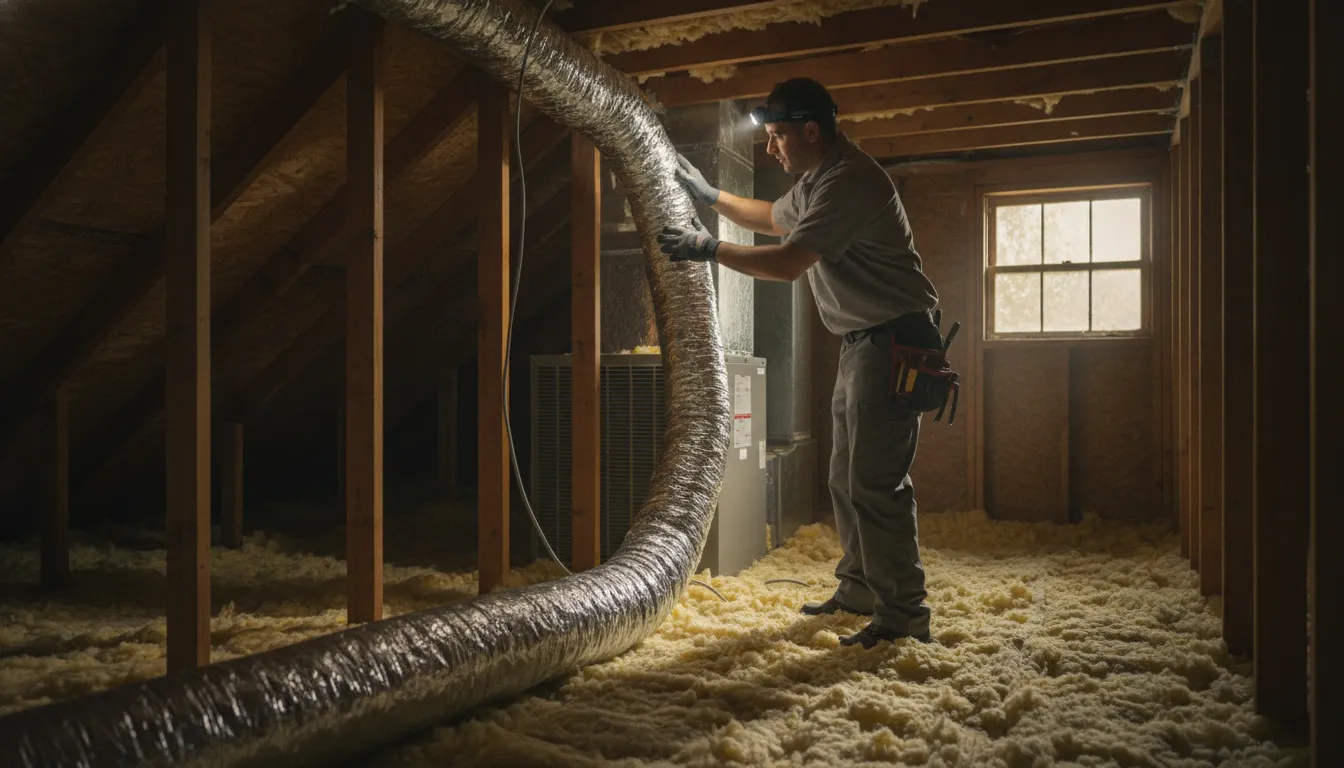
Bay Care helps Delmarva homeowners evaluate HVAC options, installation details, airflow, insulation, ductwork, and equipment documentation. The team can help you prepare practical questions for a utility program or tax professional. Bay Care does not replace the IRS, Delmarva Power, or a tax adviser when eligibility or filing decisions are involved.
A responsible 2026 upgrade conversation starts with the home, the existing system, and the homeowner’s priorities. Bay Care can help you consider:
- Whether repair, replacement, or a second opinion makes sense for the current system.
- How sizing, duct condition, insulation, and air sealing affect comfort and efficiency.
- Which model and installation records you should request for your files.
- Whether your project questions belong with Bay Care, Delmarva Power, the IRS, or a tax professional.
- How to evaluate a financing or rebate conversation without treating a possible incentive as guaranteed.
Current federal rules mean a new 2026 HVAC project should be evaluated on its comfort, reliability, operating goals, and available local programs, not on an outdated promise of a federal 25C credit. If you are still filing for a qualifying 2025 installation, gather your documentation and confirm the claim for the 2025 tax year.
For a broader plan, connect the equipment decision to Bay Care’s whole-home efficiency approach. Addressing air leakage, insulation, and ducts can help you avoid sizing or comfort decisions based only on the old unit.
Call Bay Care at (302) 245-3365 to schedule an HVAC consultation for your Maryland or Delaware home.
Frequently Asked Questions
The most common questions are about timing, eligibility, dollar amounts, and the difference between tax credits and utility rebates. The short answer is that the former federal Section 25C credit ended for property placed in service after December 31, 2025, while a qualifying 2025 installation and current Delmarva Power programs require separate review.
Is there a federal HVAC tax credit for a system installed in 2026?
Do not assume there is. The IRS says Section 25C is not allowed for property placed in service after December 31, 2025. Check current IRS guidance for any new law or program before describing a 2026 installation as eligible.
Can I claim a credit in 2026 for an HVAC system installed in 2025?
Possibly, if the system was qualifying property placed in service on or before December 31, 2025 and you meet the applicable requirements. A 2025 installation would generally be considered on the 2025 federal return, even if that return is filed in 2026. Ask a tax professional to confirm.
Was the former federal statute’s heat pump credit really $2,000?
Under the former federal statute, ENERGY STAR described a potential maximum of $2,000 for qualifying heat pumps. That was a capped 2025 opportunity, not a guaranteed payment and not a current promise for a system placed in service in 2026.
Are Delmarva Power rebates the same as federal tax credits?
No. Delmarva Power rebates are utility-program incentives with separate service-territory, equipment, contractor, application, timing, and funding requirements. Review the current program page before work begins, and do not count a rebate as approved until the program administrator confirms it.
Can Bay Care tell me whether I qualify for a tax credit?
Bay Care can help document the HVAC equipment and installation details and discuss the practical side of an upgrade. A tax professional should determine your tax eligibility, filing position, and forms. The IRS source controls federal tax questions, while Delmarva Power controls its utility-program decisions.
Call Bay Care at (302) 245-3365 to plan your next HVAC step with a Delmarva-area team.


