When a furnace blower motor starts running but barely moves air, makes a new grinding or humming sound, or stops and starts unexpectedly, the problem may involve more than the thermostat. A dirty filter, restricted ductwork, control issue, or safety shutdown can create similar symptoms. Careful observation matters before assuming a component has failed.
A failing furnace blower motor can cause weak airflow, unusual sounds, intermittent operation, or uneven comfort, but those signs are clues rather than proof. Bay Care can evaluate the furnace, airflow, and related components to identify the actual cause and explain safe repair options for your Delmarva home.
Understanding the motor’s role makes those symptoms easier to interpret. It also helps separate a true blower problem from an airflow issue elsewhere in the heating system.
What Does a Furnace Blower Motor Do?
Bay Care helps homeowners across the Delmarva Peninsula understand that a furnace blower motor is the part that powers the blower assembly, moving conditioned air through the home. It supports heating, cooling, and the return-air cycle, so a problem can affect comfort in more than one season.
In heating mode, the blower moves air warmed by the furnace into the duct system. The ducts distribute that air to rooms through supply registers, while return ducts carry room air back toward the furnace. This continuous circulation helps the system deliver heat where it is needed instead of leaving warm air concentrated near the equipment.
A central air-conditioning system commonly uses the same furnace blower to move cooled air through the home. That means the blower motor may operate during cooling even though the furnace burner is not running. If airflow becomes weak or stops, the issue may show up as uneven temperatures, longer cycles, or little air at the registers. Those symptoms can have several causes, so they are clues rather than proof of motor failure.
The blower also affects how efficiently the duct system distributes conditioned air. Airflow performance depends on the relationship between the blower, the duct system, and the pressure the equipment must overcome. Laboratory testing has evaluated blower combinations across different airflow and pressure conditions to assess airflow performance, power consumption, and efficiency. See how a furnace blower moves air within a complete gas furnace system.
Bay Care can inspect the blower motor and the surrounding airflow path when comfort changes or unusual operation points to a possible problem. A professional evaluation helps separate a motor issue from a filter, duct, control, or broader furnace concern before repair decisions are made.
What Are the Signs of a Failing Furnace Blower Motor?
A furnace blower motor may be struggling when air movement changes, sounds become unusual, or the system operates inconsistently. Bay Care Heating & Air treats these symptoms as clues rather than a guaranteed diagnosis. A technician can compare airflow, electrical performance, and operating conditions to identify whether the motor is actually at fault.
- Weak or absent airflow: The furnace may run, but little heated air reaches the registers. In some cases, the blower may not start at all, leaving rooms cold even though the system appears to be calling for heat. A furnace blower moves heated air through the duct system and returns air to the furnace, so reduced blower performance can affect the entire distribution cycle. Learn more about furnace airflow and blower operation.
- Unusual sounds: Grinding, squealing, rattling, humming, or a noticeable change in the normal startup sound can point to a problem with the motor, blower wheel, bearings, or another nearby component. Sound alone cannot identify which part needs attention, especially because furnace blower systems use different motor technologies, including PSC and brushless permanent-magnet designs.
- Intermittent operation: The blower may start sometimes and fail at other times, or it may stop before the heating cycle is complete. Intermittent symptoms can involve the motor, controls, electrical components, or a safety response. Note when the problem occurs instead of repeatedly resetting the equipment.
- Overheating or short cycling: A furnace that shuts down quickly, restarts often, or produces heat in brief bursts may have an airflow or operating problem. Restricted airflow can place additional stress on the system, but short cycling also has other possible causes. Do not assume the blower motor is the sole cause.
- Uneven comfort: Some rooms may stay cold while others receive normal heat. That pattern can result from weak blower performance, duct restrictions, or distribution problems. Furnace blower performance is evaluated across airflow and pressure conditions, not by room temperature alone. Academic furnace blower testing details explain why those conditions matter.
If you are asking, “How do I know if a furnace blower motor is bad?” the safest answer is that a cluster of symptoms deserves inspection, not a component swap based on one clue. Turn off the system and arrange professional help if you notice burning odors, repeated shutdowns, or no airflow. Avoid opening the furnace cabinet or handling electrical parts.
Could Another Airflow Problem Look Like a Bad Blower Motor?
A weak or missing airflow pattern does not automatically prove that the furnace blower motor has failed. Bay Care starts with diagnosis because the same symptom can come from a restriction, control problem, duct defect, or safety response. Identifying the cause helps protect the equipment and keeps repairs focused.
A clogged filter can restrict the air moving through the system and make the furnace seem weak, noisy, or prone to shutting down. Registers that are closed or blocked by furniture can create a similar room-by-room comfort problem. These are airflow conditions, not necessarily motor failures.
Ductwork can also be part of the problem. A crushed section, disconnected connection, or significant leak may reduce delivered air even while the blower is operating. Improving distribution efficiency can contribute to energy savings, according to the U.S. Department of Energy’s HVAC guide (DOE HVAC guide). Learn more about duct problems that restrict airflow before assuming the motor is at fault.
Thermostat settings, wiring, a control board, or another control issue can interrupt the signal that starts the blower. A furnace may also stop the blower or heating sequence when a safety control detects an unsafe operating condition. That response should be diagnosed, not bypassed. Never jumper a safety control or continue operating equipment that is overheating, producing unusual odors, or showing signs of an electrical fault.
Bay Care can evaluate the filter, duct distribution, controls, blower assembly, and operating conditions together. The goal is a clear explanation of what failed, what only needs correction, and which options support safe, reliable comfort across your Delmarva home.
What Can You Safely Check Before Calling for Help?
Bay Care recommends a careful visual and control-based check before service. The goal is to give a technician useful observations, not to diagnose or repair the furnace yourself. A blower moves heated air through the duct system and returns air to the furnace, so airflow changes can help describe what is happening.
These simple observations can help Bay Care narrow the possibilities while keeping you away from energized or moving components.
- Check the thermostat. Confirm the display is on, the system is set to Heat when heat is needed, and the setpoint is above the current room temperature. Use only the thermostat’s normal controls. Do not remove its cover or handle wiring.
- Look at the filter. If the filter is easy to access without opening the furnace cabinet, note whether it appears heavily loaded with dust. Replace it only with the correct size and type, following the equipment or filter instructions. Never reach into the cabinet to access it.
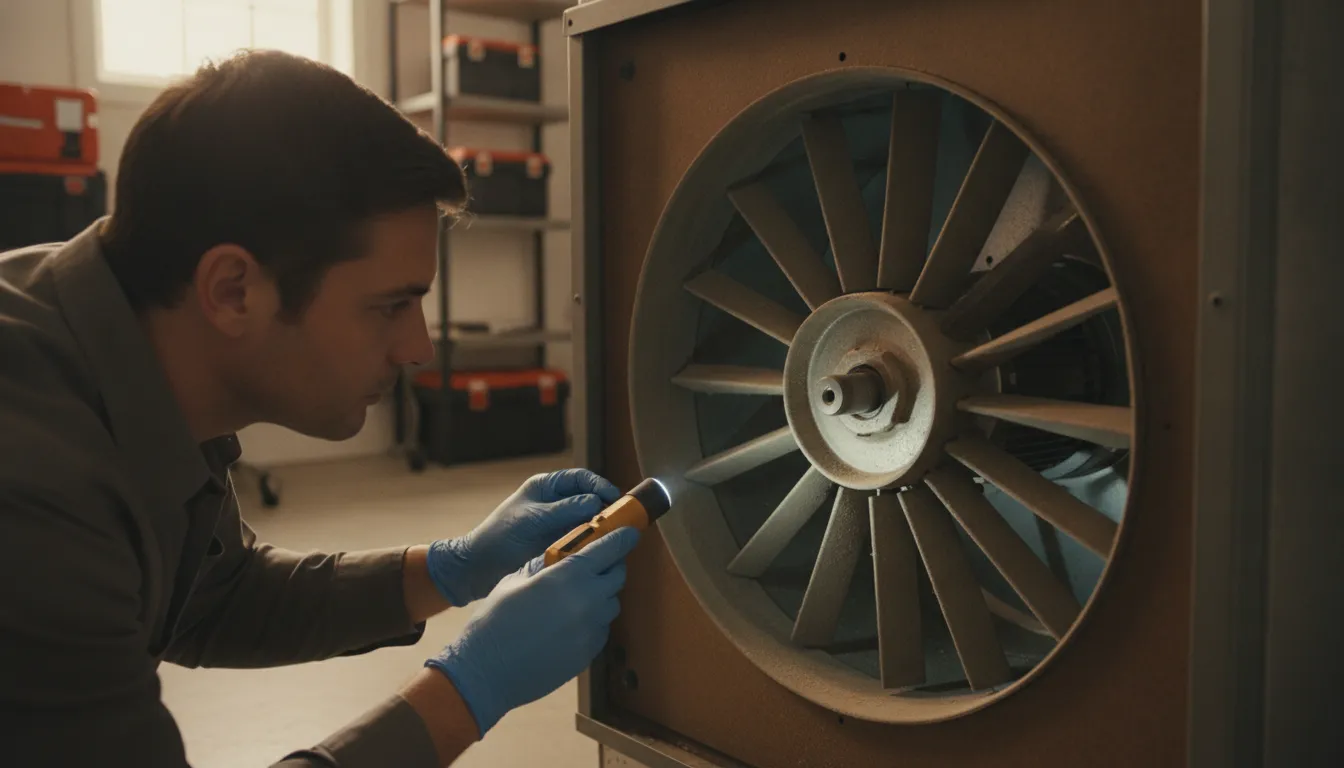
- Check the registers. Make sure supply registers and return grilles are not blocked by furniture, rugs, or stored items. Note whether airflow is weak everywhere or only in particular rooms.
- Listen and observe. Record when the sound occurs, whether the blower starts consistently, and whether the system stops unexpectedly. Note unusual humming, rattling, scraping, or a delayed start, but do not touch the assembly while it is operating.
- Use only normal user controls. If your system has an accessible service switch intended for routine homeowner use, do not repeatedly cycle it to test the equipment. Do not open the cabinet, handle wiring or capacitors, touch gas components, or approach spinning parts. Stop and request professional help if you smell gas, see smoke, or notice burning odors.
Professional testing can evaluate airflow and power performance under different conditions, which is more reliable than a homeowner guess. Share your observations with Bay Care so the technician can explain the next safe step.
How Does a Technician Diagnose a Furnace Blower Motor?
Bay Care begins with a professional assessment rather than treating every airflow complaint as a failed motor. A technician explains the findings clearly, checks the furnace as a complete system, and identifies whether the problem is mechanical, electrical, airflow-related, or connected to another control or safety issue.
The process typically includes these steps:
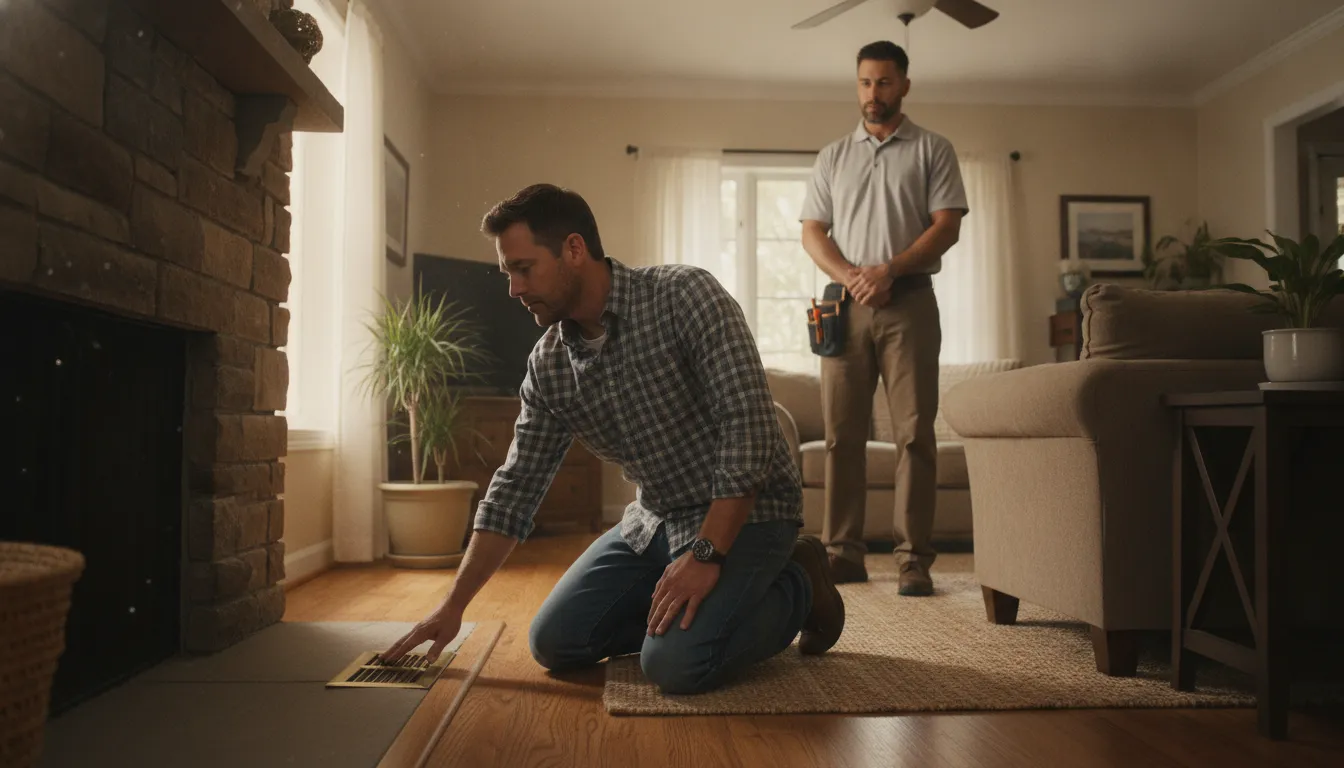
- Visual inspection: The technician examines the blower compartment, wiring, connectors, mounting hardware, and visible signs of overheating, contamination, or physical damage. The blower assembly includes the motor and wheel, and its arrangement can vary by furnace design.
- Airflow and performance testing: Proper diagnosis considers how much air the system moves under operating conditions, along with pressure, power use, and efficiency. Research on residential furnace blower combinations evaluates airflow performance across different airflow and pressure conditions, rather than relying on sound or temperature alone. The academic blower-performance study describes this broader testing approach.
- Electrical testing: A qualified technician checks the motor circuit and related components with appropriate professional equipment. Furnace blowers may use different motor technologies, including permanent split capacitor and brushless permanent-magnet designs, so the test method and expected readings depend on the equipment.
- Motor, capacitor, and wheel evaluation: The technician looks for a failing capacitor, worn motor bearings, restricted or damaged wheel, loose mounting, or debris that could reduce airflow. The goal is to identify the underlying cause instead of replacing a motor that is still operating correctly.
- Compatibility and system checks: If replacement is appropriate, horsepower, mounting arrangement, controls, and furnace specifications must match. A Department of Energy case study notes that motor upgrades are not universally compatible, because furnace size and mounting style can affect the available options. The technician also considers filters, duct restrictions, heat exchanger operation, and safety controls. For gas equipment, professional gas furnace safety testing helps keep the diagnosis focused on safe whole-system operation.
Bay Care can use these findings to explain whether service, a compatible motor replacement, or further furnace evaluation makes sense. This avoids guessing from one symptom and helps protect airflow, comfort, and system longevity.
Should You Repair or Replace the Blower Motor?
Bay Care can inspect a furnace blower motor, identify whether the problem is limited to a serviceable component, and explain whether repair, motor replacement, or broader equipment replacement makes the most sense. The right decision depends on the motor design, furnace condition, airflow needs, and compatibility of any replacement parts, not on one symptom alone.
A repair may be appropriate when the motor itself is sound and the issue involves a related, replaceable component. If the motor has failed, a like-for-like replacement or a compatible upgrade may restore operation. However, compatibility must be verified. DOE case-study findings show that motor horsepower, mounting arrangement, airflow, and operating mode all matter. Those findings provide useful context, not a universal result for every furnace.
| Option | When it may fit | What a technician evaluates |
|---|---|---|
| Repair | The fault is isolated to a related component or correctable condition, and the motor remains suitable for service. | Electrical and airflow performance, wheel condition, controls, and the cause of the failure. |
| Motor replacement | The motor has failed, but the furnace cabinet and heat exchanger remain in reasonable condition. | Horsepower, motor technology, mounting method, wiring, airflow requirements, and system compatibility. |
| Furnace replacement | Motor trouble occurs alongside major age, repeated failures, unsafe conditions, poor performance, or broader equipment concerns. | Overall reliability, safety, efficiency, repair history, distribution system, and replacement options. |
In one DOE field retrofit, technicians commonly completed motor replacements within two hours after becoming familiar with the product. That timing is specific to the studied retrofit and should not be treated as a promise for every home. The same case study reported lower average power use in some operating modes, while fan-only airflow was also lower by design. A careful comparison of furnace repair versus replacement helps keep the decision focused on total system performance.
When the furnace is older or has several related problems, replacing only the motor may postpone a larger decision. Bay Care can assess the complete system and explain the practical tradeoffs before work begins.
How Can Maintenance Help Prevent Blower Motor Problems?
Bay Care helps Delmarva homeowners protect blower reliability by looking beyond the motor itself. Preventive maintenance checks airflow, filter condition, duct performance, and system operation together. That whole-system approach can help reduce strain, identify developing concerns earlier, and support longer equipment life without promising that every motor failure can be prevented.
A clean, correctly installed filter supports proper airflow. A heavily loaded filter can make the system work harder, while blocked registers or restricted return air can also affect comfort and blower performance. During maintenance, a technician can inspect accessible airflow paths and look for conditions that may contribute to overheating, unusual operation, or uneven temperatures.
Duct conditions matter as well. The U.S. Department of Energy notes that improving heating and cooling distribution efficiency may produce energy savings, which reinforces why maintenance should include more than the furnace cabinet alone. Bay Care can evaluate whether duct restrictions, leakage, or poor distribution are contributing to symptoms that seem like a furnace blower motor problem. See this Maryland HVAC maintenance checklist for practical planning guidance.
What should routine service include?
- Reviewing filter condition and replacement needs.
- Checking airflow and temperature performance.
- Inspecting the blower assembly and related components.
- Looking for duct or distribution issues that affect system operation.
- Recording unusual sounds, cycling patterns, or comfort changes for follow-up.
Regular preventative maintenance is intended to help prevent premature equipment failure and extend equipment life. The right service interval depends on the equipment, use, indoor conditions, and manufacturer guidance. For more context, read about how often to service your HVAC system. Bay Care serves residential and commercial customers across the Delmarva Peninsula, with heating, cooling, and whole-home performance support.
Call Bay Care at 302-245-3365 to schedule heating service.
Frequently Asked Questions
How do I know if a furnace blower motor is bad?
Weak or missing airflow, unusual humming or grinding, intermittent fan operation, and uneven room temperatures can point to a blower problem. They are clues, not proof. A dirty filter, restricted duct, thermostat issue, or safety control can create similar symptoms, so a technician should confirm the cause.
What is a furnace blower motor?
The blower motor powers the fan that moves heated air through the ductwork and returns air to the furnace. In many central-air systems, that same blower also circulates cooled air. A problem with the motor or its related assembly can therefore affect heating, cooling, and fan-only operation.
Can I replace the blower motor in my furnace myself?
Blower-motor replacement is not a safe do-it-yourself project for most homeowners. It can involve electrical connections, capacitors, a heavy or spinning assembly, and model-specific compatibility requirements. You can check the thermostat, filter, registers, and normal user controls, but leave cabinet, wiring, and motor work to a qualified technician.
How much does it cost to replace a furnace blower motor?
The cost depends on the motor type, furnace model, required specifications, access, and whether another airflow or control problem is involved. A technician needs to inspect the system before giving a meaningful repair recommendation. Bay Care can explain the diagnosis and available options without relying on a guess based only on symptoms.
When should I call for furnace blower motor service?
Call for service when the furnace has little or no airflow, the blower repeatedly stops. The system makes a new mechanical noise, or comfort problems continue after checking the filter and thermostat. Bay Care provides heating repair and maintenance across the Delmarva Peninsula, with a focus on identifying the root cause and explaining the next step.
Schedule Heating Service With Bay Care
If your furnace blower motor is showing warning signs or your home is not getting heat. A professional inspection can help identify the cause and explain the next step. Schedule heating service with Bay Care for clear guidance on your furnace symptoms and repair options. Call Bay Care at 302-245-3365 to get started.