
A gas furnace can provide dependable heat across Delmarva, but reliable comfort depends on more than warm air coming from the registers. The system also needs safe combustion, clear airflow, sound ductwork, and maintenance that catches concerns before they interrupt your winter.
Call Bay Care at 302-245-3365 for qualified heating help.
A gas furnace burns fuel in a combustion chamber, transfers heat through a heat exchanger, and sends warmed air through ductwork while venting exhaust outdoors. Efficiency, filter condition, ventilation, and professional inspections all affect safe, dependable operation, so Bay Care evaluates the equipment and the surrounding home together.
The sections ahead explain how the system works, what homeowners can monitor safely, and which signs call for a qualified HVAC technician. Start with the components that turn fuel into useful heat.
What Is a Gas Furnace and How Does It Work?
A gas furnace uses controlled combustion to create heat, then moves that heat through your home’s ductwork. Bay Care Heating & Air helps Delmarva homeowners understand how the burner, heat exchanger, blower. Thermostat, and venting system work together, while keeping repairs and combustion work with qualified professionals.
When the indoor temperature falls below the thermostat setting, the thermostat signals the furnace to begin a heating cycle. A gas valve supplies fuel to the burner, where the gas ignites inside the combustion chamber. The burner does not heat your living space directly. Instead, it produces heat that transfers through a metal heat exchanger.
According to the Air-Conditioning, Heating, and Refrigeration Institute, cool indoor air is pulled back into the furnace through return ductwork. That air passes over the heated heat exchanger, warms up, and then moves through the supply ducts into rooms throughout the home. The blower motor controls this airflow and continues running long enough to distribute heat evenly.
The heat exchanger is important because it separates the combustion gases from the air your household breathes. After the burner operates, combustion exhaust travels through the furnace’s venting system and exits outdoors. Proper venting, burner operation, and heat-exchanger condition are matters for a trained technician, not homeowner experimentation.
Filters, return ducts, supply registers, and the blower all affect how effectively a gas furnace delivers heat. A dirty filter or restricted duct can reduce airflow, create uneven temperatures, and place additional strain on the equipment. Homeowners can replace filters according to the manufacturer’s guidance and keep registers open, but should not remove panels or attempt to adjust gas controls.
Understanding the sequence helps you describe symptoms accurately. Unusual odors, repeated shutdowns, strange sounds, visible soot, or a carbon monoxide alarm call for prompt professional attention. Bay Care can evaluate the furnace and the surrounding airflow, ductwork, ventilation, and insulation instead of treating the equipment in isolation.
What Does Gas Furnace Efficiency Really Mean?
Bay Care explains gas furnace efficiency as more than the percentage printed on an equipment label. AFUE describes how much of a furnace’s fuel becomes usable heat. Comfort and operating performance also depend on sizing, airflow, ductwork, the home’s envelope, and daily thermostat habits.
AFUE, or Annual Fuel Utilization Efficiency, is expressed as a percentage. It represents the share of fuel energy converted into usable heat over a typical operating season. The remaining energy is associated with exhaust and other operating losses. A higher AFUE label describes the furnace’s rated fuel-conversion performance under testing conditions. It does not guarantee a specific utility-bill result in every home.
That distinction matters because a gas furnace can have a strong efficiency rating and still perform poorly if it is not matched to the home. Correct sizing helps the system run in a way that supports consistent comfort instead of frequent, inefficient cycling. Airflow also matters. A dirty filter, restricted return, blocked supply register, or poorly balanced duct system can limit how effectively heated air moves through the house.
Duct leakage can allow conditioned air to escape before it reaches living spaces. Insulation and air sealing affect how long rooms hold the heat the furnace produces. Even thermostat habits influence operation. Large temperature setbacks or frequent manual adjustments may create longer recovery cycles, while a steady, reasonable setting can make comfort easier to manage. These factors should be evaluated together rather than treated as separate equipment problems.
| Efficiency factor | Why it matters |
|---|---|
| AFUE rating | Describes the furnace’s rated fuel-conversion performance under test conditions. |
| System sizing | Helps the equipment match the home’s heating needs and support steady comfort. |
| Airflow | Allows heated air to move through filters, ducts, registers, and living spaces. |
| Home envelope | Insulation and air sealing affect how well rooms hold the heat produced. |
When Bay Care evaluates a replacement or installation, the conversation can include the home’s layout, existing ductwork, airflow, insulation, and air-sealing needs, not only the furnace model. Explore gas furnace and heating installation options when you need a system selected for the home as a whole. The goal is a properly matched heating system and dependable distribution, not simply the largest number on a label.
How Often Should a Gas Furnace Be Maintained?
Bay Care recommends scheduling professional gas furnace maintenance once each year, ideally before the heating season begins. An annual checkup gives a qualified technician an opportunity to evaluate safe operation, heating performance, and components that homeowners should not open or adjust themselves. It also helps identify developing concerns before cold weather places heavier demands on the system.
That timing follows ENERGY STAR guidance, which recommends a pre-season contractor inspection for heating equipment. During a gas furnace visit, the technician should review the gas connections, burner combustion, heat exchanger, controls, electrical connections, and moving parts. The inspection should also confirm that the system is operating safely and that combustion gases are venting as intended.
What can homeowners check safely?
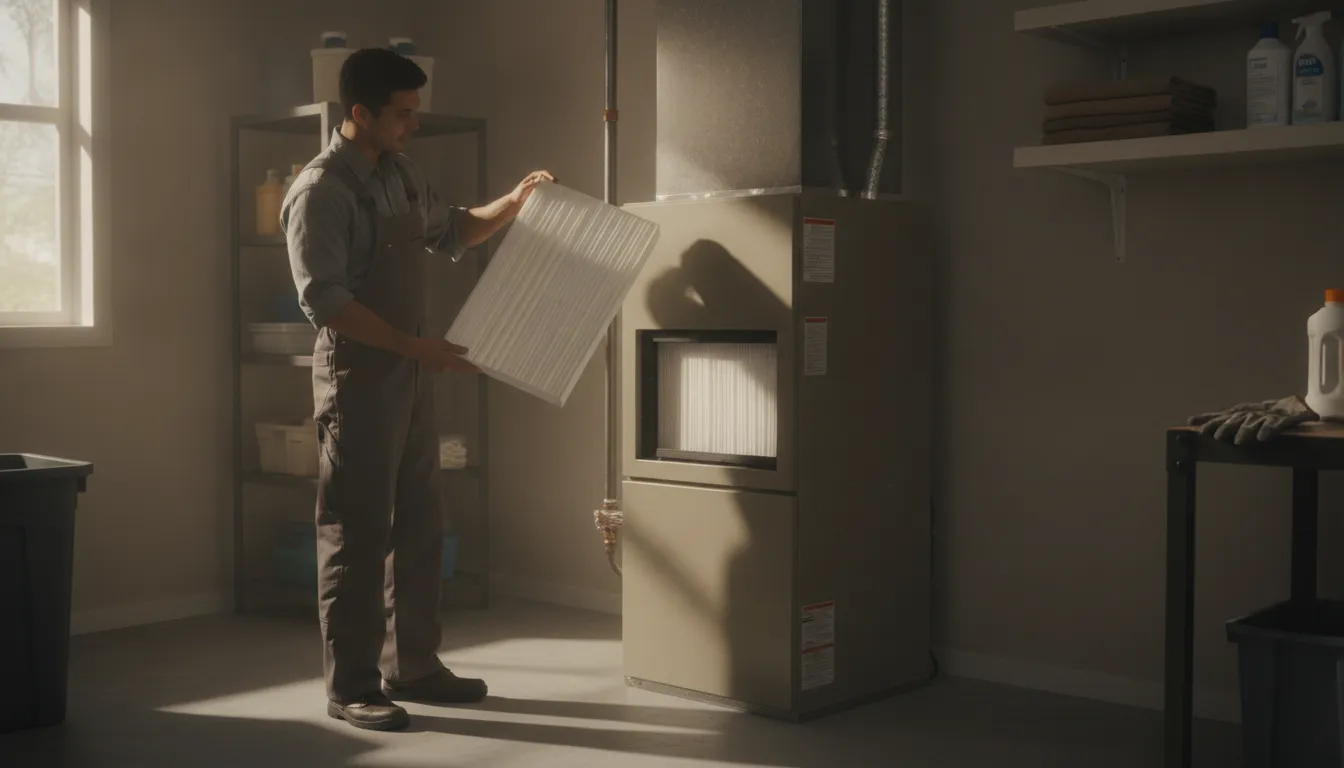
Homeowners can inspect the furnace filter regularly and replace it when it is dirty, using the filter size and replacement interval recommended for the system. A restricted filter can reduce airflow and make the furnace work harder. You can also keep the area around the equipment clear of stored items and avoid blocking supply or return vents.
Do not remove combustion covers, adjust gas controls, handle burners, or attempt to inspect the heat exchanger yourself. These parts affect combustion and safe operation. If you notice unusual odors, repeated shutdowns, unfamiliar sounds, visible soot, or signs of a venting problem. Turn off the equipment if it is safe to do so and contact a qualified heating professional.
Bay Care provides heating maintenance for homeowners across the Delmarva Peninsula. A technician can explain what was checked, note any concerns, and help you plan appropriate service without guessing at the condition of combustion components.
What Gas Furnace Safety Steps Matter at Home?
Bay Care helps Delmarva homeowners keep gas furnace operation focused on safe combustion, proper ventilation, and carbon monoxide awareness. Homeowners can reduce avoidable risks by scheduling professional inspections, maintaining working CO alarms, keeping the equipment area clear. And knowing exactly what to do if an alarm sounds or someone feels ill.
Carbon monoxide (CO) is especially dangerous because it is odorless and colorless. You cannot use your senses to detect it. The Air-Conditioning, Heating, and Refrigeration Institute (AHRI) recommends professional annual checks of a gas furnace, along with a CO alarm and an unobstructed equipment area.
Schedule professional checks
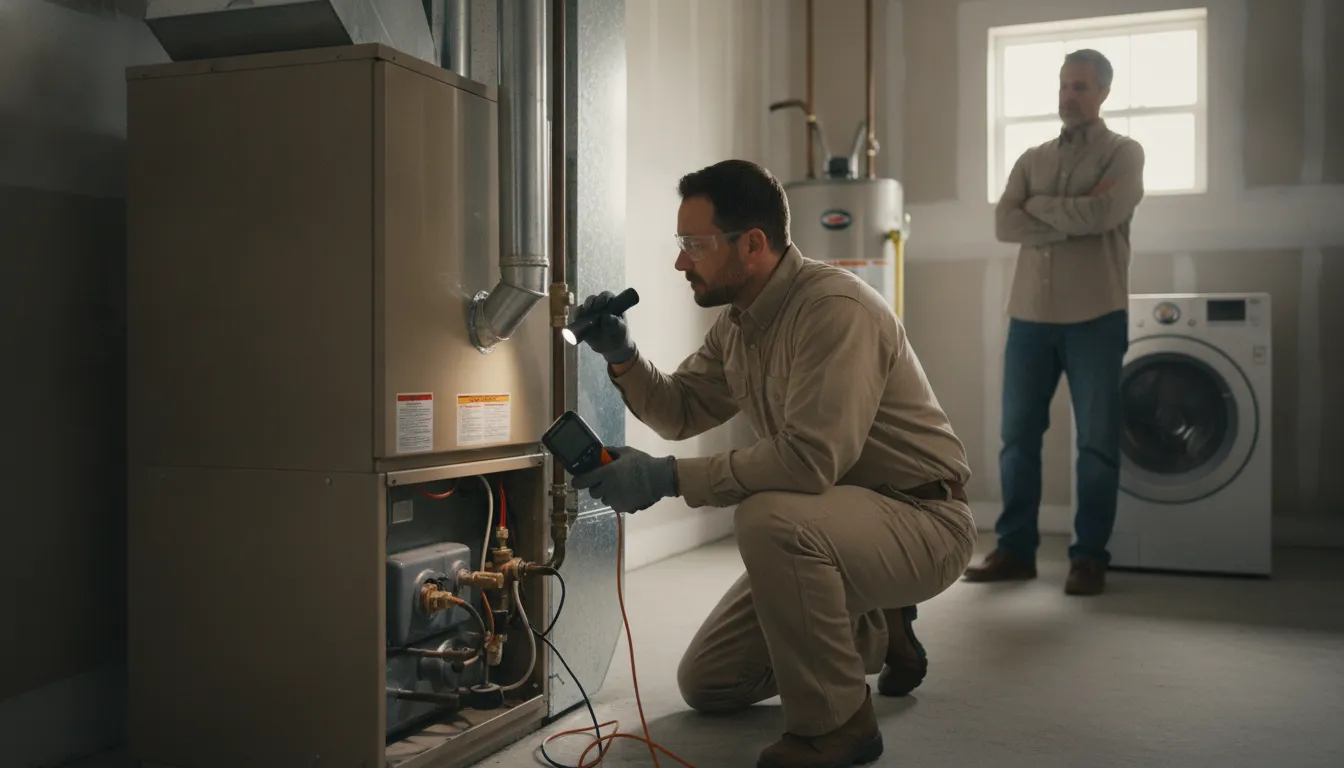
Have a qualified HVAC professional inspect the system annually, preferably before the heating season begins. A safety-focused visit can evaluate the furnace’s operation and identify conditions involving combustion, venting, or the heat exchanger. Those concerns are not appropriate for a homeowner to diagnose or repair. Bay Care can also assess related airflow and ductwork concerns as part of a whole-home heating review.
Do not attempt to adjust burners, repair gas connections, alter venting, or troubleshoot combustion components yourself. For a closer explanation of what technicians evaluate, read Bay Care’s detailed combustion safety testing for gas furnaces.
Place and test CO alarms correctly
The U.S. Consumer Product Safety Commission (CPSC) recommends installing CO alarms on each level of the home and outside sleeping areas. Follow the alarm manufacturer’s placement instructions, test each alarm monthly, and replace batteries annually unless the model uses a different approved power and replacement system. A working alarm is an important backup, not a substitute for professional furnace maintenance.
Keep the furnace area clear
Keep the area around the furnace unobstructed, and store combustible materials away from the equipment. Do not use the furnace room as a storage closet. Clear access makes professional service safer and helps prevent materials from being exposed to heat or interfering with required airflow and equipment operation.
Know what to do when an alarm sounds
If a CO alarm sounds, or anyone experiences symptoms that could indicate CO exposure, leave the home immediately. Call emergency services from outside, then do not re-enter until emergency personnel or another qualified authority says it is safe. Do not silence the alarm and continue investigating indoors. When the emergency is cleared, arrange for the gas furnace and related venting to be professionally evaluated before normal use resumes.
When Should You Repair or Replace a Gas Furnace?
Bay Care helps homeowners decide whether a gas furnace needs a targeted repair or a broader replacement evaluation. The right choice depends on the pattern of failures, how safely and consistently the system operates. The condition of related equipment, and whether the existing setup still fits the home. A qualified diagnosis should come before any recommendation.
Start with the symptoms, not the age alone
A furnace that stops producing heat needs prompt attention, but a single failure does not automatically mean replacement. A repair may be appropriate when the problem is isolated, the equipment is otherwise operating reliably, and the technician can restore safe performance. Repeated breakdowns, recurring ignition problems, or multiple repairs in a short period may justify comparing the longer-term value of replacement with another repair.
Pay attention to changes in operation between service calls. Strange sounds, unusual odors, short cycling, uneven temperatures, or a furnace that struggles to maintain the thermostat setting can point to equipment, airflow, ductwork, or control concerns. These symptoms do not identify the cause by themselves. Avoid attempting gas, electrical, combustion, or venting repairs, and arrange an assessment from a qualified technician.
When replacement deserves a closer look
Replacement may be worth evaluating when the system has become unreliable, safety concerns cannot be resolved through a practical repair, or its condition makes future service increasingly uncertain. Age can be a factor, but it should not be the only deciding point. The furnace’s maintenance history, heat exchanger and venting condition, repair pattern, comfort performance, and compatibility with the home all matter.
For a deeper comparison of the decision process, see furnace repair versus replacement. If replacement is being considered in Maryland, Bay Care’s guide to furnace replacement options in Maryland provides additional planning context without replacing an on-site evaluation.
What should a replacement evaluation include?
A qualified technician should size and select the replacement for the actual home, rather than simply matching the old furnace. Bay Care can consider square footage, layout, fuel source, design needs, ductwork, airflow, insulation, air sealing, ventilation, indoor comfort, and budget. This whole-home review can reveal whether equipment alone is the issue or whether related performance problems should be addressed at the same time.
Ask for the diagnosis, the recommended options, and the reason each option fits the home’s needs. That gives you a clear basis for deciding whether to repair now, plan a replacement, or address airflow and other home-performance concerns alongside the heating system.
How Can Whole-Home Improvements Help a Gas Furnace?
Bay Care evaluates a gas furnace as part of the home around it, not as an isolated appliance. Airflow, ductwork, insulation, air sealing, ventilation, and indoor air quality can all influence how evenly a home feels and how effectively the heating system operates. A whole-home review can reveal issues that equipment service alone may not address.
A furnace depends on a clear path for air to move from the living space, through the return ducts, across the system, and back through the supply ducts. Leaky, undersized, disconnected, or poorly insulated ducts can make some rooms uncomfortable while increasing the demand placed on the equipment. A homeowner may notice weak airflow, rooms that stay cold, dusty registers, or large temperature differences between floors.
Insulation and air sealing matter for a different reason. Gaps around attic penetrations, plumbing routes, recessed lights, doors, and windows can allow conditioned air to escape or outdoor air to enter. The furnace may continue running while the home struggles to hold a comfortable temperature. Improving the building envelope can support more consistent comfort, but the appropriate work depends on the home’s construction and existing conditions.
Ventilation and indoor air quality should also be considered. Tightening a home without evaluating how stale air, moisture, odors, and pollutants are managed can create a different set of comfort concerns. Bay Care can help homeowners consider ventilation, filtration, duct services, and other indoor air quality options alongside heating needs.
Ask about a whole-home assessment when a furnace appears to run normally but comfort remains uneven. When ductwork is difficult to access or visibly damaged, or when insulation and air leakage are concerns. An assessment can help prioritize improvements rather than guessing which project should come first. For homeowners planning a new system, Bay Care can also discuss gas furnace and heating installation in the context of the home’s layout, airflow, and design needs.
What Should You Ask a Gas Furnace Technician?
Bay Care recommends treating a furnace visit as an opportunity to understand the whole system, not just replace a single part. A qualified technician should explain what they found, what needs attention now, and how the furnace, ductwork, filtration, insulation, and ventilation affect comfort and safe operation.
- What is the condition of the furnace and heat exchanger? Ask the technician to explain any visible wear, unusual readings, or concerns in plain language. The heat exchanger separates combustion gases from the air your home receives, so concerns should be evaluated professionally rather than tested or repaired by a homeowner.
- Are combustion and carbon-monoxide safety checks needed? Ask what was checked and whether the furnace is operating safely. AHRI recommends professional annual checks for gas furnaces and carbon-monoxide alarms in the home. See Bay Care’s detailed combustion safety testing for gas furnaces for more context.
- Is the venting installed and operating correctly? Have the technician inspect vent connections, termination, and drainage where applicable. Do not modify venting or combustion components yourself. Ask whether anything could restrict exhaust or introduce safety concerns.
- Is the filter appropriate, and is airflow adequate? A filter that is too restrictive, dirty, or poorly fitted can affect airflow. Ask whether the blower, return path, supply registers, and ductwork are moving air as intended.
- Is the furnace properly sized for this home? If replacement is being discussed, ask how the recommendation accounts for square footage, layout, insulation, windows, ductwork, and heating needs. A larger furnace is not automatically the better choice.
- Does repair or replacement make more sense? Request the condition, urgency, likely future concerns, and available options in writing. Bay Care can help compare furnace repair versus replacement without relying on a single factor.
- What warranty and maintenance requirements apply? Ask what parts and labor coverage are included, what could void coverage, and which maintenance tasks should be scheduled before the next heating season. ENERGY STAR recommends annual pre-season professional maintenance through its maintenance checklist.
- Could ducts or insulation be contributing to the problem? If some rooms stay cold or the furnace runs longer than expected, ask whether airflow, duct leakage, air sealing, or insulation deserve evaluation. Bay Care’s whole-home approach considers these factors alongside equipment.
Call Bay Care at 302-245-3365 to schedule a professional furnace evaluation.
Frequently Asked Questions
How does a gas furnace heat a home?
A gas furnace burns fuel in a combustion chamber, transfers heat through a heat exchanger, and sends warmed air through ductwork. The combustion exhaust vents outdoors rather than mixing with household air. If airflow seems weak or rooms stay unevenly heated, have a qualified technician evaluate the furnace and duct system.
How often should a gas furnace be inspected?
Schedule a professional checkup before the heating season each year. ENERGY STAR recommends reviewing controls, electrical connections, moving parts, gas connections, burner combustion, and the heat exchanger during heating-system maintenance: ENERGY STAR maintenance checklist.
What should I do if I suspect carbon monoxide?
Leave the home immediately and call emergency services or the appropriate utility emergency line from outside. Do not re-enter until professionals say it is safe. Carbon monoxide is odorless and colorless, so install alarms on each level and outside sleeping areas, following CPSC carbon monoxide alarm guidance.
When should I call a furnace technician?
Call when the system will not start, repeatedly shuts down, makes unusual noises, produces a burning or gas odor, cycles frequently, or cannot maintain comfortable temperatures. Never attempt to repair gas, electrical, venting, or combustion components yourself. Bay Care can assess the equipment, airflow, ductwork, and ventilation together.
Can airflow or ductwork affect furnace performance?
Yes. A restricted filter, blocked register, leaking duct, or poorly balanced airflow can affect how heat moves through the home and how the system operates. A qualified HVAC technician can evaluate the furnace alongside ductwork, insulation, air sealing, and ventilation before recommending a repair or replacement.
Schedule a Gas Furnace Evaluation
A professional evaluation can help you understand your furnace’s condition, safety, and heating needs before the next season. Bay Care can also look at airflow and other whole-home factors that affect comfort. To discuss service for your Delmarva home, call Bay Care at 302-245-3365 or schedule an evaluation with the team.


