
HVAC decisions in Georgetown are rarely just about picking a new piece of equipment. The right choice depends on the home, the ductwork, the airflow, the indoor air quality, and whether the system needs a repair, maintenance visit, or replacement. This Georgetown DE HVAC guide gives homeowners a practical way to compare contractors, plan service, and ask better questions before work begins.
Call 302-245-3365 to schedule HVAC service or request a free second opinion.
A Georgetown DE HVAC guide should help you evaluate the whole home, not just the indoor or outdoor unit. Bay Care Heating & Air serves Georgetown from its Salisbury headquarters and can assess equipment, ductwork, insulation, air sealing, ventilation, and comfort together. That approach can clarify whether a focused repair, professional maintenance, airflow improvement, or properly sized installation makes the most sense.
Start with local HVAC service guidance for Delmarva homes, then use the sections below to understand what local context can change about contractor selection and system planning.
Why does a Georgetown DE HVAC guide need local context?
Georgetown homes do not all respond to HVAC recommendations in the same way. Bay Care Heating & Air connects comfort concerns with the home around the equipment, including ductwork, insulation, airflow, ventilation, and indoor air quality. That Whole Home view helps homeowners choose a solution that fits the property.
Housing variety is one reason a local HVAC conversation matters. The right service plan can depend on the home’s layout, construction, insulation, air sealing, duct design, and existing equipment. Humidity and ventilation also affect how a space feels. A system may be operating while certain rooms remain uncomfortable because conditioned air is not moving effectively. Outside air may enter through gaps. The home may also lack an appropriate way to manage indoor air quality.
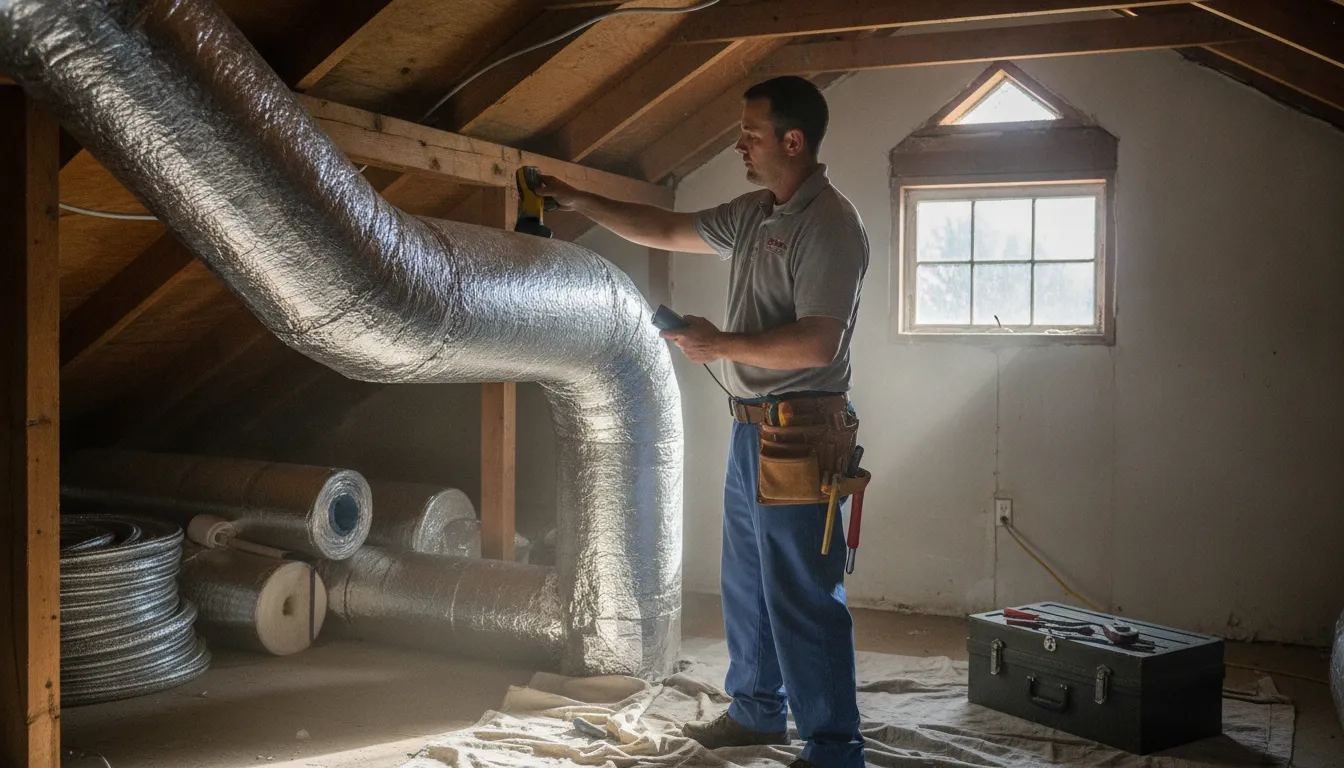
That broader view is Bay Care’s Whole Home approach. An assessment can consider HVAC equipment, ductwork, airflow, insulation, ventilation, air sealing, and indoor air quality together instead of assuming that replacement equipment will solve every complaint. For example, a homeowner who reports hot upstairs rooms or persistent stuffiness may need a closer look at distribution and the building envelope. A larger system may not be the answer.
Bay Care serves Georgetown within its Delaware and broader Delmarva territory from Salisbury, Maryland. Inland Sussex County homes can have different priorities from properties closer to the coast. The guide to Georgetown coastal HVAC risks covers salt-air exposure. This article focuses on choosing service, repairs, replacement, and installation.
For another regional perspective, review Bay Care’s whole-home comfort guide before assuming equipment replacement is the only answer.
How do you choose an HVAC contractor in Georgetown, DE?
Bay Care helps Georgetown homeowners evaluate HVAC contractors by looking beyond equipment brands and headline promises. A sound recommendation should connect the system to the home, including comfort, airflow, ductwork, insulation, ventilation, and indoor air quality. The right contractor explains what they found, what they recommend, and why the work fits the home’s needs.
Start with a basic trust check. Confirm that the company is licensed and insured, then ask about technician training and industry credentials. NATE-certified technicians, ACCA membership, and Bryant Factory Authorized Dealer status can be useful indicators of professional standards, but credentials should support clear communication rather than replace it. You should still receive direct answers to your questions.
- Request a written scope. The proposal should identify the equipment, work included, materials, disposal, controls, duct changes, permits if applicable, and any exclusions. Avoid relying on a verbal description of a major installation or replacement.
- Ask how the system will be sized. A contractor should assess the home instead of selecting equipment only by matching the old unit. Ask whether the evaluation includes comfort complaints, insulation, windows, airflow, and duct condition.
- Discuss the ductwork. A new or repaired system cannot deliver consistent comfort if air is restricted, leaking, or poorly distributed. Ask what the contractor observed and whether duct improvements are recommended.
- Clarify warranties and follow-up. Understand which parts and labor are covered, who handles warranty issues, and what maintenance or service support is available after the work is complete.
- Expect homeowner education. Before the job is closed, the technician should explain basic operation, filter access, thermostat settings, maintenance needs, and signs that deserve a service call.
For a deeper checklist covering quotes, sizing, warranties, and follow-up support, review this HVAC buyer’s guide. Bay Care’s whole-home approach is designed to help Georgetown homeowners make an informed decision, whether the next step is service, repair, or a carefully planned installation.
When should you repair or replace an HVAC system?
Bay Care helps Georgetown homeowners compare the condition of the equipment with the condition of the home before recommending repair or replacement. A practical review considers age, repair frequency, repair value, efficiency, comfort, airflow, ductwork, insulation, and air sealing. That whole-home perspective keeps one failing component from becoming the only factor in a major decision.
| Factor | Repair may make sense when… | Replacement evaluation may help when… |
|---|---|---|
| System age | The equipment is in generally sound condition and the problem is limited. | The system is older, especially beyond 15 years, and performance concerns are accumulating. |
| Repair history | Repairs have been occasional and have restored dependable operation. | Breakdowns are becoming frequent or several major components need attention. |
| Comfort and efficiency | A targeted repair can correct the issue without leaving persistent hot or cold rooms. | Uneven temperatures, weak airflow, or declining efficiency continue after appropriate repairs. |
| Home performance | The ducts, insulation, and air sealing support the existing equipment. | The equipment is being asked to overcome duct, insulation, or airflow problems that also need attention. |
Age alone does not settle the question. Bay Care’s guidance is that systems over 15 years old may deserve a replacement evaluation, not an automatic replacement. A technician should identify the failure, explain the likely repair outcome, and look for conditions that may be driving repeated stress. Sometimes the best next step is a focused repair. In other cases, continued repairs may provide less dependable comfort than planning a properly sized system.
Airflow deserves special attention because equipment can appear to be failing when the larger issue is restricted or poorly balanced distribution. Before assuming the equipment must go, review ways to improve HVAC airflow. Bay Care can also assess ductwork, insulation, air sealing, ventilation, and indoor air quality as part of a broader evaluation.
What should a Georgetown HVAC installation include?
Bay Care approaches HVAC installation as a whole-home project, not simply an equipment swap. For Georgetown homeowners, that means connecting the new system to the home’s ductwork, airflow, insulation, ventilation, and comfort needs. A careful installation supports reliable operation and gives you a clear understanding of how to use and maintain the equipment.
- Review the home’s heating and cooling needs. The contractor should perform load calculations before recommending equipment. This creates a reasoned starting point instead of choosing a system from the old unit’s label alone.
- Size the system appropriately. Equipment selection should reflect the home’s layout and calculated demand. Oversizing or undersizing can affect comfort, cycling, humidity control, and operating performance, so the recommendation should be explained in plain language.
- Inspect ducts and airflow. The installation plan should account for duct condition, airflow restrictions, insulation, and the building envelope. If the distribution system cannot move air effectively, replacing the central equipment alone may not resolve uneven rooms or persistent comfort complaints.
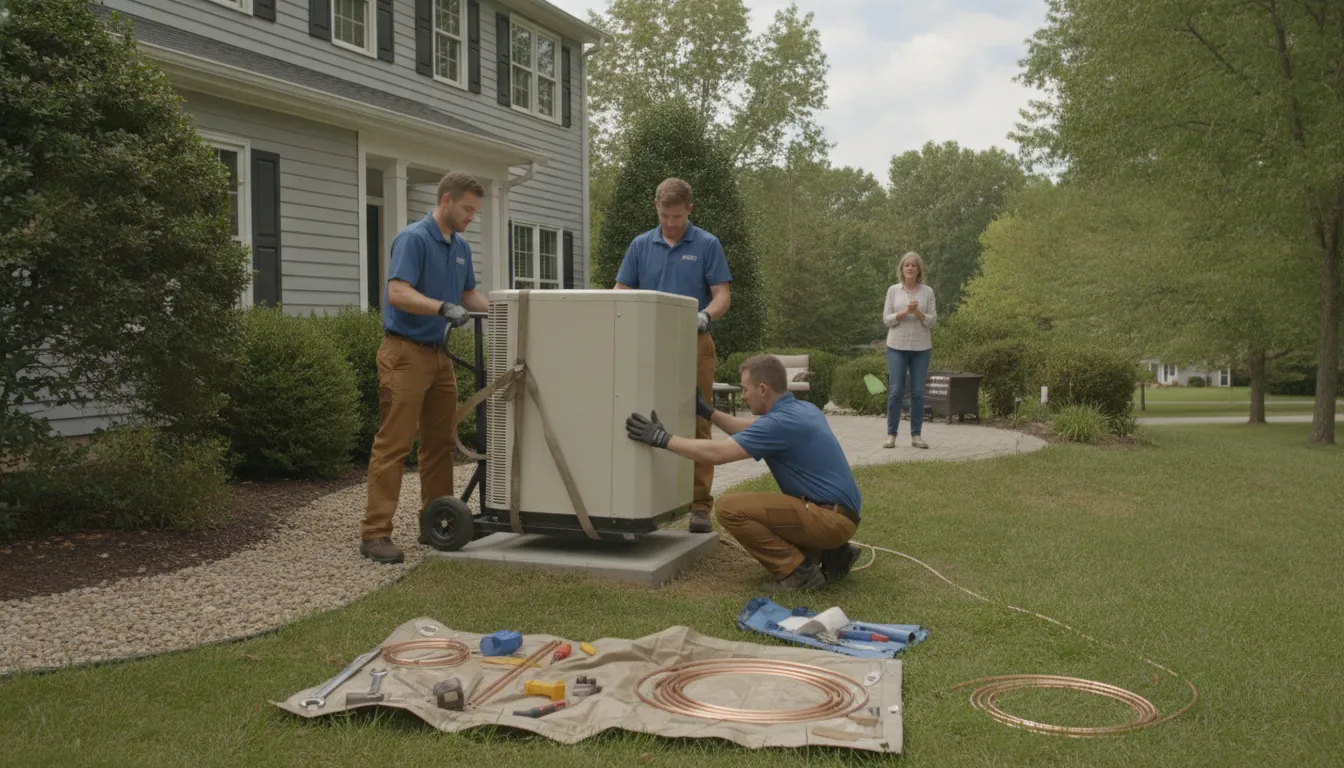
- Complete the setup professionally. This includes properly placing and connecting the equipment, following manufacturer requirements, and protecting the work area. Bay Care identifies professional setup and a clean work environment as parts of proper installation.
- Commission the system. Before the crew leaves, the installer should confirm that the equipment operates correctly and that controls, airflow, and key connections are ready for normal use. Ask what was checked and whether any follow-up items remain.
- Explain operation and care. Homeowner education should cover controls, filter access, routine care, and signs that service may be needed. For an overview of the work involved, see Bay Care’s AC installation and replacement service.
Which HVAC systems fit Georgetown homes and businesses?
Bay Care helps Georgetown property owners compare equipment against the building, not just a manufacturer’s brochure. The right choice depends on heating and cooling loads, available ductwork, zoning needs, indoor air quality, occupancy, and the condition of the building envelope. A whole-home review may also identify airflow, insulation, air sealing, or ventilation problems that equipment alone will not solve.
| System | Often fits | Planning questions |
|---|---|---|
| Central air conditioning and forced-air heating | Homes or businesses with usable ductwork and a conventional distribution layout | Are the ducts sized, sealed, and balanced? Is the equipment properly matched? |
| Heat pump | Properties seeking heating and cooling from one system, when the design and comfort needs are suitable | Will the home support the selected system? What backup, controls, and electrical requirements apply? |
| Ductless mini-split | Additions, converted spaces, older buildings without practical ductwork, or areas needing separate control | Where should indoor units go? How will condensate, line sets, filtration, and room-by-room comfort be handled? |
| Commercial HVAC planning | Offices, retail spaces, workshops, and other properties with changing occupancy or operating schedules | What are the ventilation, zoning, controls, maintenance, and business-continuity requirements? |
Heat pumps can provide heating and cooling in one system, but suitability depends on the property, existing distribution, comfort goals, electrical setup, and installation design. Bay Care can evaluate those details before recommending heat pump systems.
For a business, equipment selection should account for occupied hours, critical rooms, ventilation, service access, and what happens if comfort equipment is unavailable. For a residence, room-to-room comfort and duct performance may matter just as much as the outdoor unit. Bay Care’s licensed and insured team can connect system selection with maintenance, airflow, and indoor air quality rather than treating the equipment as an isolated purchase.
How can Georgetown homeowners maintain comfort through every season?
Bay Care Heating & Air helps Georgetown homeowners protect comfort by combining simple homeowner checks with professional HVAC maintenance and whole-home troubleshooting. That means looking beyond the equipment when needed. Filters, ductwork, airflow, ventilation, insulation, and indoor air quality can all affect how consistently a home feels from room to room. Bay Care’s maintenance work can also account for the needs of heat pumps, ductless systems, and conventional heating and cooling equipment.
Start with the observations you can make at home
Pay attention to changes instead of waiting for a complete breakdown. A filter that looks loaded with dust or rooms that become harder to keep comfortable may signal a developing issue. Weak airflow at a register, unusual sounds, or repeated thermostat adjustments are useful details for a technician. Keep supply and return grilles clear, and make sure furniture, curtains, or storage are not restricting airflow. If one area remains uncomfortable, the HVAC unit may not be the only issue. A duct, insulation, air-sealing, or ventilation concern could be contributing. Bay Care’s guidance on how to improve HVAC airflow can help homeowners understand what to check before assuming replacement is necessary.
Use professional maintenance to inspect the system
Homeowner tasks and contractor tasks are different. A professional visit should be appropriate to the equipment and may include inspection and cleaning, airflow review, and attention to components that are not safe or practical for a homeowner to service. Heat pumps deserve particular attention because they provide both heating and cooling and need proper operation and maintenance to function as intended. Keep service records and share recurring symptoms so the technician can look for patterns rather than treating each visit as an isolated event.
Separate indoor air quality from coastal corrosion
Indoor air quality may call for source control, filtration, or improved ventilation. The EPA identifies those as basic strategies, while noting that most forced-air systems do not mechanically bring fresh air indoors. Kitchen and bathroom exhaust fans that vent outdoors can help remove contaminants directly from those rooms.
Coastal corrosion is a separate outdoor-equipment concern. Georgetown is inland, but salt air can still matter across Sussex County, especially for properties closer to the coast. Review Georgetown coastal HVAC risks separately rather than treating corrosion as ordinary seasonal maintenance. Bay Care can help determine whether equipment condition, airflow, indoor air quality, or coastal exposure deserves attention first.
Frequently asked questions about HVAC in Georgetown, DE
These answers summarize the decisions Georgetown homeowners most often face when choosing service, planning maintenance, or considering a replacement. Bay Care Heating & Air can help evaluate the equipment and the whole-home conditions around it.
What should I ask an HVAC contractor before hiring them?
Ask whether the contractor is licensed and insured, and who will perform the evaluation. Ask how the system will be sized, and whether the written scope includes ductwork, airflow, warranties, maintenance, and homeowner education. Credentials such as NATE certification and Bryant Factory Authorized Dealer status can provide useful context, but the contractor’s process should still be clear.
How do I know whether to repair or replace my HVAC system?
Consider the system’s age, repair frequency, comfort problems, efficiency, and the value of another repair. Equipment more than 15 years old may deserve a replacement evaluation, but age alone is not a reason to replace it. A contractor should also check airflow, ductwork, insulation, and other whole-home factors before recommending equipment.
Are heat pumps a good option for Georgetown homes?
Heat pumps can provide heating and cooling in one system. The right choice depends on the home’s design, existing distribution system, comfort goals, electrical setup, and installation plan. A qualified contractor should compare the option with the home’s current needs rather than treating one equipment type as right for every property.
What maintenance can a homeowner handle?
Homeowners can monitor comfort changes, keep supply and return areas clear, check filters according to the equipment instructions, and note unusual sounds, odors, or cycling. Professional maintenance adds equipment inspection, cleaning, corrective work, and safety checks. If rooms remain unevenly comfortable, ask about airflow, ductwork, insulation, and ventilation instead of assuming the equipment alone is at fault.
Can Georgetown homeowners use Delmarva Power rebates?
Rebate eligibility depends on the program, location, equipment, and current terms. Georgetown is in Delaware, so Maryland-specific Delmarva Power offers should not be presented as automatically available. Ask the contractor to identify which programs apply to your property before making a purchase. Bryant systems may also qualify for 0% APR for 60 months for qualified buyers, subject to approval and current program terms.


