A heater problem can start as an uncomfortable room, but some warning signs need action before you think about routine heater repair. For Delmarva homeowners, the key is to recognize possible fire, fuel, or carbon monoxide danger, protect people in the home, and avoid trying to diagnose equipment beyond simple, safe checks.
Contact Bay Care about a heater repair concern
Not every unusual sound or cold vent is an emergency. This guide explains what to do first, when to leave the home, which checks are reasonable, and what details to share with a technician. It is not a substitute for emergency services or an on-site inspection.
Which heater warning signs need immediate action?
Bay Care recommends treating alarms, fuel odors, smoke, visible flames outside the burner area, and electrical hazards as safety concerns—not ordinary comfort complaints. Move people away from danger first. Do not spend time troubleshooting an appliance when a carbon monoxide alarm sounds, a strong gas odor is present, or smoke or fire is visible.
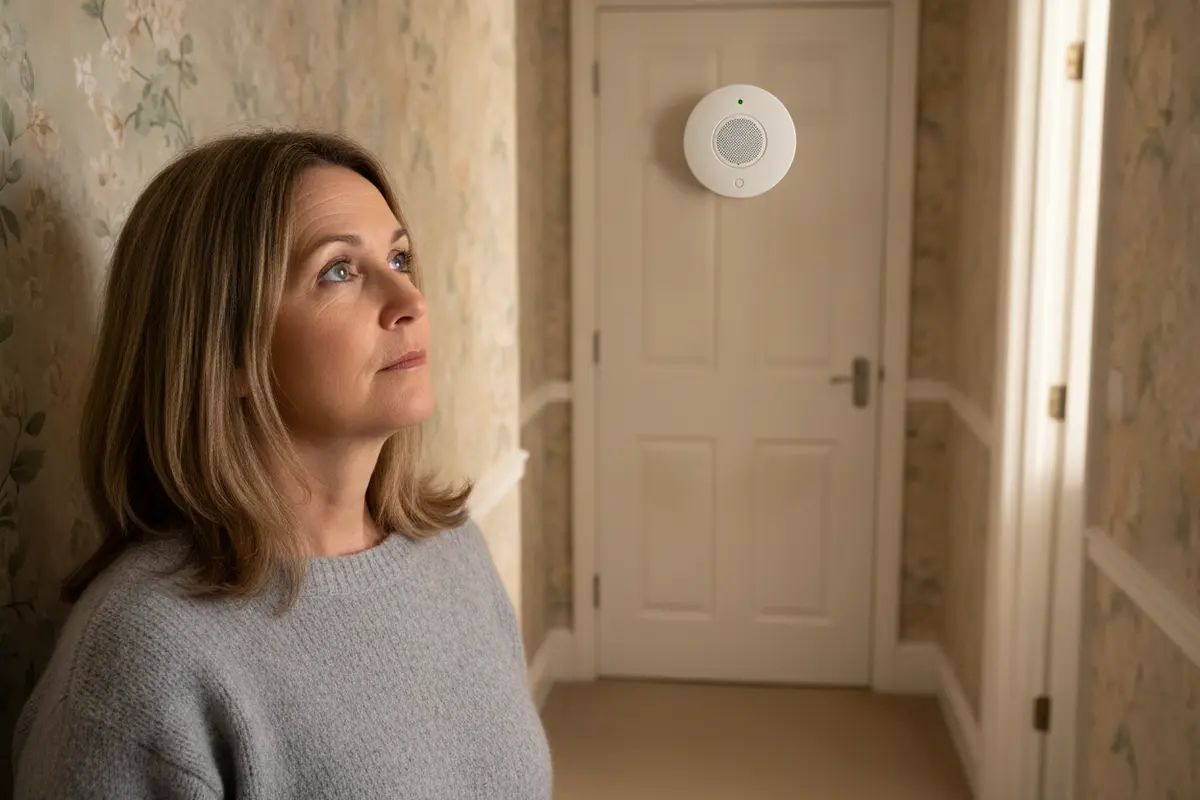
- A carbon monoxide alarm sounds. Get everyone, including pets, outside into fresh air. Call 911 or the appropriate emergency service from outside, and do not go back in until responders say it is safe.
- You smell natural gas or suspect a fuel leak. Leave the building. Do not light a flame, operate electrical switches, or use a phone inside. Once outside and away from the odor, call 911 or the gas utility’s emergency line. Follow their directions.
- You see smoke, flames where they should not be, or active sparking. Leave and call emergency services. Do not open the furnace cabinet or attempt to put out a fire unless emergency professionals direct you and you can do so without risk.
- You notice a strong burning or melting-plastic odor. If there is smoke, sparking, or an escalating smell, leave and call for emergency help. If there is no immediate danger, turn the system off at the thermostat if you can do so safely and contact a qualified technician.
Carbon monoxide has no reliable smell or color. A lack of odor does not rule it out. Treat an alarm as real even if you feel fine, and seek medical help if anyone has headache, dizziness, nausea, weakness, confusion, or unusual drowsiness after a possible exposure.
When is a heating outage urgent even without an alarm?
Bay Care advises homeowners to consider indoor temperature, weather, and who is in the home when deciding how quickly to seek help. A heater that stops during a mild afternoon is different from a no-heat failure during freezing weather, especially when infants, older adults, or people with medical needs may be affected.
Arrange prompt help if the system stops working during a cold spell, the indoor temperature is dropping, or the home cannot stay safely warm. If the temperature is already dangerously low, someone is becoming ill, or a medical device depends on power or heat, relocate to a safe warm place and contact emergency or medical services as appropriate. Do not wait for an HVAC appointment if a person needs urgent care.
Other reasons to request timely service include repeated shutdowns, a breaker that trips again after one reset, water around equipment, a new loud scraping or banging sound, or heat that comes and goes. These symptoms do not prove a specific component has failed. They do mean the system should be evaluated rather than repeatedly restarted.
For a gas furnace that will not heat, use the guidance on gas furnace no-heat troubleshooting only for basic, safe observations. Heat pumps have different operating behavior, so a homeowner with that system can review Bay Care’s heat pump no-heat information. If you suspect a hazard, skip online troubleshooting and leave the home.
What should you do if a carbon monoxide alarm sounds?
Bay Care’s first priority in a suspected carbon monoxide event is people, not the heater. Get everyone outdoors immediately, call emergency services from a safe location, and wait for responders to check the home. Do not silence the alarm and continue using the heating system, and do not re-enter to retrieve belongings.
- Tell everyone to leave by the nearest safe exit. Help children, older adults, and anyone who may need assistance, but do not delay evacuation to investigate.
- Once outside, call 911 or the emergency number recommended for your area. State that a carbon monoxide alarm sounded and give the address.
- Get medical advice for anyone with symptoms or possible exposure, even if symptoms seem mild.
- Wait for emergency responders to determine when the building is safe. Do not restart the heater unless responders and a qualified professional say it is appropriate.
- After the immediate danger is cleared, arrange a professional inspection to identify and address the cause before normal use resumes.
Do not assume the alarm is faulty because it stops sounding or because no one feels sick. Likewise, do not rely on opening a window as a fix. Follow the alarm manufacturer’s instructions for routine testing and replacement, but an active alarm requires the emergency response above.
What can you check safely before calling for heater repair?
For a heater with no danger signs, Bay Care suggests limiting homeowner checks to visible controls and conditions that do not require opening equipment. A thermostat setting, a closed supply register, or a tripped breaker may explain a simple interruption, but repeated resets, panel removal, and work on gas or electrical parts are not safe diagnostic shortcuts.
- Check whether the thermostat is set to heat and whether its set temperature is above the room temperature. If the display is blank, check only the battery or power step described in its manual.
- Confirm that the heating system has not been switched off at an ordinary user control. Do not remove a furnace door or bypass a safety switch.
- Look at the circuit breaker once. If it has tripped, you may reset it once only if there is no burning smell, water, visible damage, or other hazard. If it trips again, leave it off and call a professional.
- Check whether furniture or curtains are blocking room registers. Do not cover return grilles or block combustion-air openings.
- If the filter is readily accessible and the equipment manual explains how to replace it, check whether it is heavily loaded. Do not force a filter into place or operate equipment with an access panel removed.
- Note what the system is doing: whether it starts, how long it runs, whether air comes from the vents, and whether the display shows a message. Take a photo of the display if it is safe and useful.
Stop if a check requires tools, entering a cramped or unsafe space, touching wiring, opening a gas line, reaching near moving parts, or handling hot components. Avoid repeated thermostat cycling or repeated power resets. If the system shuts down again, let a technician diagnose it. Bay Care’s heating FAQ and troubleshooting resources can help you identify what information to gather, not replace an inspection.
How do you tell an urgent hazard from a service problem?
Bay Care separates immediate life-safety concerns from problems that need prompt but planned service. Use the table as a triage aid, not a diagnosis: when there is uncertainty about gas, smoke, carbon monoxide, or fire, choose the safer response and contact emergency responders.
| What you notice | First response | Next step |
|---|---|---|
| Carbon monoxide alarm, possible gas leak, smoke, fire, or active sparking | Leave the home; avoid operating switches or investigating the equipment | Call 911 or the appropriate emergency service from a safe location; wait for clearance |
| No heat during freezing weather or indoor temperature falling quickly | Protect people who may be vulnerable and move to a warm place if needed | Request prompt professional service; use emergency or medical help if someone is at risk |
| Repeated shutdown, breaker trips again, unusual new noise, or intermittent heat | Stop repeated resets; turn the system off if safe | Arrange a technician evaluation and describe when the symptom occurs |
| Thermostat setting, blocked register, or routine filter concern with no hazard signs | Check the user control or visible condition using the equipment manual | If the issue remains, schedule service rather than opening or modifying the equipment |
There is no single symptom that can identify the failed part without checking the system. For example, a furnace that starts and stops could have several causes, and a cold room may reflect airflow or building-envelope conditions as well as the heater. Bay Care takes a whole-home view of comfort, including equipment, airflow, insulation, and air sealing.
While waiting for non-emergency service, focus on people rather than trying to force the equipment to run. Close doors to unused rooms if that helps concentrate warmth, add ordinary layers, and check on anyone who is sensitive to cold. If the house is losing heat quickly, make a plan to stay with someone or go to a warm public location. Do not use a gas range, oven, grill, or outdoor generator to heat indoor space; equipment used for cooking or backup power can create fire or carbon monoxide hazards when used incorrectly.
If you use a portable electric heater as a temporary measure, follow its manufacturer’s instructions, place it on a stable surface away from bedding, curtains, and foot traffic, and do not leave it unattended or use it with an extension cord unless the instructions expressly allow that setup. Keep children and pets away. A temporary heater does not resolve the cause of a system failure, and it should never be used to justify staying in a home with a suspected fuel leak, smoke, or carbon monoxide alarm.
What should you tell the technician?
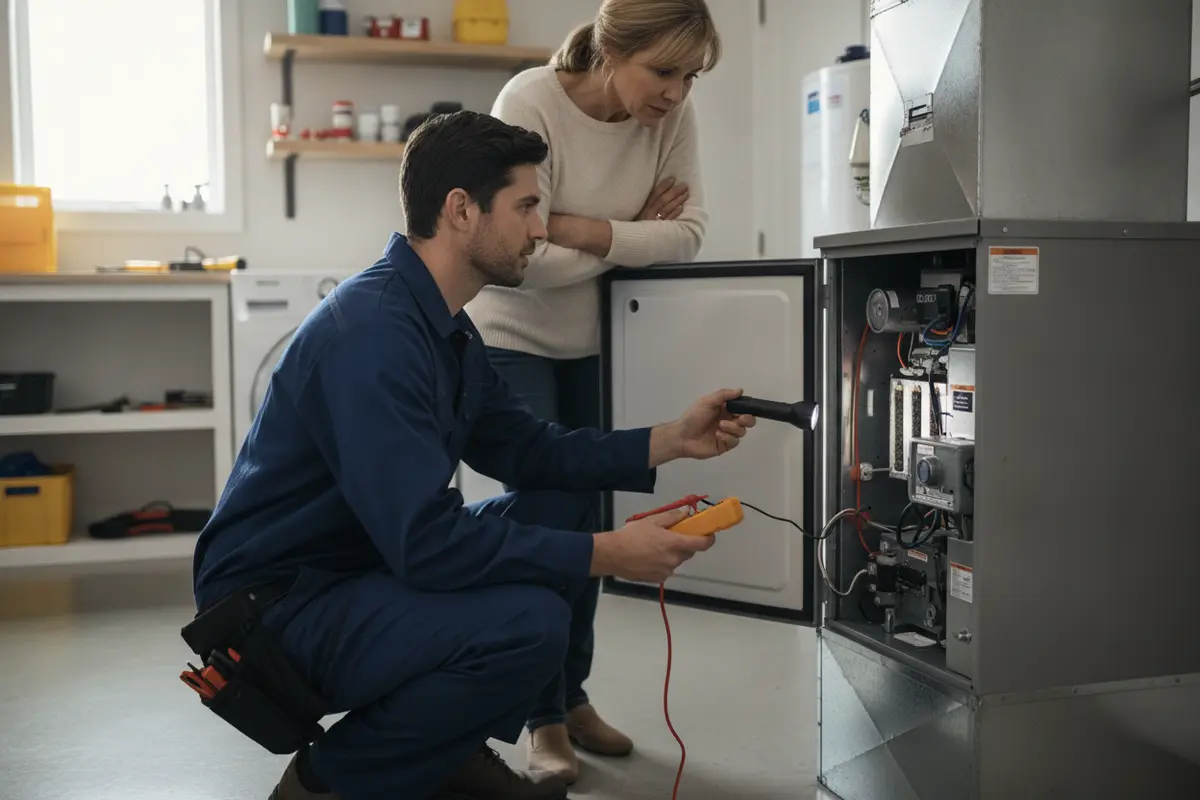
Bay Care can use a clear symptom history to plan a more useful heater repair visit. Share what happened, when it began, what you observed, and which safe checks you made. Do not try to reproduce a dangerous symptom for the technician; report it from a safe place and keep the equipment off if that is the safer choice.
Before contacting a service provider, note:
- Your address and whether the system is a furnace, boiler, heat pump, or another type, if known.
- Whether the heater stopped completely, runs without warming the home, or cycles on and off.
- When the issue started and whether it changes with outdoor temperature or time of day.
- Any alarm, odor, smoke, leak, unusual sound, or error message—without approaching a suspected hazard.
- Whether the thermostat display is working and whether a breaker has tripped more than once.
- Who is in the home and whether a no-heat condition creates a health or safety concern.
When service is arranged, ask what to do with the system while you wait, especially if it is cycling, making a new noise, or has shut itself off more than once. If you are told to leave it off, do not turn it back on to test it. Keep any alarm message or notes available, and make sure the technician can safely reach the equipment. Clear a path without moving or touching anything that may be hot, wet, damaged, or involved in a suspected leak.
During the visit, ask the technician to explain the finding in plain language and distinguish an immediate safety or operating issue from optional improvements. If a repair cannot be completed at once, ask whether the heater can safely remain off, whether temporary measures are appropriate, and what signs should prompt another call. Record the recommendation and any next steps so that repeat symptoms can be compared rather than reconstructed from memory.
If an alarm or fuel odor is involved, tell emergency responders first. A service appointment is not a substitute for emergency response. For non-emergency questions, Bay Care’s heating repair service information explains the type of help to request. Homeowners can also review heating maintenance options for planning after the immediate fault is addressed.
How should you plan for the repair or a larger home issue?
Bay Care looks beyond the heater when a recurring comfort problem may involve airflow, insulation, air leakage, or ventilation. Once urgent hazards are ruled out, ask the technician to explain what was found, what needs attention now, and what can be planned later. A repair recommendation should connect the observed condition to the proposed work.
Useful questions include: What test or observation supports the diagnosis? Is the system safe to operate before the work is completed? What parts or adjustments are proposed? Are there options, and what are the trade-offs? If the same area remains cold after the heater is working, could duct distribution, air leakage, or insulation be contributing?
When the concern seems broader than one equipment fault, an energy audit can help assess how the home uses energy and where comfort issues may originate. Bay Care also provides attic insulation and duct sealing as parts of a whole-home approach. These options are not substitutes for correcting an active safety hazard.
Home repair assistance may be available to some households, but eligibility, terms, and covered work vary by program. The USDA’s Single Family Housing Repair Loans & Grants program describes federal repair-loan and grant options for eligible rural homeowners. Review the official program details directly; do not assume a repair is covered or delay urgent safety action while exploring financial assistance.
How can you reduce the chance of another cold-weather interruption?
Bay Care recommends planning before the coldest weather arrives, especially if the heater has needed repeated resets or the home has rooms that are consistently uncomfortable. Preventive attention cannot guarantee that equipment will never fail, but it gives a technician a chance to identify service needs and lets a homeowner make a plan before a breakdown becomes urgent.
- Arrange seasonal system maintenance according to the equipment manufacturer’s guidance and the home’s needs.
- Keep the thermostat, filter access, and visible registers clear. Replace filters as directed for the particular system.
- Test smoke and carbon monoxide alarms as directed by their manufacturers, and replace units or batteries when required.
- Know how to shut off the system using the normal user control, but do not attempt to operate unfamiliar fuel shutoffs during a suspected leak.
- Keep a written note of equipment type, recent service, recurring symptoms, and the right contact number.
- Consider whether persistent drafts or uneven rooms warrant a broader review of insulation, ducts, or air sealing after the heater is operating safely.
For replacement planning—not a response to an active emergency—compare the condition of the equipment, repair findings, comfort needs, and available options. Bay Care’s heating installation information and heat pump overview can help homeowners understand possible system paths. The right choice depends on the home and an on-site assessment, not a single symptom or a general rule of thumb.
Contact Bay Care to discuss a heating concern or request service
Frequently asked questions about heater repair
Bay Care encourages homeowners to make safety the first decision and equipment diagnosis the next one. These answers cover common questions about urgent heater symptoms and the limits of simple homeowner checks; when danger is possible, follow emergency instructions instead of continuing to read or troubleshoot.
Should I keep running the heater if it smells strange?
No. If you smell gas or suspect a fuel leak, leave immediately and call emergency services or the utility from a safe location. Smoke, sparking, or a strong burning odor also calls for caution; shut the system off only if you can do so safely, and seek emergency help if the situation appears dangerous.
Can I reset a breaker that tripped when the heater stopped?
If there are no signs of water, burning, damage, or another hazard, a homeowner may reset an ordinary breaker once. If it trips again, leave it off and contact a qualified technician. Repeated resets can conceal an electrical or equipment problem and are not a repair.
What should I do if the heater stops during freezing weather?
Protect anyone who may be vulnerable to cold and move to a warm location if the home is becoming unsafe. Request prompt heating service. If a person is ill or at immediate risk, contact emergency or medical services rather than waiting for an HVAC visit.
Does a carbon monoxide alarm mean the heater is definitely the source?
Not necessarily, but the source is not something to identify by staying indoors. Evacuate, call emergency responders from outside, and wait for the home to be declared safe. Arrange appropriate professional evaluation before returning the heating system to normal use.
Can I diagnose a furnace by opening its panel?
No. Do not remove equipment panels, bypass safety switches, or work on fuel lines or wiring. Limit checks to normal user controls and visible conditions described in the equipment manual. Give the technician a clear account of what the system did.
What is the safest next step?
Bay Care’s practical guidance is simple: leave and call emergency responders for an alarm, suspected fuel leak, smoke, fire, or dangerous electrical condition; protect people during a serious no-heat event; and arrange professional service for recurring or unexplained problems. Safe triage helps you choose the right next step without putting yourself or your household at risk.