
Heating and air conditioning in Laurel, DE has to handle humid summers, cold winter periods, and quick changes between seasons. For Sussex County homeowners, a comfortable home depends on more than the outdoor unit. Equipment, ductwork, insulation, air sealing, ventilation, and indoor air quality all influence how evenly and efficiently a home performs.
Call Bay Care at 302-245-3365 to discuss heating and air conditioning service in Laurel, DE.
Bay Care helps Laurel homeowners connect an HVAC symptom with its likely cause. A whole-home review can distinguish a repair need from an airflow, duct, insulation, or humidity problem, then outline practical next steps for maintenance, replacement, or a broader comfort improvement.
This guide explains the local HVAC questions homeowners ask most often, from seasonal maintenance and system selection to repair decisions, budgeting, and appointment planning. It also connects Laurel-area needs with Bay Care’s local HVAC service guides for Delmarva communities, the broader resource for comparing comfort concerns across the region.
What HVAC Calls Do Laurel, DE Homeowners Make Most Often?
Bay Care commonly helps Laurel homeowners with no-cool or no-heat calls, weak airflow, uneven room temperatures, unusual sounds, short cycling, thermostat problems, and aging equipment. The first visit should identify whether the issue is isolated to a component or connected to ductwork, insulation, controls, or the home’s airflow pattern.
Heating and cooling problems often show up as symptoms rather than clear diagnoses. A system may run but leave one bedroom uncomfortable. An air conditioner may cool the first floor while the upstairs remains warm. A furnace may start and stop repeatedly, or a heat pump may seem to struggle when the weather changes.
Common reasons Laurel homeowners contact an HVAC professional include:
- No heat or no cooling: A complete loss of conditioned air needs prompt attention, especially during extreme outdoor temperatures.
- Uneven temperatures: Room-to-room differences can point to duct leakage, blocked returns, insulation gaps, zoning issues, or an equipment-sizing problem.
- Weak airflow: A dirty filter, restricted duct, failing blower component, closed register, or undersized return can limit comfort.
- Unusual sounds or odors: New rattling, grinding, burning smells, or musty odors should not be dismissed as normal operation.
- Long or repeated cycles: Extended runtime may reflect high outdoor demand, poor airflow, low refrigerant, inadequate insulation, or equipment that is not matched to the home.
- Rising utility bills: Higher operating costs can have several causes, including aging equipment, duct losses, air leakage, insulation problems, or a control issue.
Bay Care’s Laurel, DE HVAC service page is the best place to start when the issue is urgent or clearly related to air conditioning repair. The same whole-home perspective is useful for heating calls because the equipment cannot compensate indefinitely for poor distribution or a leaky building envelope.
How Does Sussex County’s Climate Affect HVAC Choices in Laurel?
Bay Care plans Laurel heating and cooling around seasonal change, not one extreme day. Humidity and cooling demand matter in summer, while winter equipment must deliver dependable heat. Shoulder seasons also reward responsive controls, sound airflow, and maintenance that prepares the system before demand rises.
Laurel is an inland Sussex County community, but its homes still experience the broader Delmarva pattern of humid summer weather, cold winter nights, and transitional weeks when outdoor conditions change quickly. That combination places different demands on an HVAC system throughout the year.
In summer, the system must remove both heat and moisture. A home may feel uncomfortable even when the thermostat reaches its set point if the air conditioner is oversized, airflow is restricted, or the building envelope allows hot, humid air to enter. In winter, drafts, thin attic insulation, duct leakage, and uneven distribution can make rooms feel cold even when the furnace or heat pump is operating.
Seasonal planning can be simple and practical:
| Season | What to watch for | Useful planning step |
|---|---|---|
| Spring | Cooling demand is approaching, but the system has been idle. | Schedule a cooling check, confirm airflow, replace the filter, and clear the outdoor area of leaves and debris. |
| Summer | Long runtimes, indoor humidity, warm rooms, and condensate concerns. | Address comfort changes early and have a professional inspect the system if basic airflow checks do not help. |
| Fall | Heating equipment is about to carry more of the load. | Plan heating maintenance, review thermostat operation, and look for drafts or rooms that were difficult to cool. |
| Winter | No heat, unusual sounds, safety concerns, or uneven temperatures. | Request prompt service and avoid delaying a problem that could affect comfort or equipment reliability. |
Laurel homes still benefit from an assessment that considers the equipment, ductwork, return-air path, insulation, ventilation, and controls together. That is especially important when a homeowner is considering replacement because a new unit cannot correct every building-performance problem by itself. Bay Care can connect HVAC service with duct sealing, attic insulation, air sealing, or indoor air quality work when those improvements fit the findings.
Which Heating and Air Conditioning System Fits a Laurel Home?
Bay Care compares heating and air conditioning options against the Laurel home’s layout, ductwork, insulation, electrical service, fuel availability, and comfort goals. Common paths include a heat pump, a furnace with central air, or a ductless system. Proper sizing and installation matter as much as the equipment type.
There is no single best system for every Laurel house. A home with functional forced-air ducts may be a good candidate for a ducted heat pump or a furnace paired with central air conditioning. An addition, converted space, or older section without usable ductwork may be better served by a ductless heat pump or a zoned approach.
Air-source heat pumps
An air-source heat pump can provide both heating and cooling. ENERGY STAR explains that the system moves heat rather than creating it through combustion: it transfers heat out of the home in summer and reverses the process to bring heat indoors in winter. Read ENERGY STAR’s explanation of how heat pumps work when comparing the technology.
Heat pumps can be a practical option when a homeowner wants one system for both modes, but the installation still needs to match the home. The contractor should evaluate sizing, duct condition, electrical capacity, controls, backup heat where appropriate, and the building envelope. A heat pump installed into a home with serious airflow or insulation problems may not deliver the expected comfort.
Furnace and central air conditioning
A furnace with central air may fit a home that already has suitable ductwork and an existing fuel source. This path keeps heating and cooling as separate pieces of equipment, which some homeowners prefer. The evaluation should include the furnace, air conditioner, thermostat, supply ducts, return ducts, and combustion-safety considerations rather than treating each component as unrelated.
Ductless systems
Ductless heat pumps can serve rooms where extending ductwork is impractical. They allow zone control and can work well for additions, workshops, converted spaces, and homes with room-by-room comfort challenges. Placement of the indoor units, condensate management, outdoor-unit location, and homeowner preferences all belong in the design conversation.
Bay Care can compare these options with your home’s actual conditions. Its heating services and air conditioning services cover repair, maintenance, installation, and replacement planning. For a broader comparison of local system choices, review Bay Care’s Delmarva heat pump and gas furnace guide.
When Should Laurel Homeowners Repair or Replace an HVAC System?
Bay Care treats age as one factor, not an automatic replacement trigger. Repair may make sense when the issue is isolated and the equipment remains dependable. Replacement deserves discussion when failures repeat, comfort declines, parts are difficult to source, or the system and home no longer work well together.
Ask these questions before making the decision:
- Is the problem a one-time component failure or part of a recurring pattern?
- Does the system keep rooms comfortable without excessive runtime?
- Are replacement parts available and is the equipment safe to operate?
- Has the ductwork been checked for leakage, restrictions, insulation, and balance?
- Could air sealing, attic insulation, ventilation, or indoor air quality work change the load on the equipment?
- Will a proposed replacement be sized from the home’s conditions instead of copied from the old unit’s label?
Equipment age matters, but it is not the whole story. A well-maintained older system may deserve a repair, while a newer system with poor sizing or weak ductwork may perform badly. The recommendation should explain the failure, the home’s needs, and the tradeoffs.
For planned replacement, ask about currently available incentives and financing without assuming eligibility. Eligible Maryland Delmarva Power customers may qualify for rebates under current program rules. Qualified buyers may also have access to 0% APR for 60 months on Bryant systems. Bay Care can help homeowners identify which questions to ask before relying on an offer.

What Should You Budget for HVAC Service in Laurel, DE?
Bay Care does not treat HVAC service as a one-size-fits-all purchase. The scope depends on the equipment, problem, parts, accessibility, ductwork, safety requirements, and whether the home needs a repair or a larger improvement. A proper assessment creates a more useful plan than an unsupported online price.
Homeowners searching for HVAC service pricing often want a simple number, but responsible budgeting begins with the scope of work. A routine maintenance visit, a component repair, a duct correction, a heat pump installation, and a whole-home performance project involve different equipment, labor, materials, and site conditions. The right contractor should explain what the recommendation includes.
When comparing proposals, ask whether they address:
- The specific equipment and component involved.
- Diagnostic findings and the reason the work is recommended.
- System sizing, duct condition, airflow, and thermostat compatibility.
- Any needed electrical, drain, ventilation, or code-related work.
- Warranty coverage, maintenance expectations, and available follow-up.
- Current rebate or financing terms, along with the eligibility rules that apply.
A lower initial quote is not always the lower-cost solution if it leaves a duct leak, insulation gap, sizing problem, or control issue unresolved. Conversely, replacement is not automatically the right answer when a targeted repair can restore reliable operation. Bay Care’s whole-home approach is intended to make that tradeoff visible so Laurel homeowners can decide with more information.
For homeowners trying to reduce energy waste, an assessment can also show whether the HVAC system is being asked to overcome problems elsewhere. RESNET explains that home energy audits can identify energy loss, inefficient systems, air leakage, and missing insulation. Its home energy audit guidance is a useful starting point for understanding why comfort and utility concerns sometimes require more than equipment service.
How Can Laurel Homeowners Improve Comfort Beyond the HVAC Unit?
Bay Care looks at the home’s full comfort system, including equipment, ducts, insulation, air sealing, ventilation, filtration, and humidity. That approach can uncover why a room remains uncomfortable after a repair or why a new system may need support from home-performance improvements.
When a system is operating but the home still feels wrong, changing the thermostat may only mask the symptom. The distribution system and building envelope deserve attention. Leaky ducts can send conditioned air into an attic or crawlspace. Insulation gaps can make an upstairs room difficult to heat or cool. Restricted returns can reduce airflow throughout the house.
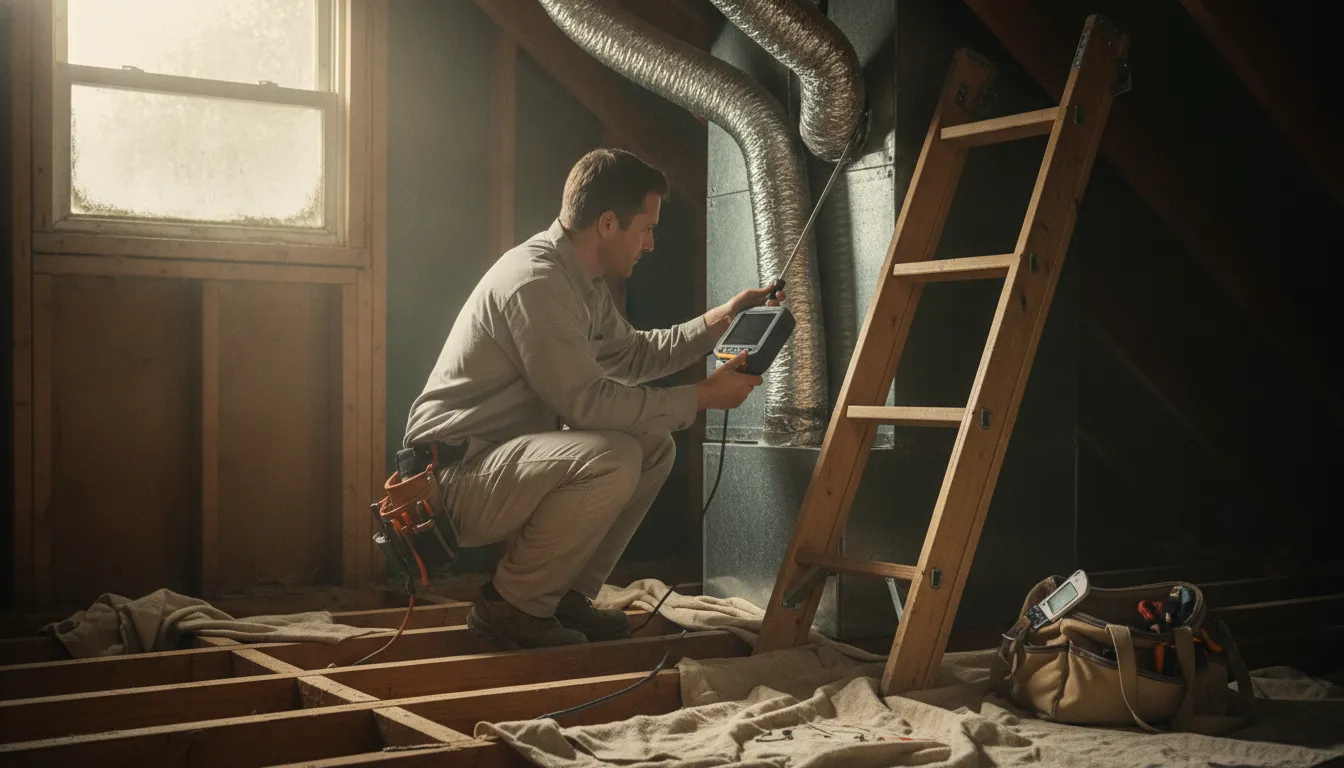
Practical improvements may include:
- Duct sealing and insulation: Helps conditioned air reach the intended rooms and can reduce losses through unconditioned areas.
- Attic insulation and air sealing: Reduces unwanted heat transfer and drafts around common penetrations.
- Indoor air quality improvements: Filtration, ventilation, humidity control, or other measures can address dust, odors, and stale air.
- Thermostat and zoning review: Better controls can support room-by-room comfort when the system and duct design allow it.
- Energy audit or home performance assessment: Testing can help prioritize improvements instead of relying on guesswork.
These changes should be based on observed conditions, not guesses. Bay Care’s residential HVAC and home-performance services connect those decisions in one conversation.
How Should You Plan Heating and Air Conditioning Service in Laurel, DE?
Bay Care makes Laurel service planning straightforward: describe the symptom, note when it happens, and share any recent repairs or comfort changes. The team can then discuss the appropriate next step, from routine maintenance to emergency repair, system replacement planning, or a whole-home consultation.
Before calling, note the thermostat setting, affected rooms, start date, runtime, and any new sounds, smells, water, error codes, or utility changes. If it is easy to access, share the model information, recent filter changes, renovations, additions, or insulation work. Do not remove panels or take unsafe measurements.
Bay Care serves Laurel and nearby Sussex County communities as part of its Delmarva service area. Homeowners can contact Bay Care to schedule service, request emergency repair, ask about a free consultation, or seek a second opinion before making a major HVAC decision.
Have a Laurel HVAC question? Call Bay Care at 302-245-3365 before the next seasonal change.
Frequently Asked Questions About Laurel HVAC Service
Bay Care’s answers to common Laurel HVAC questions focus on safe next steps and the home conditions behind the symptom. The right recommendation depends on the equipment, ductwork, insulation, controls, and comfort goals, so a local assessment is more reliable than a generic replacement rule.
Is a heat pump a good choice for a Laurel, DE home?
It may be. A heat pump can provide heating and cooling in one system, but suitability depends on sizing, ductwork, electrical service, controls, insulation, and the homeowner’s comfort goals. Bay Care can compare a heat pump with a furnace and central air or a ductless option after reviewing the home.
Why is one room in my Laurel home always too hot or too cold?
Uneven comfort can come from duct leakage, restricted airflow, poor return-air paths, insulation gaps, air leaks, zoning problems, or equipment sizing. Bay Care can inspect the equipment and the home’s distribution and envelope instead of assuming that replacing the outdoor unit will solve the issue.
How often should Laurel homeowners schedule HVAC maintenance?
Seasonal maintenance is a useful planning approach because heating and cooling equipment face different operating demands. A professional can review performance, airflow, electrical and mechanical components, drains, controls, and safety-related conditions. Filter needs vary by home, occupants, pets, and indoor air quality concerns.
Should I repair an older air conditioner or replace it?
Consider the repair history, equipment condition, comfort, efficiency, parts availability, and the condition of the ductwork and home envelope. Age is one factor, not an automatic verdict. Bay Care can explain whether a targeted repair, system replacement, or whole-home improvement is the more practical next step.
Does Bay Care serve Laurel, Delaware?
Yes. Bay Care Heating & Air serves Laurel and other Maryland and Delaware communities across the Delmarva Peninsula. Homeowners can call 302-245-3365 or use the contact form to schedule service, request emergency repair, ask for a free consultation, or discuss heating and air conditioning replacement options.
Laurel homeowners do not have to choose between comfort and clarity. A good HVAC plan starts with the immediate problem, then checks the equipment, airflow, ductwork, insulation, ventilation, and indoor air quality conditions that affect the result. Call Bay Care at 302-245-3365 to schedule heating and air conditioning service in Laurel, DE.


