A power outage can interrupt more than lights. It may stop a sump pump, refrigerator, well pump, heating system, or medical equipment. Planning for home generators before an outage gives you time to decide what must keep running, compare generator types, and arrange a safe connection. Bay Care Heating & Air helps Delmarva homeowners think through backup power as part of the home’s comfort and equipment plan.
Request a generator planning conversation
Call Bay Care to discuss your generator and home comfort needs
How do you decide what a generator should power?
Bay Care recommends beginning with the equipment and needs that matter most, not with a generator size or model. A written load plan helps you identify which circuits deserve backup, whether HVAC is a priority, and what questions to take to a qualified installer or electrician before choosing equipment.
Walk through the home and list what you would want available during an outage. Separate essential needs from conveniences. The right list depends on the household, season, home systems, and expected outage conditions.
- Safety and health: Identify any medical equipment or other essential needs that require reliable power. Follow the equipment provider’s instructions and make an appropriate contingency plan.
- Water and drainage: Note whether the home uses a well pump, sump pump, or other electrically powered equipment that protects access to water or helps manage water intrusion.
- Food and communication: Consider a refrigerator or freezer, phone charging, internet equipment, and selected lighting.
- Comfort: Decide whether heating, cooling, or a portion of the HVAC system is important during the likely outage season. Do not assume every generator can start and run the entire system.
- Work and accessibility: Include equipment needed to work from home or support household members with mobility or other practical needs.
Then mark each item as essential, useful, or optional. This ranking is more useful than trying to run every appliance at once. It also gives an installer a clear starting point for checking load requirements and possible operating combinations.

Which home generators fit your outage plan?
Bay Care advises homeowners to compare generator types against the coverage they actually need, their ability to manage equipment during an outage, and the proposed connection method. Portable and standby generators solve different planning problems, so compare the setup rather than choosing on the generator label alone.
| Option | Typical planning fit | What to plan for | Key question |
|---|---|---|---|
| Portable generator | Selected essentials or limited circuits | Outdoor placement, fuel storage, manual operation, and a safe transfer connection | Who will set it up and operate it safely during an outage? |
| Standby generator | A more integrated backup plan for selected circuits or broader coverage | Permanent outdoor location, fuel supply, transfer equipment, permits, and professional installation | Which loads will the system support, and how will that be verified? |
| Partial-home backup plan | Households prioritizing a short list of essential systems | Clearly selected circuits and limits on simultaneous use | Which circuits should be included in the plan? |
| Broader home coverage | Households seeking to support more equipment at once | Careful load review, equipment compatibility, and a larger installation scope | What are the actual starting and running requirements? |
A portable unit may be appropriate when the goal is to power a small number of items and someone can manage setup and operation according to the manufacturer’s instructions. A standby unit is installed as a permanent system and requires advance planning for the location, connection, fuel, and applicable approvals. These descriptions are starting points, not a recommendation for a particular house.
Ask the installer to explain exactly what each proposal includes. A quote that says “whole house” should still identify the loads, equipment, transfer arrangement, and limitations. Ask how the system behaves when several loads start together, and whether HVAC is part of the plan. Bay Care’s Generac generator information is a useful place to learn about its generator offering.
How should HVAC fit into a backup-power plan?
Bay Care treats backup power and HVAC as connected planning questions: a generator must be evaluated against the home’s actual heating or cooling equipment, not just the homeowner’s preferred comfort level. Review system details with qualified professionals before assuming an existing furnace, heat pump, or air conditioner can run on a proposed generator.
HVAC equipment can have electrical requirements that differ from lights or phone chargers. The system may also include several components, such as an outdoor unit, indoor air handler, controls, and accessories. A qualified professional should review the equipment labels and applicable documentation, then confirm the proposed generator and transfer arrangement are suitable.
Consider these questions during the review:
- Is heating or cooling essential during the season when outages are most likely?
- Which parts of the HVAC system would need backup power for the requested operation?
- Will the generator support the equipment’s startup needs as well as its normal operating load?
- Would it be more practical to back up a smaller comfort-related load, such as controls or a different heating component, rather than the entire system?
- Can the selected loads operate at the same time as the well pump, refrigerator, or other priority equipment?
Do not rely on a general wattage estimate from an online chart in place of an equipment review. System configurations vary, and the homeowner’s priorities matter. If a home’s comfort concerns include uneven temperatures, poor airflow, or insulation issues, addressing those underlying conditions may also shape how much backup comfort the household expects. Bay Care’s energy audit service and attic insulation information can help readers explore related whole-home performance questions. For a new or replacement system, see heating installation.
What connection and placement details must be settled first?
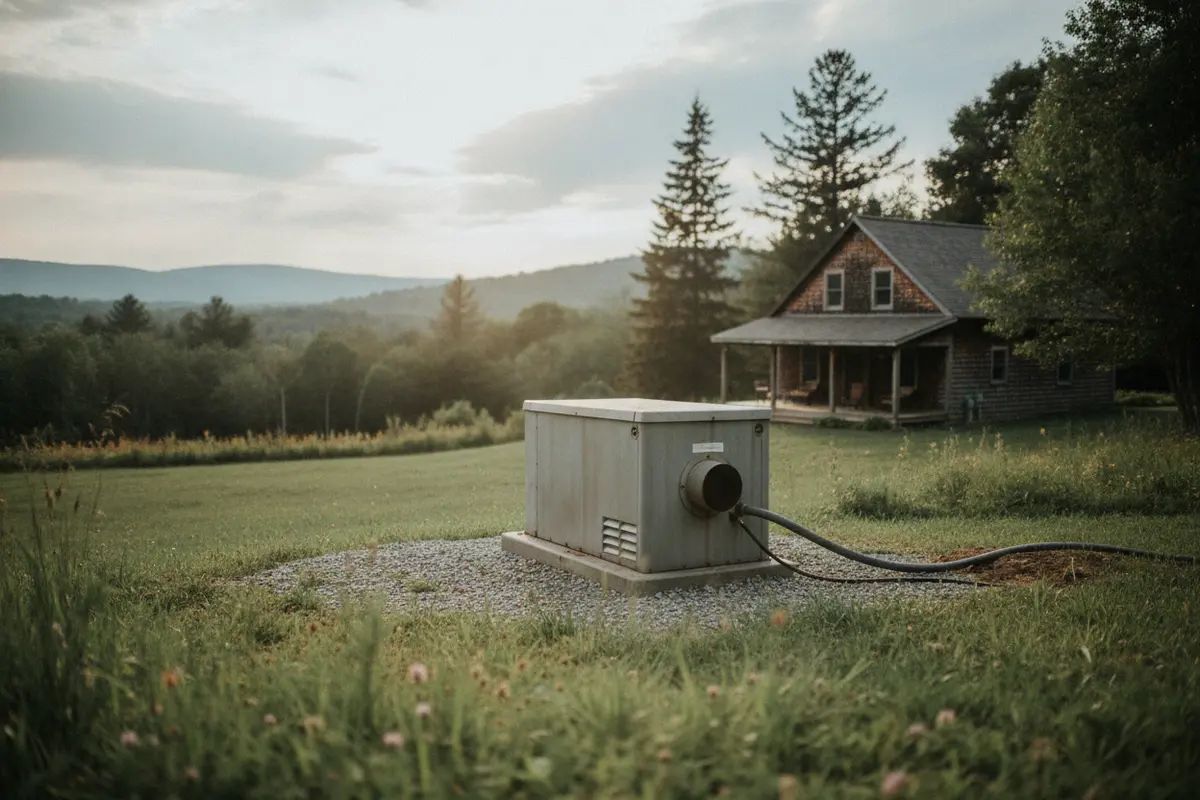
Bay Care urges homeowners to treat electrical connection and outdoor placement as safety requirements, not do-it-yourself details to improvise during a storm. A qualified electrician or generator installer can determine the transfer equipment, permits, clearances, and installation approach required for the specific property and local rules.
Never connect a generator to home wiring by plugging it into a wall outlet or using an improvised cord arrangement. Improper connections can create serious shock and fire hazards and can send power back onto utility lines. Ask a qualified professional to specify the correctly installed transfer equipment for the system and intended loads.
Generator exhaust contains carbon monoxide, which cannot be seen or smelled. The U.S. Consumer Product Safety Commission says never to operate a generator inside a home, garage, basement, crawlspace, shed, or near a window or exterior vent. Its generator safety guidance explains these hazards. The Electrical Safety Foundation International also advises keeping generators at least 20 feet from the home and maintaining clear space around them in its generator safety guidance. Follow the manufacturer’s instructions and applicable local requirements for the actual placement.
Before installation, ask who is responsible for confirming:
- The generator location and required distance from doors, windows, vents, and other openings.
- Clearance for airflow, exhaust, maintenance access, and protection from site-specific conditions.
- The transfer equipment and which circuits it will serve.
- Any permits, inspections, or utility coordination required for the project.
- Whether carbon monoxide alarms are installed and working as directed by their manufacturers.
How do fuel and outage duration change the plan?
Bay Care recommends thinking through fuel and run time before selecting a setup, because a generator is only useful during an outage if its operation can be sustained safely. The homeowner should understand the fuel source, storage or supply requirements, maintenance schedule, and who will check the system during an extended interruption.
Portable generators commonly require the owner to manage fuel and operation. Read the manufacturer’s instructions about approved fuel, storage, refueling, and operating conditions. Never refuel a hot generator; follow the specific instructions for shutdown and cooling. Store fuel only in approved containers and in a location that complies with safety directions and local requirements.
A standby generator may use a permanent fuel supply, but the details still need to be verified for the property and chosen equipment. Ask the installer how the fuel source is connected, what must be maintained, and what happens if supply is interrupted. Do not assume a fuel source will remain available or that a system can run indefinitely.
For a realistic outage plan, answer these questions:
- How many hours or days should the household prepare to be without utility power?
- Which essential loads will be used continuously, and which only intermittently?
- How will the household monitor fuel and arrange replenishment where applicable?
- Who can operate or check the generator if the primary household member is away?
- What is the plan if the generator cannot be used or the outage lasts longer than expected?
Keep a written procedure with the operating manual, emergency contact information, and a list of loads the household intends to use. Share it with everyone who may need to respond. A simple plan can reduce rushed decisions when weather is poor or power is already out.
How can you prepare for a generator consultation?
Bay Care can help homeowners connect generator planning with heating, cooling, and whole-home needs. A useful consultation starts with clear information about the property and the loads you want to cover, then identifies which questions require an electrician, installer, or fuel professional.
Before speaking with a provider, gather the following:
- Make and model information for the HVAC system and any other priority equipment.
- A short list of essential circuits, ranked by importance.
- Photos of equipment labels and the proposed outdoor location, if safe and practical to take.
- Information about the home’s electrical service, fuel source, and any existing transfer equipment, if known.
- Notes about past outages, including which equipment stopped and what caused the most difficulty.
- Questions about permitting, installation responsibilities, maintenance, and warranty terms.
Ask for the proposed coverage in writing. It should distinguish the circuits included from those not included and explain any limits on simultaneous operation. Clarify who handles electrical work, permits, fuel connections, and inspections. Ask what maintenance the owner must perform and which tasks require a qualified provider.
Bay Care serves homeowners across Maryland and Delaware on the Delmarva Peninsula. If you are unsure whether your address is in the service area, check the service area information. For questions about the company’s home performance approach, review About Bay Care, or use the contact page to request a conversation. The residential services overview also shows how generator planning can sit alongside other home services.
What should you compare in generator proposals?
Bay Care encourages homeowners to compare the complete coverage plan rather than only the equipment model or headline capacity. A clear proposal should show how the generator connects to the home’s circuits, what it can operate, what the project requires, and what the owner must do to keep the system ready.
Use a simple comparison worksheet. For each proposal, record the included circuits and equipment, whether HVAC is included, the transfer equipment, the fuel plan, installation and permit responsibilities, maintenance requirements, and stated limitations. If a proposal uses broad terms such as “essential circuits” or “whole home,” ask for the included loads to be listed specifically.
Also ask how the installer determined the recommended capacity. Request an explanation of startup requirements and likely combinations of equipment that can run together. Compare the same assumptions across proposals. If one option excludes an important load or depends on a different operating pattern, note that before comparing the total scope.
Finally, clarify what support is available after installation and what is not included. Ask how routine checks are handled, how to report a fault, and whether any components have separate maintenance requirements. These practical details can matter as much as the initial configuration when the generator is needed under stressful conditions.
Call Bay Care to talk through your generator coverage plan
Frequently asked questions about home generators
Bay Care recommends treating these answers as a starting point for a written outage plan, not as a substitute for equipment-specific advice. Generator capacity, placement, connections, and fuel all depend on the home and selected system. Confirm the details with qualified professionals before buying or operating a generator.
Should a home generator power the entire house?
Not necessarily. Some homeowners prioritize selected essential circuits, while others want broader coverage. The appropriate plan depends on equipment requirements, household needs, generator capacity, and the connection design. Ask for the included loads and operating limits in writing.
Can a portable generator run central heating or air conditioning?
It depends on the specific generator, HVAC equipment, and properly installed connection. Have qualified professionals review startup and operating requirements before relying on a portable generator for central HVAC. Do not connect a generator to home wiring with an improvised method.
Can I run a generator in a garage if the door is open?
No. The CPSC warns not to operate a generator inside a garage, even if the door is open. Operate it outdoors, away from windows and vents, and follow the manufacturer’s placement instructions and relevant safety guidance.
How far should a generator be from a house?
ESFI’s guidance says to keep generators at least 20 feet from the home. Follow the generator manufacturer’s instructions and confirm the required location with the installer, since the site, openings, clearances, and local requirements matter.
What information should I bring to a generator consultation?
Bring the list of priority loads, HVAC make and model details if available, photos of equipment labels, outage concerns, and questions about fuel, transfer equipment, permits, maintenance, and installation responsibilities. The more specific the coverage goal, the easier it is to evaluate a proposal.
What is the best next step before the next outage?
Start with a written list of the equipment you need most, then have the generator, connection, fuel, and HVAC requirements reviewed before selecting a system. A safe, specific plan can help your household make informed decisions before an outage puts those choices under pressure.