
Attic insulation rarely fails on a calendar date. In Maryland and Delaware, its performance depends more on moisture, air movement, settling, compression, pests, and installation quality than on age alone. A dry attic with even coverage may continue doing its job, while a newer installation can underperform if roof leaks or air leaks affect it.
So, how long does attic insulation last? There is no universal expiration date. Cellulose, fiberglass, mineral wool, and spray foam can perform differently, but the practical answer comes from inspecting coverage, condition, moisture exposure, and the attic’s R-value. If insulation is low, uneven, damp, contaminated, or hiding visible air leaks, adding or replacing it may make sense.
Call Bay Care at 302-245-3365 to schedule an attic or whole-home assessment.
Bay Care evaluates insulation alongside air sealing, ventilation, ducts, indoor air quality, and HVAC performance. That whole-home energy efficiency on the Delmarva Peninsula perspective helps separate a simple top-off from a larger repair. First, compare what each insulation material can realistically deliver over time.
How Long Does Attic Insulation Last? A Material-by-Material Answer
How long does attic insulation last? There is no universal expiration date. Fibers and foam can remain in place for decades, but their practical performance depends on moisture control, installation quality, coverage, air leakage, settling, pests, and roof condition. An older attic is not automatically due for a full replacement.
Think of insulation as part of the building envelope rather than a disposable HVAC component. Bay Care Heating & Air evaluates the material, its condition, and the way the attic interacts with ductwork, ventilation, air sealing, and heating and cooling equipment. That helps determine whether the right next step is to repair a moisture problem, seal leaks, add insulation, or remove damaged material.
| Material | Qualified service-life guidance | What can shorten performance |
|---|---|---|
| Fiberglass batts or loose fill | Potentially many decades when dry, intact, and properly installed | Roof leaks, dampness, pests, compression, gaps, and air moving through the material |
| Cellulose loose fill | Often estimated at about 20 to 30 years when properly installed and kept dry | Moisture, poor air sealing, settling, and uneven coverage |
| Mineral wool | Often durable for decades, provided it stays dry and undisturbed | Water intrusion, displacement, gaps, and inadequate installation |
| Spray foam | Can remain effective for decades when correctly applied and protected | Improper application, substrate problems, moisture intrusion, or damage |
These are planning ranges, not warranties or replacement schedules. A visual inspection matters more than the calendar. Look for low spots, exposed joists, compressed sections, staining, dampness, pest contamination, or material that has pulled away from the intended area. Fiberglass may last a very long time in theory, yet a leak or airflow path can reduce its real-world value much sooner. Cellulose can also settle or deteriorate when moisture and air sealing problems are left unresolved.
R-value is the insulation’s resistance to heat flow. Higher R-values generally indicate better thermal performance, but the number only helps when the insulation is evenly installed and the attic details are handled correctly. ENERGY STAR identifies R-38, or roughly 10 to 14 inches depending on material, as a recommended level for many attics. Recommendations vary by climate, existing insulation, and the home’s construction, so depth alone does not diagnose a problem.
For a Delmarva home, Bay Care can assess the attic before recommending work. The goal is a sound, dry, evenly covered assembly that supports comfort and HVAC performance, not replacing material simply because it has reached a certain age.
How Do Maryland and Delaware Conditions Affect Insulation Life?
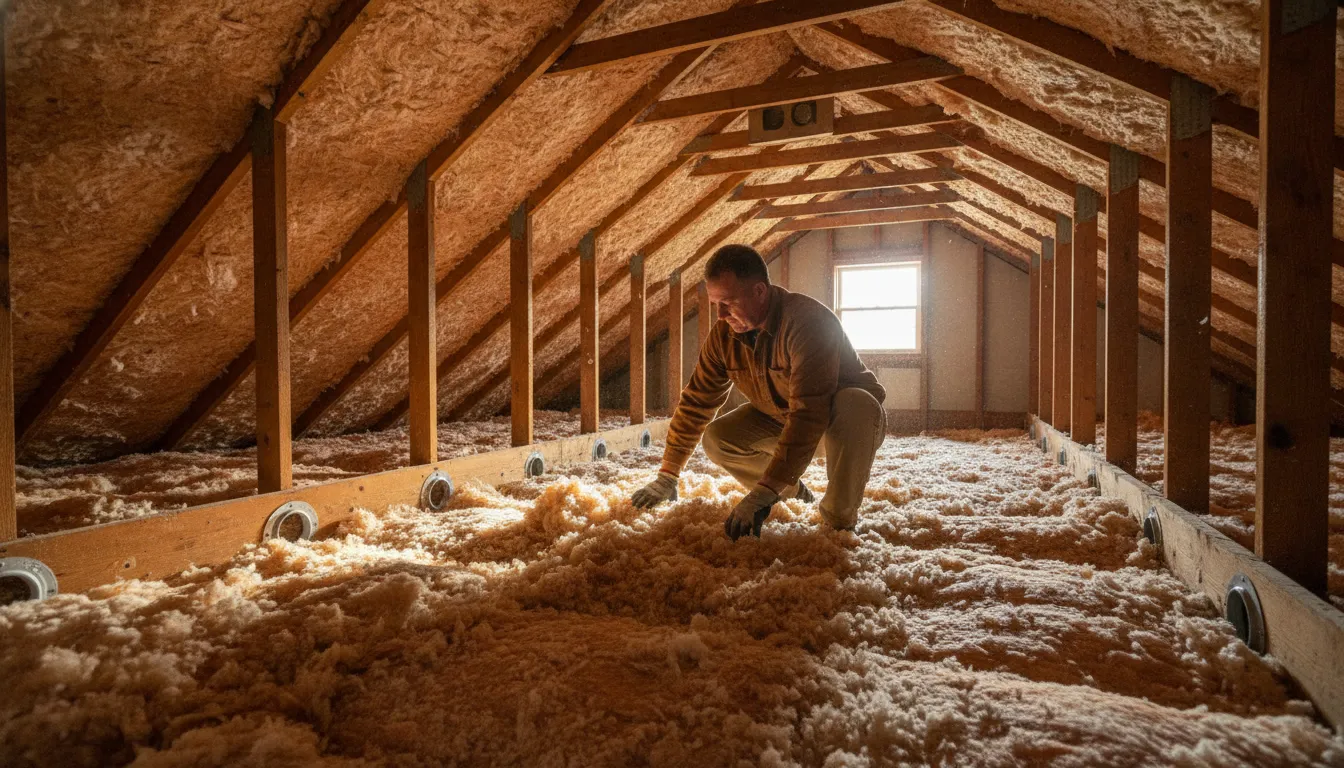
Delmarva attics deal with more than age. Humidity, changing temperatures, roof condition, and airflow can determine whether insulation continues performing as intended. These conditions do not create a guaranteed expiration date. They create reasons to inspect the attic and correct the problems affecting its performance.
Moisture is a warning, not a calendar
Maryland and Delaware homes experience humid summers, and an attic can also be affected by roof leaks, inadequate ventilation, or warm air moving up from the living space. Wet or damp insulation may lose effectiveness, develop odors, or contribute to a broader moisture problem. Water staining, compressed material, or visible growth should be investigated at the source before anyone simply adds more insulation.
Coastal homes around Ocean City, Bethany Beach, and nearby communities may also warrant closer attention to wind-driven rain, salt-air exposure around exterior components, and ventilation details. Inland homes have different site conditions, but they still face seasonal humidity and temperature swings. The right response depends on what an inspection finds, not only on the home’s location.
Air leakage can reduce comfort even when insulation remains in place
Insulation slows heat flow, but it is not a substitute for air sealing. Gaps around plumbing penetrations, recessed lights, top plates, ductwork, and attic access points can allow conditioned air to escape. Air moving through insulation can also leave it dirty or uneven. ENERGY STAR identifies dirty insulation as a possible sign that air is moving through it, while RESNET lists air leakage. Moisture problems, and rooms that are too hot in summer or too cold in winter among the issues an audit can investigate.
Settling and compression can create thin areas, especially in loose-fill insulation. Pests may disturb or contaminate material, and roof repairs can leave sections displaced. These issues may reduce coverage without meaning every inch of insulation has failed. A professional should distinguish between a localized repair, air sealing, an added layer, and full removal.
Look at the attic as part of the whole home
Insulation interacts with ventilation, ductwork, indoor air quality, and the heating and cooling system. RESNET explains that an energy audit can show where a home is losing energy and identify cost-effective solutions. Bay Care uses that broader perspective when evaluating homes across Maryland and Delaware. A whole-home performance assessment can help connect uneven temperatures or rising energy use to insulation, air leakage, ducts, or equipment rather than assuming the insulation alone is responsible.
In other words, how long does attic insulation last depends less on a fixed number of years than on whether it stays dry. Evenly distributed, protected, and properly integrated with the home’s airflow and building envelope. Conditions that shorten performance call for an assessment, not an automatic replacement date.
What Signs Mean Attic Insulation Needs Attention?
Attic insulation does not have a universal expiration date. Its condition, coverage, moisture exposure, and installation all affect how well it performs. In a Maryland or Delaware home, look for patterns rather than relying on age alone. These signs can point to a need for air sealing, repair, additional insulation, or replacement.
- Low spots or exposed joists: If insulation sits level with or below the attic floor joists, or the joists are easy to see, ENERGY STAR recommends adding more insulation. Coverage should also remain even. Material concentrated in the center of the attic may leave the areas near the eaves underinsulated. ENERGY STAR’s attic insulation guidance explains how to check depth and distribution.
- Uneven or compressed coverage: Flattened batts, settled loose-fill, gaps around access points, and thin patches can reduce the insulation’s effective performance. A single thin area may call for targeted work, not full removal.
- Dirty insulation: Dark or dusty streaks can indicate air moving through the insulation. That may mean air leaks need attention before more insulation is installed. Dirty material is a clue, not by itself proof that all insulation has failed.
- Dampness, stains, or mold-like growth: Wet insulation, water marks, or a musty odor should prompt an inspection for roof leaks, condensation, ventilation issues, or plumbing problems. Fix the moisture source before deciding what to do with the insulation.
- Pests or contamination: Droppings, nesting material, odors, or damaged insulation can affect indoor air quality and may require specialized cleanup. Avoid disturbing contaminated areas until the condition is assessed.
- Drafts and uneven rooms: Cold floors, hot upstairs rooms, drafts near the attic hatch, or rooms that never match the thermostat can reflect air leakage, missing insulation, ventilation problems, or duct issues.
- Rising energy bills: A sustained increase can support an investigation, especially when it appears with comfort changes. Bills alone cannot diagnose insulation, since weather, equipment condition, and household usage also matter.
How do you know if attic insulation needs to be replaced?
Replacement may be appropriate when insulation is wet, heavily contaminated, damaged, displaced, or no longer practical to repair. However, visible low spots often call for adding insulation, while drafts may call for air sealing. Bay Care can inspect the attic and connect the findings with ventilation, ductwork, HVAC performance, and comfort before recommending a solution.
Safety note: Do not disturb gray, flaky vermiculite insulation. ENERGY STAR warns that it may contain asbestos and recommends testing by an approved laboratory before any disturbance. If you see it, leave it in place and seek qualified guidance.
Should You Get an Energy Audit Before Replacing Insulation?
A visual attic check can be enough to prompt a closer inspection. If you see exposed joists, obvious low spots, damp areas, staining, pest contamination, or insulation that has been displaced, you have a reasonable reason to investigate. But those signs do not always tell you whether the best next step is removal, air sealing, adding insulation, or correcting a moisture or ventilation problem first.
That is where an energy assessment can add useful context. RESNET explains that a basic home energy survey is a visual review of insulation, ducts, HVAC equipment, comfort complaints, and visible moisture issues. It can help organize the problem, especially if your home has drafts. Rooms that stay too hot or cold, or utility costs that seem out of proportion to your comfort.
When is a visual inspection enough?
A visual inspection may be a practical starting point when coverage is clearly uneven or the insulation is level with or below the attic floor joists. ENERGY STAR notes that visible joists are a sign more insulation may be needed, while insulation that covers the joists and is distributed evenly may already be adequate. Low areas near the eaves still deserve attention because the middle of an attic can look well insulated while perimeter sections remain thin.
Inspection should also look beyond depth. Dirty insulation can indicate that air is moving through it, and moisture staining or dampness may point to a roof, plumbing, ventilation, or air-leakage issue. Replacing the material without addressing the cause can leave the new installation exposed to the same problem.
When is diagnostic testing worth considering?
A broader audit is particularly useful when the cause of discomfort is unclear, the attic has multiple problem areas, or you are considering a significant insulation project. RESNET describes diagnostic testing that can measure air leaks and reveal missing insulation that is difficult to spot. A building performance audit may use a blower door, duct leakage tester, combustion analyzer. And infrared camera to evaluate the envelope, duct system, insulation effectiveness, and related safety concerns.
Air sealing may deserve priority even when the attic has enough insulation. ENERGY STAR explains that sealing attic air leaks can improve insulation performance and comfort. You can learn more about blower door testing before insulation to see how leakage testing can guide that decision.
Bay Care approaches attic work as part of whole-home performance, considering insulation, airflow, ducts, ventilation, moisture, and HVAC needs together. An assessment can help turn the question of how long does attic insulation last into a more useful decision: what is affecting performance now, and which improvement should come first?
When Should You Add Insulation Instead of Replacing It?
Full removal is not the automatic answer when an attic feels underinsulated. In many homes, existing material can remain in place while a contractor corrects air leakage, restores coverage, and adds insulation to the needed depth. The practical choice depends on what is happening above the ceiling, not simply on how old the material is.
-
Check depth and coverage before deciding
Look across the attic rather than judging one accessible corner. ENERGY STAR recommends adding more when insulation is level with or below the floor joists and the joists are visible. If insulation covers the joists and is distributed evenly, the existing layer may already be adequate. Pay special attention to low spots along the eaves, where the center of an attic can look well insulated while the edges remain thin. Current recommendations also vary by climate and existing insulation, so depth should be evaluated in context. ENERGY STAR’s attic insulation guidance explains how R-value and coverage affect the decision.
-
Correct leaks and moisture before adding material
Adding insulation over an active roof leak, damp area, or significant air pathway can hide the problem instead of solving it. Air sealing may be the right first step, even when the attic already contains enough insulation. ENERGY STAR notes that dirty insulation can indicate air moving through it, and that sealing attic air leaks can improve insulation performance and comfort. Roof repairs, ventilation corrections, pest cleanup, or other moisture work may also need to happen before a top-off.
-
Choose compatible materials and installation methods
New insulation does not necessarily have to match the existing type. ENERGY STAR says loose fill can be added over fiberglass batts or blankets, and unfaced fiberglass can be installed over loose fill. The facing matters: fiberglass installed over loose fill should not have paper or foil backing. Loose-fill work also requires a blowing machine, so professional installation can help create consistent depth and coverage rather than scattered piles.
-
Stop if the attic contains vermiculite
Do not rake, move, vacuum, or remove vermiculite insulation as a routine preparation step. ENERGY STAR warns that vermiculite may contain asbestos and should not be disturbed until it has been tested by an approved laboratory. This safety issue requires a different evaluation path before anyone plans an addition or replacement.
-
Base the final choice on the whole home
Bay Care evaluates the attic’s structure and layout alongside airflow, ventilation, ducts, HVAC needs, energy source, and budget. That assessment may lead to a top-off, targeted repair, air sealing, removal and replacement, or no insulation change at all. For Delmarva homeowners wondering how long does attic insulation last, the most useful answer is often a condition-based recommendation, not a calendar date.
How Much Does Attic Insulation Replacement Cost in Delmarva?
There is no honest one-size-fits-all answer to this question. The cost of attic insulation work depends on what your home needs after the space is inspected. A top-off in a dry, accessible attic is a different project from removing damaged insulation, correcting moisture problems, and rebuilding the assembly.
For a Delmarva homeowner, the main quote drivers typically include:
- Attic size and insulation depth: A larger area or a greater target depth requires more material and labor.
- Access and layout: Tight entries, low-clearance areas, finished sections, and obstructions can make preparation and installation more involved.
- Insulation type: Fiberglass, cellulose, and other materials have different handling and installation requirements.
- Removal and disposal: If existing insulation is wet, contaminated, compacted, or otherwise unsuitable, removal and disposal may be necessary before new work begins.
- Air sealing and ventilation: Sealing attic bypasses or correcting ventilation can be important parts of a durable project, rather than optional extras added after the fact.
- Moisture remediation: A roof leak, condensation, or other moisture source should be addressed before insulation is replaced.
The biggest decision is often whether the attic needs a full replacement at all. If existing insulation is clean, dry, and evenly distributed, adding insulation may be more appropriate. If it has been affected by water, pests, mold-like growth, or severe settling, removal may be part of a safer plan. Bay Care evaluates the structure, airflow, ventilation, and insulation together through its attic insulation services, instead of recommending the same treatment for every home.
Delmarva Power rebates and financing opportunities may help eligible homeowners, but program rules, availability, and amounts can change. Confirm current requirements before approving work. For the separate question of whether the project is a good investment, see our guide to attic insulation benefits in Maryland.
Call Bay Care at 302-245-3365 to schedule an attic insulation assessment.
Frequently Asked Questions
How do I know if my attic insulation needs to be replaced?
Look for dampness, staining, pest contamination, visible gaps, low spots, or insulation that has pulled away from important areas. If floor joists are visible or insulation sits level with them, ENERGY STAR recommends adding more insulation. Those signs call for an inspection, but they do not automatically mean the entire attic must be removed.
Should I add insulation or replace what is already there?
Adding insulation may be appropriate when existing material is clean, dry, and evenly distributed but too shallow. Replacement or removal may be needed when insulation is wet, contaminated, severely compressed, or affected by a problem such as a roof leak. Bay Care can evaluate air sealing, ventilation, and moisture conditions before recommending the least disruptive option.
Is an energy audit necessary before insulating an attic?
Not every project requires a full audit, but diagnostic testing can explain uneven temperatures, drafts, moisture concerns, or high energy use that insulation alone may not solve. RESNET explains that certified audits can identify air leaks and hard-to-detect missing insulation, helping homeowners prioritize improvements.
What is the best time of year to insulate an attic?
Attic insulation can be assessed and installed in any season when the roof, attic, and work area are safely accessible. Spring and fall are often comfortable times for an inspection. While a leak or serious comfort problem should be addressed when it is discovered rather than waiting for a particular month.
How much does attic insulation replacement cost?
There is no reliable one-size-fits-all price. The total depends on attic size and access, insulation type and depth, removal and disposal, air sealing, ventilation corrections, and any moisture remediation. A site assessment gives Maryland and Delaware homeowners a project-specific scope instead of an unsupported online estimate.
Schedule an Attic Insulation Assessment
Attic insulation works best when it is evaluated alongside air sealing, ventilation, ducts, and the rest of your home’s comfort system. Bay Care Heating & Air can help you understand whether your Maryland or Delaware home needs added insulation, targeted repairs, or a broader whole-home performance plan. To schedule an attic insulation or whole-home performance assessment, call Bay Care at 302-245-3365.


