If you are wondering how to test for mold in air, start by looking for the source of moisture—not by assuming a test will give a simple yes-or-no answer. Air sampling can provide information about particles collected at a particular time and place, but results do not, by themselves, establish whether a home has a mold problem or explain a person’s symptoms. A careful next step depends on what you can see, smell, and learn about moisture in the building.
Talk with Bay Care about indoor air quality
What can an indoor air test tell you?
Bay Care Heating & Air approaches indoor air quality as one part of whole-home comfort. A mold air sample is a limited snapshot: it may identify or count particles captured from a particular indoor location during a particular sampling period. The result is shaped by conditions at that moment, including airflow, activity in the room, open windows, and the sampling method. It is not a complete map of every surface or hidden space in a home.
Testing may help answer a focused question when a qualified professional selects a method and interprets it alongside a building inspection. A report can indicate that certain mold spores were present in a collected sample. It cannot reliably tell you the full extent of growth, identify every source, determine whether mold is actively growing somewhere unseen, or establish a health diagnosis. A single result should not be treated as a pass-or-fail certificate for a house.
For general public-health information about mold and health, consult the Centers for Disease Control and Prevention. If someone has health concerns, a healthcare professional is the right person to discuss those concerns; an HVAC contractor cannot diagnose illness from a home air sample.
How to test for mold in air without misreading the result
Before ordering a kit or hiring a sampler, write down the concern you want the test to address. Is there a musty odor in one room? Did a leak occur? Is there visible growth? Does the concern persist after a moisture source was addressed? A specific question helps determine whether air sampling is useful or whether a visual moisture assessment is a more direct first step.
- Inspect for moisture first. Look for current leaks, past water damage, condensation, damp materials, or areas that repeatedly feel wet. Check the places you can safely reach, including around plumbing, windows, exterior walls, and HVAC equipment. Do not open walls or disturb suspected growth just to search for it.
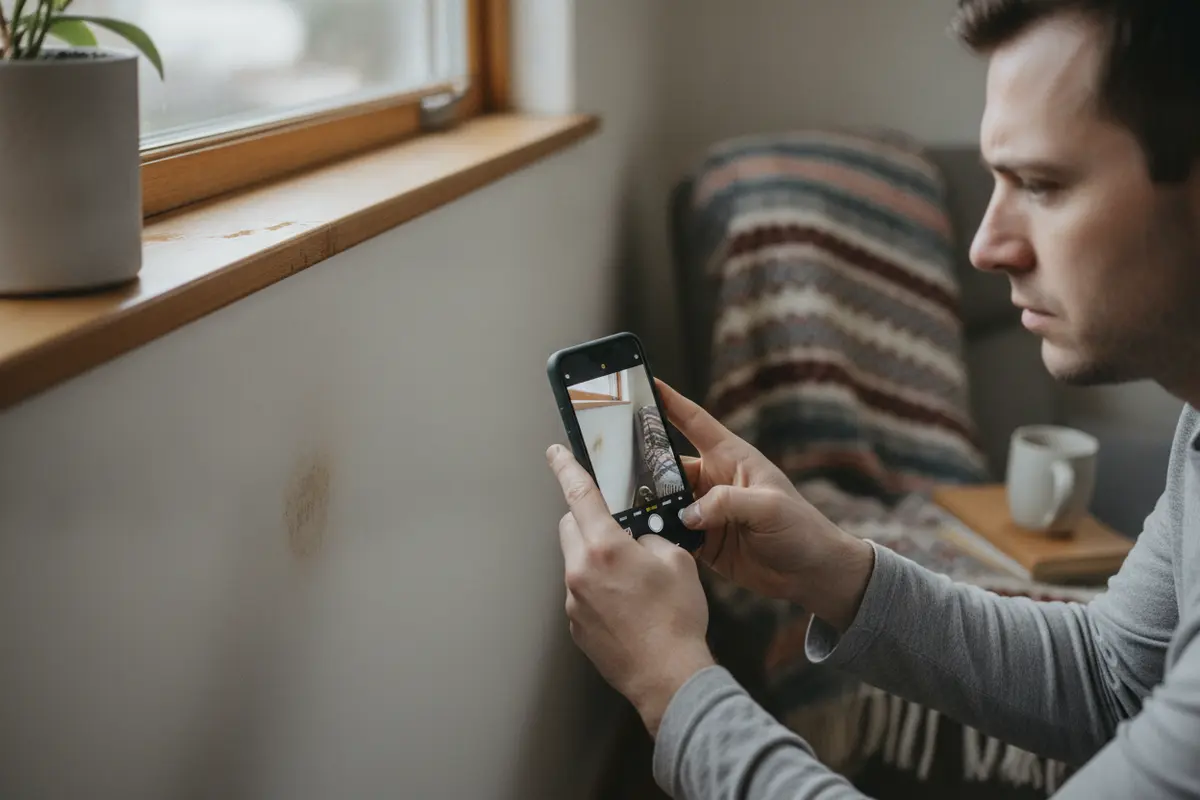
- Record what you observe. Note the room, approximate location, odor, visible staining or growth, dates of leaks, and whether the concern changes after rain, bathing, cooking, or equipment use. Photos can help you document changes. Avoid guessing at species or treating discoloration as proof of a particular mold.
- Decide whether sampling answers the question. If there is visible growth or a clear moisture problem, addressing the underlying moisture and getting an appropriate assessment may be more useful than collecting an air sample first. If there is no visible source but a persistent concern, ask an independent, qualified indoor environmental professional whether sampling is appropriate and what the result can and cannot establish.
- Ask about the method before paying. Find out what locations will be sampled, how many samples are planned, whether comparison samples are included when appropriate, what laboratory will analyze them, and how the findings will be explained. Ask for the total scope and written limitations in advance.
- Use the report as one piece of evidence. Review it with the inspector or other qualified professional who understands the building conditions. A number without context is not a diagnosis or a complete remediation plan.
Should you use a do-it-yourself mold air test?
Do-it-yourself kits can seem like an easy way to get an answer, but collection and interpretation matter. A kit may collect particles from one place at one time, while the conditions elsewhere in the home may differ. Some kits also require you to arrange laboratory analysis separately. Read what the kit actually measures, where the sample is collected, what the lab report includes, and whether anyone will explain the limitations.
Be cautious of any seller who presents a kit result as a definitive health assessment, guarantees that a home is mold-free, or uses a single reading to prescribe costly work without examining moisture conditions. There is no single air sample that can certify every room and hidden cavity. If you choose a test, ask whether the person collecting it has relevant training and whether the lab and interpretation process are clearly identified.
A test is not a substitute for a safe response to visible growth or ongoing water intrusion. Do not disturb large areas of suspected material or attempt work that could spread particles or expose you to hazards. If the affected area is extensive, the source is hidden, or you are unsure how to proceed, seek advice from a qualified remediation or building professional. For health questions, speak with a clinician.
How to test for mold in air: when is a professional assessment more useful?
Bay Care can discuss HVAC and indoor air quality factors, but a mold investigation is not the same as routine heating or cooling service. A building-focused professional may be a better fit when you need an independent assessment of suspected growth, a moisture source, or a sampling plan. Choose someone who explains their scope, limitations, and any potential conflicts before work begins.
Consider asking for a professional assessment when you find recurring moisture, suspect growth that cannot be safely inspected, notice a persistent odor with no obvious source, or need a documented evaluation after a leak. A contractor should explain what their work includes. If the person recommending testing also sells remediation, ask how they separate the assessment from the proposed repair, and consider whether an independent opinion would help.
For a smaller, visible area, avoid assuming that laboratory testing is required to take sensible action. The priority is to identify and correct the moisture source. The right response depends on the materials, size, location, and circumstances. If the situation involves contaminated water, significant damage, or a vulnerable occupant, get qualified guidance rather than relying on an online kit or generic instructions.
How can HVAC conditions relate to indoor air concerns?
Heating and cooling equipment moves and filters air, but it does not make every indoor air concern an HVAC problem. A drain issue, wet insulation, condensation, a blocked or dirty component, or poor airflow can be relevant clues in some situations. Other moisture sources may have nothing to do with the HVAC system. A technician can inspect equipment and airflow within the scope of HVAC service, but that inspection does not replace a building-wide mold assessment.
Bay Care’s whole-home approach considers how ventilation, airflow, insulation, air sealing, and equipment work together. Those factors can affect comfort and moisture management, but no single adjustment is a guaranteed mold solution. For more on the range of indoor air quality options, discuss the specific room, conditions, and goal with a qualified provider.
Where airflow or duct condition is part of the concern, a technician may consider whether an inspection of ductwork and duct repairs is appropriate. If the question involves air leakage, duct sealing may be worth discussing after the system is assessed. Neither service should be presented as a substitute for finding and correcting a leak or other moisture source.
For homes with persistent comfort or moisture concerns, a broader home energy audit may help examine how the home performs as a system. Depending on the findings, the discussion may include insulation or ventilation; see Bay Care’s information on attic insulation for one part of that picture. These evaluations focus on building performance, not medical diagnosis or proof that mold is present.
What should you compare before choosing a testing option?
Compare the purpose, scope, and interpretation—not just the price of a kit or sample. The table below can help you choose a reasonable next step. The best option depends on what you have observed and what question remains unanswered.
| Option | What it can help with | What it cannot establish | Useful next question |
|---|---|---|---|
| Homeowner visual notes | Recording visible conditions, odors, leak history, and locations to guide a conversation | Whether hidden growth exists or what particles are in the air | Is there an active or recurring moisture source? |
| Do-it-yourself air kit | Collecting a limited sample when the instructions and lab process are clear | A full-home assessment, health diagnosis, or guarantee that the home is mold-free | Who interprets the result, and what are the method’s limits? |
| Qualified indoor environmental assessment | Evaluating a defined building concern and deciding whether sampling is useful | Medical conclusions or certainty about every concealed area without appropriate access | What locations, methods, and written findings are included? |
| HVAC service evaluation | Checking relevant equipment, drainage, airflow, and system conditions within the service scope | Identifying every building moisture source or diagnosing mold-related illness | Is the concern within the HVAC system, or does it need a building specialist? |
How should you respond to results and next steps?
Read the report together with the conditions in the home. Ask the person who collected the sample to explain what was sampled, when, and under what conditions. Ask what conclusions are supported, what remains unknown, and whether inspection findings point to a moisture source. If a report recommends work, request a clear scope that identifies the area, the moisture correction, and the work being proposed.
Do not focus on a single count without context or compare results from different methods as if they were interchangeable. A finding does not automatically prove a dangerous exposure, and a low or negative result does not guarantee that no growth exists elsewhere or at another time. If the report is unclear, seek an independent explanation. If you have health symptoms or concerns, contact a healthcare professional rather than trying to interpret a test medically.
When HVAC conditions appear relevant, an equipment assessment can help determine whether a drain, airflow, or ventilation issue needs attention. Bay Care serves Delmarva homeowners with HVAC and whole-home performance services. You can review Bay Care’s whole-home approach, learn about duct maintenance, or use the contact page to ask whether an HVAC evaluation fits your concern. To discuss service availability in your area, see the Delmarva service area information.
Contact Bay Care to discuss an indoor air quality concern
Frequently asked questions about mold air testing
Can an air test prove that my home is mold-free?
No. A sample reflects what was collected at a particular place and time. It cannot guarantee that every room, surface, or hidden area is free of mold, or that conditions will remain unchanged.
Should I test the air if I can already see mold?
Not necessarily. If growth is visible, focus first on the moisture source and an appropriate response. A qualified professional can advise whether testing adds useful information for the specific situation.
Can a mold air test explain symptoms?
No. An air sample is not a medical test and cannot diagnose the cause of symptoms. Discuss health concerns with a healthcare professional.
Will my HVAC system remove mold from the home?
Heating and cooling equipment is not a substitute for correcting moisture or addressing growth. HVAC service may help identify equipment-related conditions within its scope, but a building concern may require a qualified indoor environmental professional.
What should I ask before hiring someone to collect samples?
Ask what question the sampling will answer, which locations and methods are included, who analyzes the sample, how results will be interpreted, and what the limitations are. Request a written scope before agreeing to work.
What is the safest first step if I suspect a moisture problem?
Document what you can observe without disturbing suspected material, and address an obvious water source when it is safe to do so. For hidden, extensive, or uncertain conditions, seek qualified building guidance; contact a clinician for health questions.
Air testing can contribute information, but it is only one part of understanding an indoor environment. Start with the moisture history and visible conditions, then choose an assessment that answers a clearly defined question.