
Indoor air quality problems in Maryland homes often show up as musty odors, stuffy rooms, window condensation, or dust that returns soon after cleaning. These signs can connect to moisture, ventilation, filtration, ductwork, or air leaks. Understanding the pattern helps you choose a solution that improves comfort. It can also prevent you from masking one symptom.
Call Bay Care at 302-245-3365 to discuss your home’s air quality.
Indoor air quality problems in Maryland homes commonly involve moisture, weak ventilation, combustion pollutants, chemicals, particles, or air leaks. Bay Care evaluates these conditions together. The team then prioritizes source control, filtration, duct service, ventilation, or humidity management. The U.S. Environmental Protection Agency recommends controlling pollution sources and improving ventilation when appropriate.
Maryland’s humid summers, heating season, older housing stock, and coastal conditions can make the indoor environment more challenging. The sections below explain what to look for and what you can safely do first. They also explain when a whole-home assessment makes more sense than another filter change.
What Are the Most Common Indoor Air Quality Problems in Maryland Homes?
Indoor air quality problems in Maryland homes often come from excess moisture, airborne particles, combustion pollutants, volatile organic compounds, radon, and inadequate ventilation. Bay Care looks at the source, the path through the home, and the conditions that allow a pollutant or irritant to remain indoors.
Several contributors can exist at once. A home may have a well-maintained furnace but still feel stale because bathroom moisture is not exhausted well. A new filter may catch some particles. Air leaks can still pull dusty air from an attic or crawl space. A single product should not be treated as a complete indoor air quality plan.
| Sign or source | What it may suggest | Useful next step |
|---|---|---|
| Musty odor or visible condensation | Moisture, drainage, or ventilation issue | Find and correct the moisture source |
| Dust returns quickly | Filter bypass, duct leakage, or source dust | Check filter fit and inspect return airflow |
| Uneven rooms or weak airflow | Duct, insulation, air sealing, or equipment concern | Request an airflow and whole-home evaluation |
| Alarm sounds or combustion concern | Possible carbon monoxide emergency | Leave immediately and call emergency services |
Moisture and biological growth
Moisture from showers, cooking, plumbing leaks, groundwater, or condensation can raise humidity. It can also create conditions where mold grows. Musty smells, staining, bubbling paint, and recurring condensation deserve attention. Cleaning the visible area without correcting the water source can leave the underlying problem in place.
The EPA’s guidance on controlling moisture in the home emphasizes fixing leaks, drying wet materials, and reducing indoor moisture. In Maryland, that may involve bathroom exhaust, dehumidification, drainage, insulation, air sealing, or HVAC adjustments depending on the cause.
Particles, dust, and outdoor air
Dust, pollen, pet dander, smoke, and other particles can enter through doors, windows, leaks, and return-air pathways. Outdoor air infiltration is especially noticeable during pollen seasons or when nearby activity introduces smoke and debris. A properly selected and installed filter can help, but it must fit the equipment and be changed on an appropriate schedule.
Combustion pollutants and carbon monoxide
Fuel-burning furnaces, fireplaces, water heaters, ranges, and generators require proper installation, venting, and maintenance. Carbon monoxide has no reliable smell or visible warning. If a carbon monoxide alarm sounds, leave the home and contact emergency services or the appropriate utility or fire authority. Do not re-enter until officials say it is safe. HVAC service cannot replace emergency response or carbon monoxide alarm testing.
VOCs and other chemical sources
Paints, adhesives, cleaning products, air fresheners, pesticides, pressed-wood products, and some furnishings can release volatile organic compounds. Source control is often the most direct response. Store chemicals as directed, follow product ventilation instructions, and avoid using fragrance or cleaning products to cover a persistent odor. If a concern continues, professional testing may be appropriate.
Radon and other specialized concerns
Radon is a naturally occurring radioactive gas that can enter through foundation openings. It is not an HVAC problem, and a filter or air purifier is not a substitute for radon testing and mitigation. The EPA radon resource explains when homeowners should test and where to find mitigation information. Bay Care can help identify when a concern should be referred to a qualified specialist.
Why Does Maryland Humidity Make Indoor Air Quality Worse?
Maryland humidity can make indoor air quality problems worse by increasing condensation, supporting mold growth, and making rooms feel stale. Bay Care checks whether the home is producing too much moisture, bringing in humid air, or failing to remove moisture through equipment and ventilation.
Relative humidity is only one part of the diagnosis. A thermostat reading may look acceptable while a crawl space, attic, basement, or exterior wall has a localized moisture problem. Conversely, an air conditioner may run frequently but fail to control humidity if it is oversized, short-cycling, poorly maintained, or not moving air correctly.
How does humidity create indoor air quality problems?
Warm, humid outdoor air can enter through cracks, duct connections, doors, and other openings. Indoor moisture also comes from normal activities such as bathing, cooking, drying clothes, and caring for plants. If that moisture is not exhausted or removed, it can condense on cool surfaces and create persistent dampness.
High humidity can also make a room feel warmer, which may lead occupants to lower the thermostat. That can increase runtime without addressing the moisture source. A dehumidifier may help in some homes, but it should be selected as part of a system that also considers drainage, ventilation, insulation, air sealing, and HVAC operation.
Why do kitchens and bathrooms need active ventilation?
Kitchen and bathroom exhaust removes moisture and odors near their source. Fans should discharge outdoors, not into an attic or crawl space. Use them during moisture-producing activities and long enough to clear the room. If a fan is loud, weak, disconnected, or vented incorrectly, a contractor can inspect the installation and recommend a correction.
The EPA’s home ventilation guidance explains that ventilation can reduce indoor pollutant concentrations when outdoor air is acceptable and the system is designed and operated correctly. More outdoor air is not automatically better if it adds humidity, smoke, or other pollutants.
What should coastal Delmarva homeowners consider?
Homes near the coast can face salt air, wind-driven moisture, and longer periods of high humidity. Outdoor HVAC equipment may need specialized corrosion protection, while the indoor system still needs correct airflow and condensate drainage. A coastal home assessment should consider both equipment exposure and the way the building envelope handles humid air.
For customers in Salisbury, Berlin, Cambridge, Easton, Bethany Beach, Rehoboth Beach, Ocean View, Selbyville, and nearby communities, Bay Care’s coastal HVAC corrosion protection service can address one part of that environment. It does not replace indoor moisture control, filtration, or ventilation, but it can help protect outdoor equipment from coastal exposure.
Which Symptoms Can Point to an Indoor Air Quality Problem?
Common signs include persistent odors, visible moisture, recurring mold, excessive dust, stuffy rooms, uneven comfort, and symptoms that improve after leaving the home. These signs do not identify one cause by themselves, so Bay Care uses the pattern, location, timing, and building conditions to guide the next step.
Pay attention to where and when the issue occurs. A smell limited to one room may point to a localized moisture or duct issue. A problem that appears after rain may involve water intrusion or crawl-space conditions. A concern that worsens when the HVAC runs may involve filtration, duct leakage, equipment cleanliness, or airflow.
- Record the room, time, weather, and activity when the concern appears.
- Look for visible condensation, leaks, staining, damp materials, or musty areas.
- Check that HVAC filters are present, correctly sized, and seated without gaps.
- Confirm bathroom and kitchen exhaust fans discharge outdoors and operate effectively.
- Review carbon monoxide alarm placement, age, and test status according to the manufacturer’s instructions.
- Note whether odors or discomfort change when windows are opened or the HVAC system cycles.
When is a carbon monoxide concern an emergency?
A sounding carbon monoxide alarm is an emergency, not a routine indoor air quality appointment. Leave immediately, take people and pets with you, and call emergency services from outside. Do not investigate the furnace or attempt to silence the alarm by removing its batteries. Once the home is cleared by authorities, a qualified professional can inspect HVAC and combustion equipment.
When should symptoms be discussed with a healthcare professional?
Indoor air quality concerns can overlap with allergies, asthma, infections, and other health conditions. Persistent or serious symptoms should be discussed with a healthcare professional. An HVAC contractor can evaluate building and equipment conditions, but cannot diagnose or treat a medical problem.
How Can HVAC, Filters, and Ducts Improve Indoor Air Quality?
HVAC improvements work best when they address the actual pathway of the problem. Bay Care may recommend filter corrections, equipment maintenance, duct sealing, airflow testing, humidity control, or ventilation changes after reviewing the home’s comfort and air movement.
Choose the right filter and make sure it fits
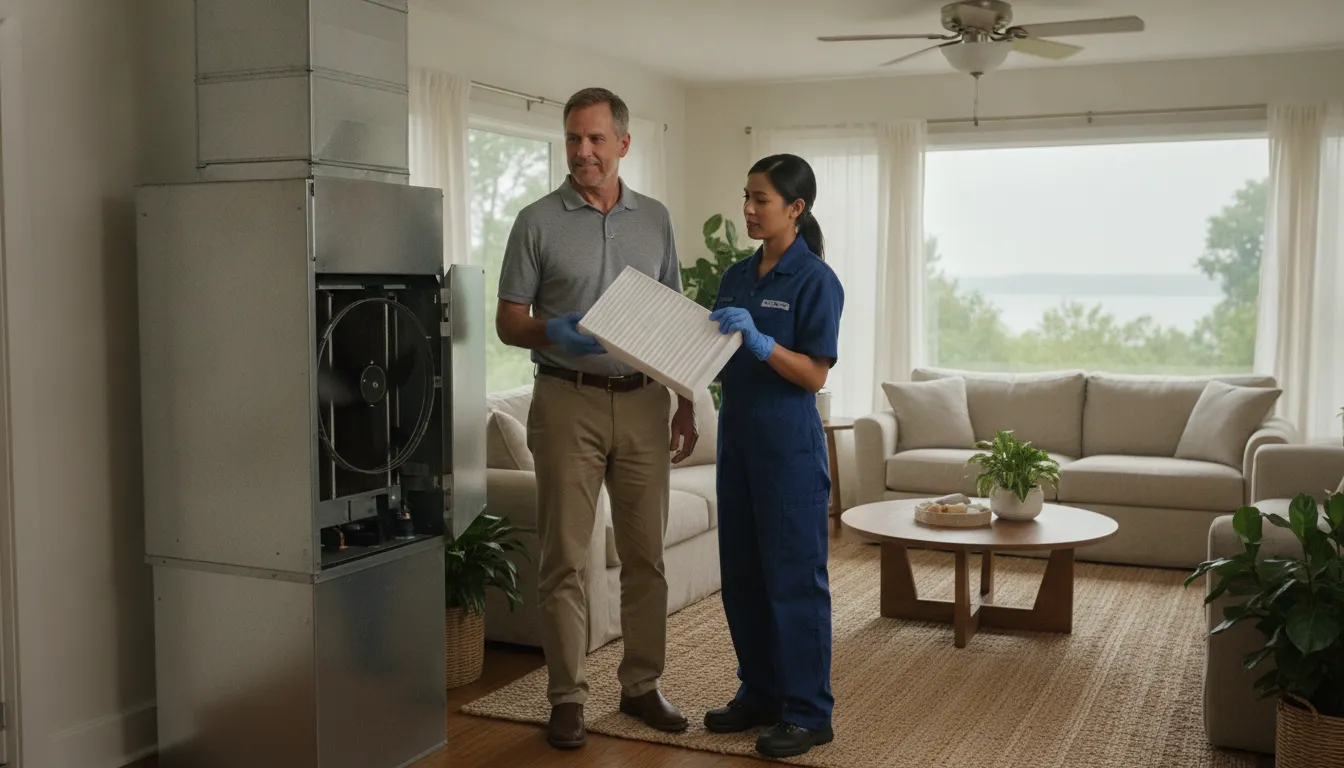
Filters are designed for specific equipment and airflow conditions. A filter that is too restrictive for the system can reduce airflow, while a filter that is too loose allows air to bypass it. Check the size printed on the existing filter, inspect for gaps, and follow the equipment or filter manufacturer’s replacement guidance.
Do not assume the highest rated filter is always the best choice. The correct selection depends on the equipment, cabinet, blower capacity, household needs, and maintenance habits. Bay Care can evaluate whether the filter cabinet and return-air design support the desired level of filtration.
Seal ducts and maintain equipment
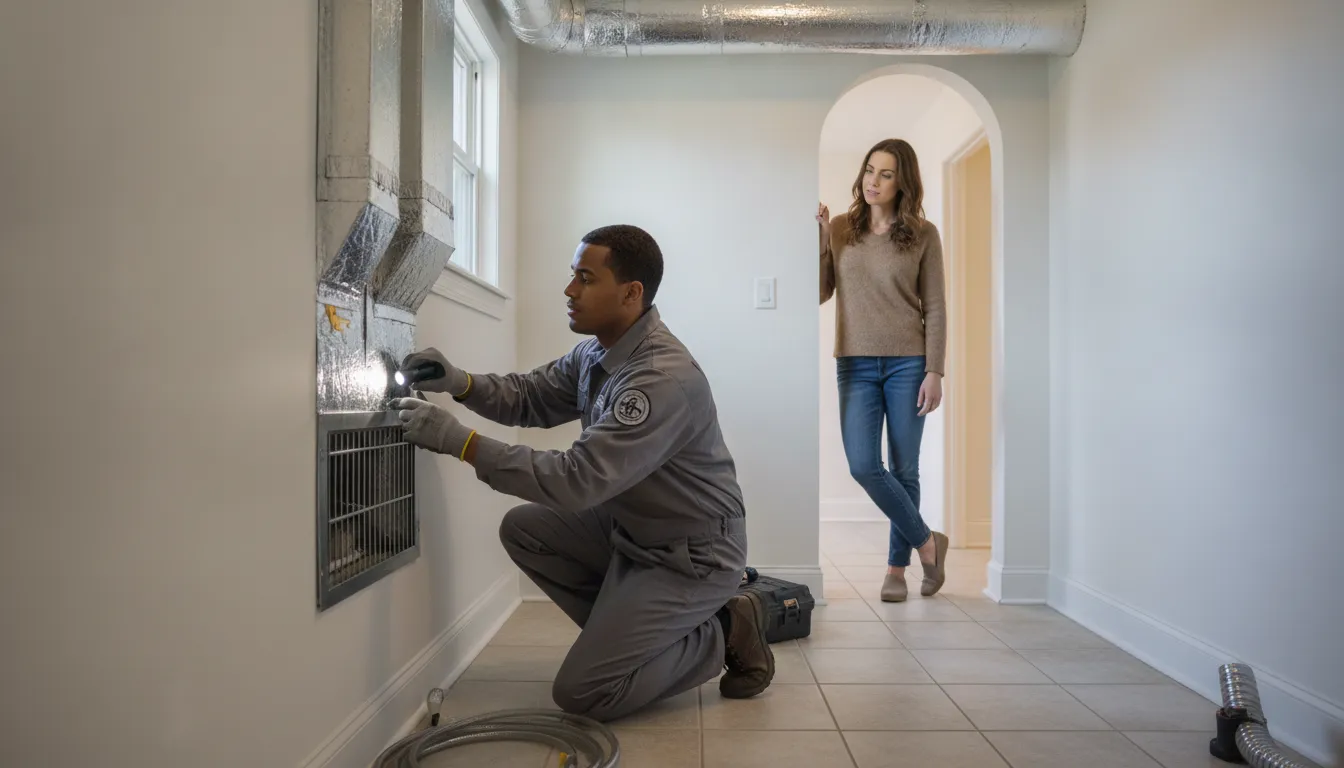
Duct leakage can draw air from attics, crawl spaces, garages, or wall cavities and distribute it through the home. It can also waste conditioned air, contribute to uneven temperatures, and make the system work harder. The company’s guide to how to know if your ducts are leaking can help homeowners recognize clues before scheduling an evaluation.
Routine maintenance also matters. Coils, blower components, drain systems, electrical connections, and combustion equipment need attention appropriate to the system. Use Bay Care’s HVAC maintenance checklist for Maryland homeowners as a starting point, then follow the equipment manufacturer’s requirements.
Control pollutants at their source
Filtration is only one layer. Keep combustion appliances properly vented, repair leaks, control dust, use exhaust fans, store chemicals safely, and avoid bringing unnecessary smoke or fragrance into the home. Source control often reduces the load on filters and ventilation equipment.
Schedule a Bay Care indoor air quality evaluation for your Maryland home.
What Whole-Home Fixes Work Beyond an Air Purifier?
A whole-home approach considers air quality, humidity, insulation, air sealing, ventilation, ductwork, and HVAC operation together. Bay Care can help homeowners prioritize the work that addresses the cause, rather than adding an air purifier to a home with an unresolved leak or ventilation problem.
An air cleaner or purifier may be useful for certain particle concerns, but it cannot repair a plumbing leak. Stop humid outdoor air from entering, correct a disconnected exhaust duct, or remove radon. The most useful solution depends on what testing and inspection reveal.
Control moisture and pollutants at the source
Start with the source that can be corrected safely and directly. Repair plumbing leaks, dry wet materials, improve bathroom exhaust, maintain condensate drainage, and address basement or crawl-space moisture. For product-related odors, remove or isolate the source and follow the product’s ventilation directions.
Bring in outdoor air more strategically
Ventilation should be intentional. Opening windows may help when outdoor air is clean and humidity is manageable. But it can worsen a problem during muggy weather, high pollen, smoke, or poor outdoor air conditions. Mechanical ventilation may be more appropriate in a tightly sealed home, but equipment must be sized, installed, and balanced correctly.
Bay Care’s whole-home philosophy connects indoor air quality with whole-home energy efficiency and performance upgrades on the Delmarva Peninsula. Air sealing and insulation can improve comfort, but they should be paired with a ventilation plan so the home does not simply trap pollutants or moisture.
Find hidden performance problems
Uneven rooms, high utility bills, dusty spaces, and humidity can share a building-performance cause. A home energy assessment can help identify air leakage, insulation gaps, duct issues, and equipment performance. Read what a home energy audit includes before deciding whether testing is the right next step.
Bay Care also provides indoor air quality services that can be considered alongside HVAC, duct, and home-performance work. The goal is not to sell one device for every home. It is to match the remedy to the source and the way the home is used.
When Should Maryland Homeowners Call an Indoor Air Quality Specialist?
Call an indoor air quality specialist when a concern persists after basic maintenance, returns after cleaning, affects multiple rooms, involves moisture, or changes with HVAC operation. Bay Care can evaluate HVAC and whole-home conditions, then identify when a different specialist is needed for radon, mold remediation, water intrusion, or medical concerns.
Call when problems persist after basic maintenance
Schedule an evaluation if odors, dust, condensation, or stuffiness continue after replacing a correctly sized filter and checking obvious moisture sources. The same is true when comfort varies sharply between rooms or the HVAC system runs continuously without controlling temperature and humidity.
Know which concerns require a different specialist
Radon testing and mitigation, extensive mold remediation, structural water intrusion, asbestos, lead, and medical diagnosis fall outside ordinary HVAC service. A careful contractor should identify those boundaries rather than promise that a filter or duct cleaning will solve every concern.
Bay Care’s team brings more than 50 years of combined experience and serves residential and commercial customers across the Delmarva Peninsula. The whole-home approach includes HVAC, duct services, energy audits, attic insulation, air sealing, ventilation, and indoor air quality solutions. That range makes it easier to coordinate related improvements when the evidence points beyond one piece of equipment.
Prepare for a useful evaluation
Before the appointment, list the rooms involved, dates and weather patterns, recent renovations, new furnishings or products, filter changes, maintenance history, and any visible moisture. If you have test results, equipment information, or photos of condensation and staining, keep them available. Do not disturb suspected hazardous materials or enter areas that may be unsafe.
Frequently Asked Questions About Indoor Air Quality Problems in Maryland Homes
What causes unhealthy indoor air quality in Maryland homes?
Common causes include excess moisture, inadequate ventilation, combustion pollutants, household chemicals, particles, radon, duct leakage, and outdoor air entering through leaks. More than one cause may be present, so the most useful solution starts with identifying the source and pathway instead of relying on one air-cleaning device.
How can I improve indoor air quality in my Maryland home?
Begin with source control, moisture management, safe ventilation, correctly fitted filters, and routine HVAC maintenance. If the concern persists, have the ductwork, airflow, equipment, insulation, air sealing, and drainage evaluated together. Bay Care can help prioritize improvements based on the home’s conditions.
How does humidity affect indoor air quality?
Excess humidity can create condensation, musty odors, and conditions that support mold growth. It can also make rooms feel uncomfortable and encourage longer HVAC operation. The correct remedy may include exhaust ventilation, dehumidification, drainage, air sealing, insulation, or HVAC correction.
When should I test my indoor air quality?
Consider testing when a concern is persistent, localized, recurring, or associated with a specific pollutant such as radon or carbon monoxide. Testing should answer a useful question and be performed with appropriate equipment. A contractor can help distinguish an HVAC inspection from specialized environmental testing.
Can an air purifier fix every indoor air quality problem?
No. An air purifier may reduce certain airborne particles, but it cannot correct a water leak, excessive humidity, poor exhaust ventilation, duct leakage, combustion safety issue, or radon. Use the source and the home’s airflow conditions to decide whether filtration belongs in the solution.
Call Bay Care at 302-245-3365 to get practical help with your home’s air quality.


