
Indoor air quality testing is not automatically the first answer when a room feels musty or uncomfortable. A useful evaluation starts with a better question: what decision should the information help you make?
Call Bay Care at 302-245-3365 to discuss your home-performance questions.
Indoor air quality testing can help investigate a specific concern when the method matches the question, but a sample is only one part of the process. The U.S. Environmental Protection Agency recommends considering the building walkthrough, occupant observations, pollutant sources, pathways, and HVAC conditions alongside sampling rather than treating one result as a complete diagnosis.
That distinction matters in Delmarva homes, where airflow, ventilation, moisture, and the building envelope can influence what a test detects. Before choosing a method, define what you want to learn, what conditions should be documented, and what action would follow from the result.
What Does Indoor Air Quality Testing Actually Answer?
Bay Care can help Delmarva homeowners frame indoor air quality testing as one part of an investigation, not a pass-or-fail verdict on the home. A focused review may connect a defined concern with building conditions, HVAC operation, airflow, ventilation, moisture, or a suspected source. The appropriate method depends on the question, so testing should be qualified and explained before conclusions are drawn.
At its most useful, testing helps answer a question such as:
- Is a selected contaminant or indicator present in the location and conditions examined?
- Does a measurement support or weaken a reasonable hypothesis about the concern?
- Would a building, HVAC, ventilation, or moisture correction be a sensible next step?
- Is follow-up needed to determine whether a corrective action changed the condition?
The U.S. Environmental Protection Agency describes IAQ investigations as a process that can include identifying causes, collecting information about occupants and pollutant sources, considering pathways and driving forces, reviewing HVAC data, and forming and testing hypotheses. Sampling air for contaminants and indicators is one part of that process, rather than a replacement for understanding the building context. Read the EPA Building Air Quality Guide.
That distinction also explains what a test cannot answer by itself. One sample cannot establish that every room has the same condition, identify every possible source, or prove that a particular health symptom came from the building. Results are tied to the method, location, timing, and conditions documented during the investigation. EPA also lists complaints caused by conditions other than poor air quality as a consideration. So a result should be interpreted alongside observations rather than used to confirm a preferred explanation.
Before agreeing to testing, ask the provider to state the question, method, areas covered, conditions to document, limitations, and action associated with each possible result. If no result would change the next step, a walkthrough or building assessment may be more useful than an unfocused test.
How Should You Define the Question Before Testing?
Bay Care’s answer: Indoor air quality testing is most useful when it supports a defined building question. Before sampling, homeowners can document the concern, its timing and location, possible sources, airflow or ventilation conditions, and the HVAC context. That approach can help a provider match the investigation to the concern without treating one result as a complete diagnosis.
EPA guidance describes an initial walkthrough as part of an IAQ investigation. It also includes occupant complaints, pollutant sources, pathways and driving forces, and HVAC system information. Use those categories to prepare observations, not to diagnose a health condition from symptoms.
- Describe the decision you need to make. Write down what you want the visit to clarify. For example, you may need to understand whether a recurring concern relates to ventilation, a moisture condition, a suspected source, or system operation. Ask what result would change your next step.
- Record the pattern. Note the room or rooms involved, when the concern appears, weather conditions, occupancy, recent activities, and whether the HVAC system is heating, cooling, or off. Include relevant occupant observations without assuming they identify a pollutant or medical cause.
- List possible sources and pathways. Note recent cleaning, renovation, stored products, leaks, condensation, exhaust use, and other changes near the affected area. Also record whether doors, windows, supply registers, or return grilles are open, closed, blocked, or operating differently.
- Gather HVAC and building details. Collect recent service records, filter information, repair or leak dates, and notes about rooms that feel different. A provider can use this context to consider equipment operation, airflow, ventilation, and the way air may move through the home.
- Ask for a method-specific plan. Before agreeing to work, ask what will be observed, measured, or sampled, where and when it will occur, what limitations apply, and how each possible result will affect the recommendation. A method should fit the question, rather than testing broadly without a clear use for the findings.
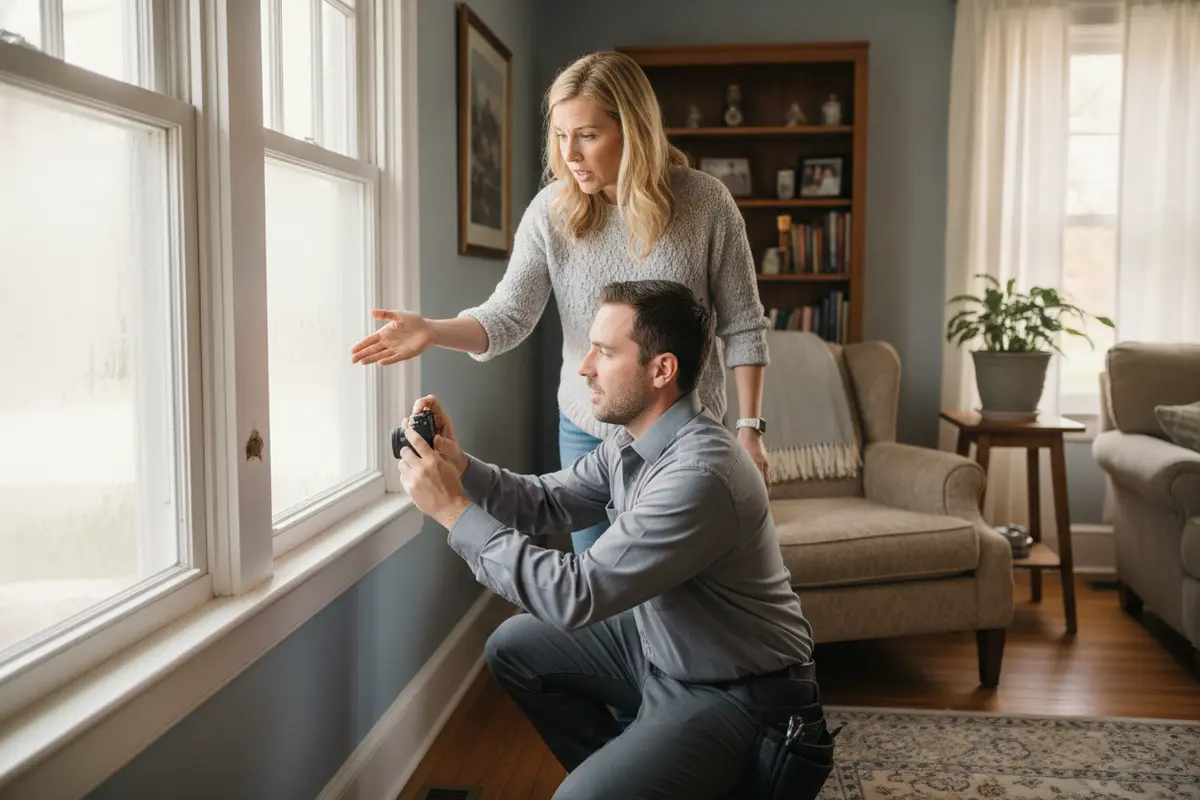
Keep the notes available for the visit, and ask for the findings and limitations in writing. If the concern involves possible hazardous material or a health issue, do not disturb materials or use an air test as a substitute for appropriate safety or medical advice.
EPA’s Building Air Quality Guide provides additional context on investigation and information-gathering steps.
Which Methods Match Different Indoor Air Questions?
A useful indoor air quality testing plan matches the method to the question before collecting a sample. Indoor air quality testing can be one part of an investigation, but the useful approach may also include a walkthrough, occupant observations, source information, pathway clues, and HVAC details. The goal is a result that supports a practical decision.
| Indoor question | Information to gather first | When targeted measurement or sampling may help |
|---|---|---|
| Is a room adequately ventilated or receiving enough airflow? | Note the room, occupancy, HVAC operating mode, supply and return locations, timing, and whether the concern changes with weather or equipment operation. | When a defined ventilation or airflow question remains after an initial walkthrough, and the proposed measurement can inform an adjustment or further evaluation. |
| What may be contributing to moisture or a mold concern? | Document leaks, condensation, damp materials, exhaust operation, affected locations, and when the condition appears. CDC explains that indoor mold needs moisture and a carbon source, with excess moisture generally a major cause of growth. | When a qualified provider explains why sampling is needed, what it can answer, and how the result would change the response. Address an active moisture source without waiting for a test. |
| Could an odor or particle concern have a specific source? | Record where and when it occurs, recent cleaning or renovation, stored products, cooking or combustion activity, filter condition, and nearby equipment operation. | When the suspected concern is specific enough for an appropriate method. EPA identifies sampling for contaminants and indicators as one part of diagnosing an IAQ problem, not a complete verdict. |
| Does the concern follow an occupant or building-use pattern? | Keep a simple record of room, time, activities, occupants present, weather, HVAC mode, and whether multiple people notice the same condition. | When comparing locations or conditions can test a clearly stated hypothesis. EPA includes occupant information and complaints, while also noting that some complaints may arise from conditions other than poor air quality. |
EPA’s Building Air Quality Guide describes forming and testing hypotheses as part of an investigation. A sample taken in one room at one time may not represent the whole building. So ask what the method, location, timing, and limitations mean before relying on the result. Bay Care can help connect the question to HVAC, airflow, ventilation, and moisture conditions as part of a whole-home discussion.
What Should a Testing Provider Document?
Bay Care brings a whole-home HVAC and performance perspective to indoor air quality concerns, considering how equipment, airflow, ventilation, moisture, insulation, and air sealing may interact. That perspective can help frame the investigation, but the appropriate method depends on the concern. A provider should explain the proposed scope instead of treating one test as a universal answer.
The U.S. Environmental Protection Agency recommends asking whether professional assistance is appropriate, reviewing selection criteria, and making sure the provider’s approach fits the need. Before work begins, request documentation that answers these questions:
- What question is being investigated? The scope should identify the concern and explain what decision the work is meant to support.
- What method will be used? Ask whether the visit involves observation, instrument measurement, air sampling, or laboratory analysis, and why that method fits the question.
- Where and when will the work occur? The provider should identify rooms or areas, sampling locations if applicable, timing, and relevant operating conditions.
- What conditions were present? Request notes about HVAC operation, ventilation, occupancy, weather, recent activities, and visible moisture or other relevant building conditions.
- What will the report include? Results should be presented with enough context to distinguish observations, measurements, interpretations, and recommended next steps.
- What are the limits? Ask whether the findings apply only to a location or time, what the method cannot determine, and whether an inconclusive result is possible.
- What happens next? Confirm how follow-up will be handled, including whether a change, specialist review, or additional evaluation would be needed to assess progress.
- Are there financial conflicts? Ask whether the provider also sells remediation, equipment, or other corrective work, and request a clear separation between findings and optional services.
These questions do not require every provider to offer every type of testing. They help you compare a focused investigation with an unfocused package and understand what the result can realistically support. EPA guidance on hiring professional assistance and matching the approach to the need is available in its Building Air Quality Guide.
How Do You Interpret an Indoor Air Quality Test Result?
Homeowners can read indoor air quality testing results as part of a larger investigation, not as a stand-alone verdict. Bay Care can discuss related HVAC and whole-home performance factors when the result points beyond a single device or room. A result should be compared with the original question, the test method, the location, and the conditions present at the time. It may help guide a next step, but it may not explain every concern in the home.
Start by asking what the result actually confirms. Does it support a concern about a particular room, ventilation pattern, moisture condition, or suspected contaminant? EPA guidance describes forming and testing hypotheses, using sampling as one part of diagnosing an indoor air quality problem, while also considering conditions that may have causes other than air quality. Read the report alongside its stated limitations, rather than treating a single number as a complete assessment.
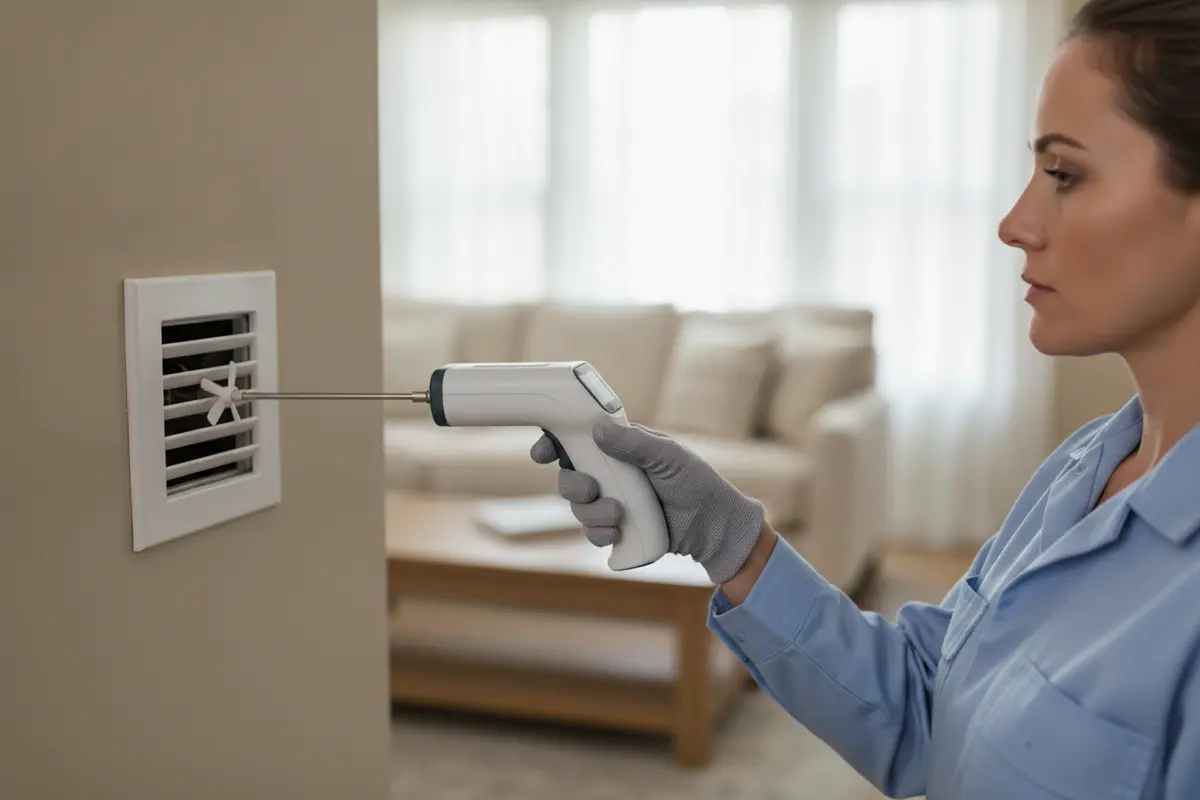
Next, compare the finding with the conditions documented during the visit. Weather, HVAC operation, occupancy, ventilation, and the test location can affect what a sample represents. Ask whether the provider recorded those details and whether the result applies only to that room and time. If the report is inconclusive, ask what additional observation or targeted evaluation would clarify the question before ordering more testing.
Follow-up should connect directly to the finding. If a moisture source, airflow problem, or ventilation issue is identified, address that condition and establish how you will determine whether the original concern improved. EPA guidance includes assessing whether mitigation strategies succeeded, deciding whether a problem has been resolved, and consulting technical specialists when needed. A qualified provider should explain which action is urgent, which is preventive, and what requires a separate specialist.
Bay Care can help connect HVAC, airflow, ventilation, moisture, and building conditions when the result points beyond a single device or room. A whole-home performance assessment may help organize related observations, while the Indoor Air Quality FAQ provides additional context. For the EPA’s investigation guidance, review the Building Air Quality Guide.
When Can Targeted Indoor Air Quality Testing Add Value?
Bay Care’s answer: Targeted indoor air quality testing can add value when a homeowner has a defined question, documented conditions, and a clear idea of how the result would affect the next step. Bay Care can add whole-home HVAC and building-performance context, but the testing method and interpretation should match the concern and stated limits.
Think of these as decision points for a focused investigation, not a universal instruction to order a test:
- A specific question remains after observation. You have documented the location, timing, operating conditions, and possible source, but still need information to evaluate a clear hypothesis about that space or condition.
- Two conditions need to be compared. A defined comparison between rooms, operating modes, or time periods may help test whether the concern follows a location or a documented building pattern. The comparison still applies only to the conditions and method used.
- You need a baseline for follow-up. If a specific moisture, airflow, ventilation, or building condition is corrected, a suitable measurement may help evaluate the documented question afterward. A result should not be treated as proof that every related issue is resolved.
- A specialist needs organized information. A written record of the question, observations, HVAC mode, location, timing, method, and limitations can make a later building, environmental, or health-related conversation more precise without turning an air sample into a medical diagnosis.
Before authorizing work, ask what observation or measurement is proposed, what it can establish, which conditions affect the result, and what decision each possible outcome would support. If no possible result would change the next step, more testing may add data without adding clarity. The U.S. Environmental Protection Agency describes sampling as one part of an IAQ investigation that also considers sources, pathways, HVAC information, occupant observations, and follow-up.
Bay Care’s indoor air quality solutions page explains its whole-home positioning. If the question involves several interacting parts of the home, a whole-home performance assessment may provide useful context alongside a focused test. The Indoor Air Quality FAQ offers additional service information.
Keep the final report with your notes, including the method, locations, timing, operating conditions, findings, limitations, and proposed next step. Bay Care can discuss HVAC, airflow, ventilation, moisture, insulation, and air-sealing factors with homeowners across Delmarva. Call 302-245-3365 to discuss a focused indoor air quality or whole-home performance question.
Call Bay Care at 302-245-3365 to discuss your testing question.
Frequently Asked Questions
Is indoor air quality testing worth it?
It can be worthwhile when you have a specific question that a suitable investigation or sample can help answer. Testing is less useful as a stand-alone search for a single cause because indoor air concerns can involve sources, airflow, moisture, HVAC conditions, and factors other than air quality. The EPA recommends treating sampling as one part of a broader diagnostic process. Learn more from the EPA.
What is indoor air quality testing?
Indoor air quality testing is the collection or evaluation of information about indoor conditions, which may include sampling for particular contaminants or indicators. A useful process also considers occupant concerns, possible sources, pollutant pathways, driving forces, and HVAC system information. The method should match the question rather than assume one test can evaluate every concern. EPA guidance outlines this approach.
Can a test identify the cause of every indoor air problem?
No. A result may provide evidence about the condition measured, but it may not identify the source, pathway, or reason for a complaint by itself. The EPA includes forming and testing hypotheses in an investigation and notes that some complaints can arise from conditions other than poor air quality.
Should I test for mold if I see moisture or visible growth?
Ask a qualified professional what decision the test would support before ordering one. CDC guidance says indoor mold needs moisture and a carbon source from building materials to grow, and excess moisture is generally the major cause of indoor mold growth. Addressing the moisture condition may be more important than pursuing a broad, undefined sample. See CDC mold guidance.
How should I respond to an unexpected test result?
Do not treat one number or laboratory finding as a complete diagnosis. Review the method, sampling location, timing, building conditions, limitations, and recommended follow-up with the provider. EPA guidance includes assessing whether a problem has been resolved, evaluating mitigation strategies, and deciding when to consult technical specialists. Bay Care can help evaluate related HVAC, airflow, ventilation, moisture, and whole-home performance factors.
Ready to Talk Through Your Indoor Air Questions?
Testing is most useful when it answers a focused question and connects the result to conditions in your home. Bay Care can help you discuss the HVAC, airflow, ventilation, moisture, and whole-home factors that may shape your next step. Call Bay Care at 302-245-3365 to discuss a focused indoor air quality or whole-home performance question.


