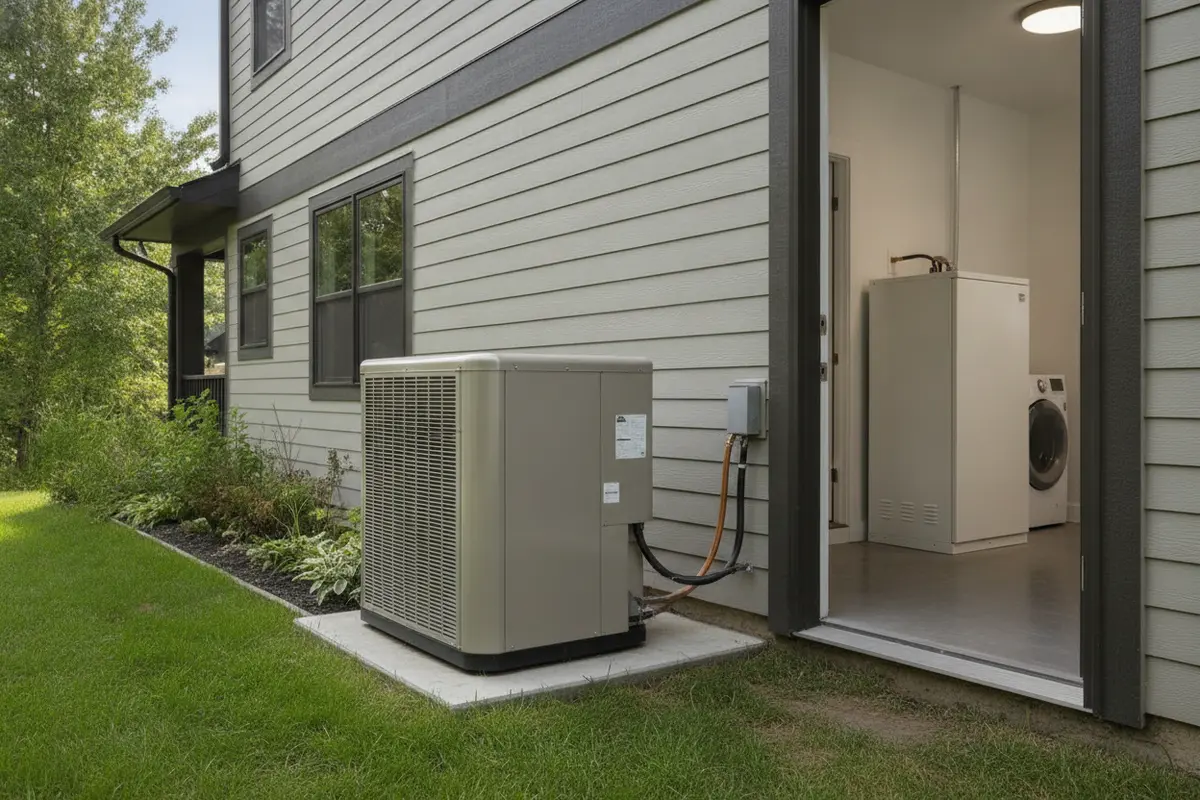
If you are asking what is a heat pump, the short answer is that it is a system that moves heat rather than making heat by burning fuel. A heat pump can move heat into a home in heating mode and move heat out in cooling mode. For Delmarva homeowners, understanding that two-way process makes it easier to think through comfort across humid summers, cool shoulder seasons, and winter weather.
Request a heat pump consultation
What is a heat pump, and how does it move heat?
A heat pump uses a refrigeration cycle to carry heat from one place to another. It relies on refrigerant, coils, a compressor, and controls. In heating mode, the outdoor coil absorbs available heat from outdoor air, and the system transfers that heat indoors. In cooling mode, the cycle runs in reverse: the indoor coil absorbs heat from the home, and the outdoor unit releases it outside.
This is different from a furnace, which generates heat by burning fuel or using electric resistance. A heat pump uses electricity to operate its components and transfer heat. The basic principle is similar to how a refrigerator moves heat from inside its cabinet to the room. Penn State Extension explains this process in its guide to heat pump basics.
Bay Care Heating & Air approaches comfort as a whole-home issue. Equipment, ducts, insulation, air sealing, and ventilation can all affect how evenly a home heats and cools. A heat pump is one part of that system, so the best choice depends on the building and the way you use it.
How does a heat pump heat a Delmarva home in winter?
In heating mode, the outdoor coil collects heat from outdoor air, even when the air feels cold. The refrigerant carries that heat through the system, and the indoor coil releases it into the home. The system’s reversing valve helps change the direction of refrigerant flow when the thermostat calls for cooling instead.
Heat pumps do not all perform the same way in every outdoor condition. As outdoor temperatures change, the amount of heat available and the system’s operating demands change too. Equipment selection, installation, airflow, and controls influence how the system responds. A system should be selected and set up for the home’s actual heating and cooling needs, rather than chosen by name alone.
Some systems have supplemental or auxiliary heat for conditions when the heat pump needs additional support. The controls determine when that heat is used. If auxiliary heat appears to run often, or the home struggles to hold the thermostat setting, do not assume a single cause. A technician can check the equipment, airflow, thermostat settings, and the building envelope. Bay Care offers heat pump services and can help assess system questions.
During cold weather, an outdoor unit may briefly enter a defrost cycle to clear frost from its coil. The fan may pause or the unit may sound different during that process. If you notice persistent heavy ice, repeated unusual sounds, or a sudden loss of heat, contact an HVAC professional rather than trying to chip ice from the equipment.
How does a heat pump cool the home in summer?
In cooling mode, the heat pump removes heat from indoor air as it passes over the indoor coil. The refrigerant carries that heat to the outdoor coil, where it is released outside. The indoor blower then circulates cooled air through the home. Because the same equipment serves both seasons, a heat pump can provide year-round heating and cooling from one system.
Cooling performance depends on more than the outdoor unit. Correct airflow, clean filters, duct condition, and the home’s insulation and air sealing all affect comfort. High indoor humidity or rooms that feel warmer than others may point to several possible issues, including airflow or duct problems. A thermostat adjustment may not address the underlying cause.
For basic cooling questions, Bay Care’s air conditioning FAQ offers related information. If you have a specific cooling problem, a professional can evaluate the equipment and the home together.
What should you know about ducted and ductless heat pumps?
Heat pumps can distribute conditioned air through ducts or use indoor units without a conventional duct network. The right arrangement depends on the home layout, existing equipment, and the areas that need heating and cooling. A ducted system may use existing supply and return ducts if they are suitable; a ductless system can serve selected rooms or zones. The label alone does not tell you which is best.
Ask how the proposed system will serve each living area, how the controls will work, and whether any existing ducts need attention. If you are considering a ductless setup, review Bay Care’s ductless HVAC information and discuss whether it fits your home. Make the comparison based on the spaces you use and your comfort goals, rather than assuming one configuration is right for every building.
What routine care can help a heat pump operate well?
Follow the equipment manufacturer’s care instructions and arrange professional maintenance as appropriate for the system. Keep the outdoor unit’s immediate area clear enough for airflow, and do not stack items against it or direct debris into its coil. Check filters at the interval recommended for your equipment and household conditions; replace or clean them as instructed.
Pay attention to changes from normal operation. A new rattle, repeated shutdown, persistent ice, or a noticeable decline in heating or cooling deserves attention. Before service, note when the change occurs and whether it happens in one mode or both. Bay Care’s preventative maintenance information explains how to discuss routine system care. Maintenance does not replace a repair when a system is malfunctioning, and homeowners should avoid opening equipment or handling electrical components.
What changes as Delmarva moves from one season to another?
A heat pump changes operating mode as heating or cooling is needed; the calendar does not require a special seasonal conversion. In mild spring and fall weather, the system may run for shorter periods or remain off when indoor conditions are comfortable. During summer, it removes indoor heat and moisture as it cools. In winter, it transfers heat from outdoor air to the home, with system performance depending on the equipment and conditions.
Use the thermostat in a steady, understandable way and follow the equipment manufacturer’s guidance. Frequent large changes to the setpoint can make it harder to interpret how the system is behaving. If the home is not comfortable, take note of the indoor temperature, the mode selected, and what the system is doing before requesting help.
| Season or mode | What the heat pump does | What to notice |
|---|---|---|
| Heating | Collects heat outdoors and transfers it indoors. | Check whether rooms reach the setpoint and whether airflow feels consistent. |
| Cooling | Absorbs heat indoors and releases it outside. | Notice indoor comfort, humidity, and whether airflow reaches each room. |
| Mild spring or fall | Runs in heating or cooling mode only as needed to maintain indoor conditions. | Observe whether the thermostat mode and setpoint match the weather and household needs. |
| Defrost or supplemental-heat operation | Uses system controls to manage outdoor-coil frost or add heat when needed. | Short changes in sound can occur; persistent ice or poor heating deserves professional attention. |
Which details matter when comparing heat pump options?
There is no single heat pump setup that fits every Delmarva home. Compare options based on the house, existing distribution system, comfort priorities, and the work needed for a sound installation. A proposal should make clear what equipment and related work are included, and how the contractor arrived at the recommendation.
- Heating and cooling needs: Share comfort problems by room and season, not just the square footage.
- Ducts and airflow: Ask whether existing ducts can deliver the required airflow and whether repair or sealing should be considered.
- Insulation and air leakage: Discuss whether attic insulation or air sealing could affect comfort and system operation.
- Controls and backup: Ask how the thermostat manages heating, cooling, defrost, and any supplemental heat.
- Equipment fit: Ask what informed the equipment selection and how the proposed system addresses the home’s needs.
- Rebates and financing: If you may qualify, confirm current program terms and eligibility before including an incentive in your budget.
Bay Care provides energy audits, which can help identify home-performance factors relevant to comfort and efficiency. A home assessment can also clarify whether the issue is equipment, ducts, insulation, or a combination. For eligible Maryland Delmarva Power customers, rebates may be available through current programs; check the rebate information and verify program details before making a decision.
What comfort clues should you pay attention to?
Changes in comfort can help you describe the problem, but they do not identify the cause on their own. Before calling for service, consider when the issue began and whether it affects one room or the whole home. Bay Care can use those observations as a starting point when assessing the system and its connected components.
- One room feels different: Note whether a door is usually closed and whether the room has a supply register or return path.
- The system runs but comfort does not improve: Record the thermostat setting and whether the issue occurs in heating, cooling, or both.
- Airflow seems weak: Check that registers are open and that the filter is installed as directed. Do not remove equipment panels.
- Indoor air feels damp: Mention the weather and whether the issue is limited to certain rooms. Humidity and cooling operation can be connected.
- Outdoor unit has persistent ice or unusual noise: Keep clear of the equipment and request a professional evaluation.
If a system is not heating, Bay Care’s heat pump no-heating guide may help you identify safe observations before arranging service. For a cooling concern, see the heat pump no-cooling guide. Avoid opening electrical compartments or attempting repairs yourself.

How do insulation and ducts affect heat pump comfort?
A heat pump conditions the air, but the house determines how that conditioned air moves and how long comfort lasts. Leaky or poorly balanced ducts can reduce delivery to rooms. Insufficient insulation or air leakage can make temperatures harder to maintain. Ventilation and indoor air quality are also part of a whole-home plan.
For example, if an upstairs room is uncomfortable in both summer and winter, simply changing equipment may not solve the problem. A professional may look at supply and return airflow, duct leakage, insulation, air sealing, and how the system is controlled. Bay Care’s duct sealing service and attic insulation work address building components that can affect comfort.
That does not mean every heat pump home needs duct or insulation work. It means that system decisions should account for the home’s existing conditions. A practical evaluation helps separate equipment needs from building-performance improvements.
What should you prepare before a heat pump consultation?
A few clear details can make a consultation more useful. You do not need to diagnose the system. Describe what you experience and gather basic information you already have.
- Write down the rooms or areas where comfort is a problem.
- Note whether it occurs during heating, cooling, or both, and whether it is constant or occasional.
- Record thermostat mode and settings when the issue occurs.
- Look for the model information on accessible equipment labels, but do not remove panels to find it.
- Gather recent service records or information about earlier repairs, if available.
- Ask what the evaluation includes, whether duct or insulation conditions will be reviewed, and how the recommendation addresses your home’s needs.
Bay Care serves homeowners across Maryland and Delaware on the Delmarva Peninsula. You can use the service area information to check the communities served, then contact Bay Care to discuss a heat pump question or consultation.
Talk with Bay Care about your home’s comfort
Frequently asked questions about heat pumps
Does a heat pump work when outdoor air feels cold?
Yes. A heat pump can collect heat from outdoor air even when it feels cold. The amount of heat available and the system’s operation change with conditions, so equipment selection and controls matter. If your home does not stay comfortable, have the system assessed rather than assuming the outdoor temperature alone explains it.
Does a heat pump provide both heating and air conditioning?
Yes. A heat pump can heat and cool by reversing the direction in which it transfers heat. In heating mode it moves heat indoors; in cooling mode it moves heat from indoors to outdoors.
Why might the outdoor unit briefly sound different in winter?
The system may be clearing frost from its outdoor coil in a defrost cycle, and the fan or sound can change briefly. Persistent ice, repeated unusual sounds, or reduced heating should be checked by an HVAC professional.
Can a heat pump fix uneven temperatures in every room?
Not by itself in every case. Uneven comfort can involve equipment, duct design or condition, airflow, insulation, air leakage, or controls. An evaluation can help identify which factors apply to the home.
Should I change the thermostat when the seasons change?
Set the thermostat to the mode and temperature that suit your comfort needs, and follow the system manufacturer’s instructions. You do not need to convert the equipment between seasons; the heat pump changes its operating mode when heating or cooling is called for.
Can I check a heat pump myself before calling for service?
You can note the thermostat settings, check that registers are open, and inspect or change the filter as directed by its manufacturer. Do not open equipment panels, handle wiring, or chip ice from the outdoor unit. Share your observations with a qualified technician.
A heat pump can serve a Delmarva home through changing seasons, but comfort depends on the equipment and the home working together. Understanding the operating mode and keeping track of comfort clues can help you ask better questions and plan an informed next step.