
If your air conditioner runs but several rooms still feel different, the equipment may be only one part of the story. Whole-home comfort problems can reflect how the HVAC system, building envelope, humidity, ventilation, and room layout interact. That is especially important in Delmarva homes, where upper floors, additions, attics, crawlspaces, and coastal conditions can create different comfort demands under one thermostat.
Call Bay Care at 302-245-3365 to schedule service or request a free second opinion.
Whole-home comfort problems are persistent temperature, humidity, or air-quality concerns that cannot be explained by the equipment alone. Bay Care Heating & Air evaluates the relationship among the HVAC system, rooms, ducts, insulation, air sealing, and ventilation. That helps homeowners choose a targeted next step instead of assuming replacement is necessary.
The key distinction is scope. A single blocked register may need a simple correction, while several rooms that change with weather, time of day, or season may point to a larger home-performance pattern. For the broader relationship among these systems, see Bay Care’s whole-home energy efficiency guide. Then use the clues below to decide whether the problem calls for a narrow service visit or a more connected evaluation.
Why Do Whole-Home Comfort Problems Persist When AC Runs?
Bay Care Heating & Air often starts with a simple question. Is the equipment unable to condition the air? Or are conditioned air and outdoor heat interacting unevenly with the house? An air conditioner may operate through a normal cycle while rooms continue to feel warm, damp, drafty, or stale.
The thermostat reports conditions at one location. It does not measure every bedroom, hallway, finished attic, addition, or lower level. If those spaces have different sun exposure, insulation levels, window areas, ceiling heights, or occupancy patterns, the home can experience different comfort loads at the same time. A central system may satisfy the thermostat while another part of the home remains uncomfortable.
Comfort can also change without an obvious equipment failure. A room may become harder to condition after an addition, attic conversion, insulation disturbance, duct modification, window replacement, or change in how the family uses the home. Seasonal moisture can add another layer. The AC may be lowering temperature, but high indoor humidity can still make the space feel heavy or clammy.
That does not prove the building envelope or distribution system is at fault. It does show why a replacement recommendation should follow evidence. Bay Care’s whole-home approach connects homeowner observations with equipment operation, room conditions, airflow, insulation, air sealing, ventilation, and indoor air quality before identifying the most practical solution.
What Clues Point to a Whole-Home Issue Instead of an AC Failure?
Patterns are more useful than one uncomfortable moment. A professional evaluation becomes more valuable when the same complaint returns across different days or appears in more than one area of the house. The following clues do not diagnose a specific defect, but they help separate a localized symptom from a broader comfort problem.
| Homeowner observation | What the pattern may suggest |
|---|---|
| Several rooms feel different from the thermostat area | Uneven room loads, distribution concerns, envelope differences, or thermostat-location limitations |
| Comfort changes with sun, wind, rain, or outdoor humidity | Building-envelope or moisture interaction that may not be solved by equipment service alone |
| The concern appears in heating and cooling seasons | A recurring home-performance, control, duct, or room-load issue rather than one seasonal equipment symptom |
| A room changed after renovation or a new use | A changed load or altered relationship between the room and the existing HVAC design |
| Temperature feels acceptable but the room remains damp or stale | Humidity, ventilation, drainage, or indoor-air-quality conditions that need their own review |
It is also useful to note when the issue began, which rooms are affected, whether doors are usually open or closed, and whether the concern is strongest during a particular time of day. Photos of visible moisture, damaged insulation, or unusual equipment conditions may provide context, but homeowners should not enter unsafe equipment areas or disturb fuel-burning appliances.
These observations give Bay Care a starting point without turning a symptom into a conclusion. The existing airflow improvement guide covers practical airflow checks. This article addresses the wider question of when those checks are not enough because the comfort pattern involves the house as a connected system.
How Do the Building Envelope and HVAC System Interact?
Every heating and cooling system works inside a building envelope. The envelope includes the attic, roofline, walls, windows, doors, crawlspace, and other boundaries that separate conditioned rooms from outdoor conditions. Insulation slows heat transfer, while air sealing addresses uncontrolled movement through gaps. Neither function replaces the other, and neither automatically corrects a distribution or equipment problem.
An upper room under a poorly insulated roof can gain heat faster than a shaded main-floor hallway. A room over a crawlspace may respond differently from a room over conditioned space. Air leaks around penetrations, framing, doors, or attic access can introduce outdoor air and moisture, while leakage from the conditioned side can allow treated air to escape before it benefits the room. The HVAC system then has to respond to loads that may not have been part of its original design assumptions.
The interaction can run in the other direction as well. Ducts or equipment located in an attic, crawlspace, garage, or other unconditioned area are exposed to conditions that affect delivery and efficiency. A building-envelope review should therefore be connected with the system’s supply, return, controls, and operating condition. Looking at insulation alone can miss a duct or equipment issue. Looking at the equipment alone can miss a room that is gaining heat through the envelope.
Bay Care can connect this review to its whole-home performance assessment service. The goal is not to recommend insulation or air sealing automatically. The goal is to identify whether the evidence points toward envelope work, duct service, equipment repair, ventilation changes, or a combination of improvements. ENERGY STAR’s whole-house guidance also supports considering air sealing and insulation as related parts of home performance.

This broader view protects homeowners from solving the wrong problem. Envelope work cannot repair a failing blower or an incorrectly sized system. HVAC service cannot, by itself, correct every heat gain or air leak. Whole-home comfort problems improve when the proposed work matches the source of the discomfort.
Call Bay Care at 302-245-3365 if recurring comfort problems are affecting more than one room.
What Role Do Humidity and Ventilation Play in Comfort?
Temperature is only one part of how a home feels. A room can reach the thermostat setting and still feel uncomfortable when indoor humidity is high, outdoor air is entering unpredictably, or stale air is not being replaced appropriately. Moisture can come from weather, ground conditions, plumbing, bathing, cooking, occupancy, drainage, or a system that is not operating long enough to dehumidify effectively.
Ventilation and air sealing must be considered together. Sealing uncontrolled leaks can reduce drafts and moisture entry, but a tighter home may require a deliberate ventilation strategy. Ventilation changes should also account for exhaust fans, combustion appliances, and the way air moves through the home. A comfort evaluation should not promise that one new vent or one seal will solve every humidity or air-quality complaint.
Bay Care considers moisture, odors, dust, stale air, and temperature swings as related clues rather than separate problems by default. In a coastal Maryland or Delaware home, salt air and seasonal humidity can add stress to equipment and the building. Coastal exposure is a reason to consider equipment care and corrosion protection, not proof that salt air caused a particular room imbalance.
A home energy audit can help when comfort concerns overlap with high energy use, drafts, moisture, or several building areas. Bay Care’s guide to what a home energy audit finds explains that broader review. The right scope depends on what the evidence shows, and homeowners should receive a clear explanation of which condition each proposed improvement is intended to address.
When Should Zoning or Ductless HVAC Enter the Conversation?
Zoning or ductless HVAC may be appropriate when a room, addition, second floor, or other area has a genuinely different conditioning need. The existing central layout may not serve that space well. These options should enter the conversation after the basic whole-home pattern is understood, not as an automatic response to any room that feels warm.
A new control zone cannot correct every envelope, duct, return-air, or equipment problem. Likewise, a ductless indoor unit may provide focused conditioning while leaving the underlying reason for the discomfort unresolved. The decision should account for room use, insulation, windows, solar exposure, existing equipment, heating needs. Electrical requirements, condensate planning, and how the proposed solution fits the rest of the home.
Bay Care can compare targeted repairs, home-performance improvements, zoning, ductless options, or equipment work based on the home’s conditions. Learn more about ductless HVAC options when a dedicated solution may fit the space. This article does not replace a system-design consultation, and no single technology should be presented as the answer before the cause and scope are established.
How Does Bay Care Prioritize the Next Step?
Bay Care Heating & Air uses the homeowner’s experience as the starting point, then connects it with observable conditions. The purpose is to create a practical order of operations. A clear priority list can prevent a homeowner from paying for a major change before a smaller, better-supported correction has been considered.
- Define the pattern. Record the affected rooms, the time of day, weather conditions, season, humidity concerns, and whether the issue changes when doors or rooms are used differently.
- Separate urgent concerns from comfort concerns. Unusual odors, water near equipment, electrical concerns, fuel-burning appliance concerns, or a system that cannot maintain temperature may require prompt service. Do not troubleshoot unsafe equipment areas yourself.
- Connect the room to the system. The evaluation considers thermostat location, system operation, supply and return conditions, duct routes, controls, room loads, and the building envelope. The objective is to understand how the pieces interact, not to assign blame to one component too early.
- Check for home-performance contributors. Insulation, air sealing, ventilation, moisture, and indoor air quality may belong in the same discussion when symptoms occur across multiple rooms or seasons.
- Rank options by evidence. The next step may be a focused repair, duct or airflow service, envelope improvement, ventilation or IAQ measure, zoning or ductless design, equipment repair, or replacement. Bay Care explains why each option fits the findings and what it is intended to improve.
That process is different from chasing one symptom at a time. It also does not assume that every uncomfortable home needs a full retrofit. The appropriate outcome may be one targeted correction, several coordinated improvements, or a documented decision to monitor the condition. Homeowners in Salisbury, Fruitland, Delmar, and nearby Maryland communities, as well as Delaware communities across the Delmarva Peninsula. Can ask for a clear explanation of the findings before approving major work.
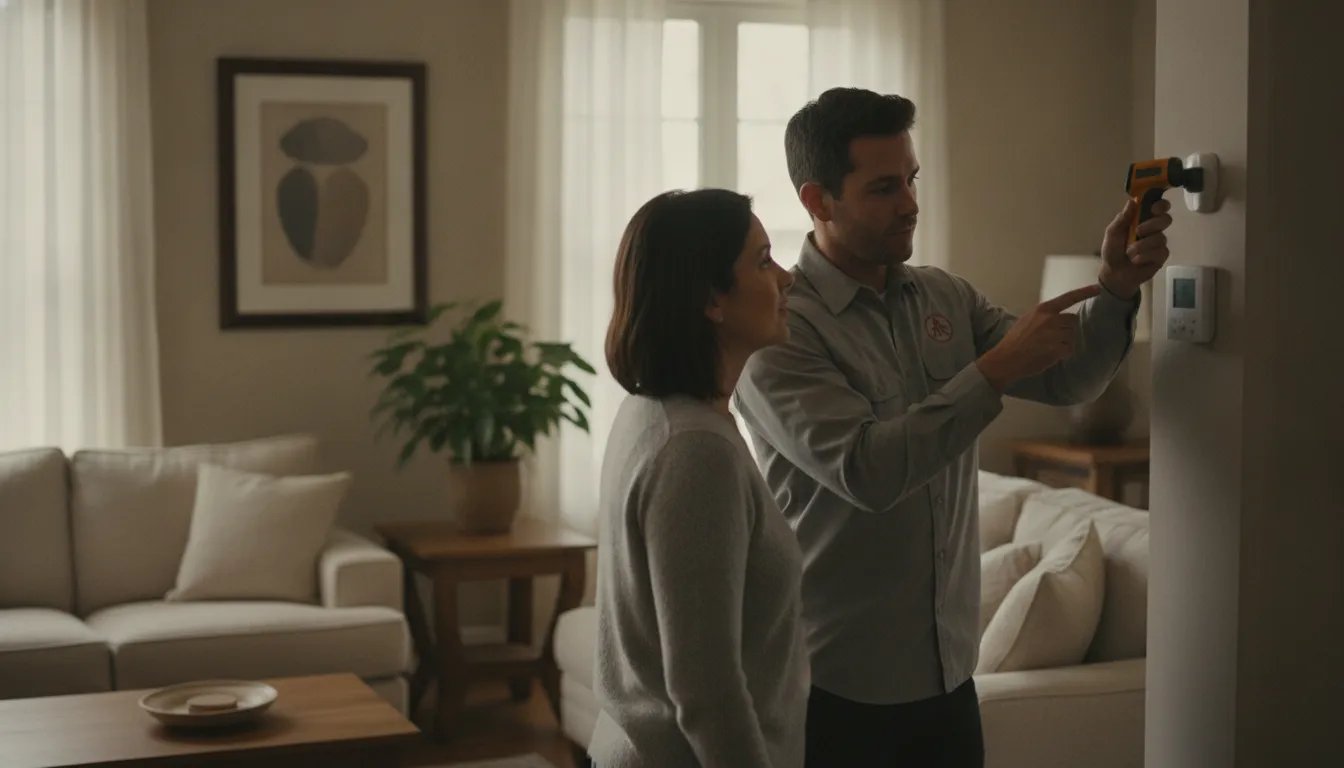
Frequently Asked Questions About Whole-Home Comfort Problems
Why can rooms feel different when they share one thermostat?
A thermostat measures the conditions around its own location. Differences in sun exposure, room use, windows, floor level, insulation, moisture, and the path between a room and the HVAC system can make other spaces feel different. The pattern should be evaluated before assuming the equipment has failed.
Why can a home feel humid even when the temperature is comfortable?
Humidity can be affected by outdoor air, moisture sources, drainage, ventilation, and how the air conditioner operates. A comfortable temperature does not prove that moisture is controlled. Bay Care can help identify whether the concern relates to equipment operation, the building, ventilation, or another source.
Can whole-home comfort problems occur during both heating and cooling?
Yes. A recurring issue in both seasons may point to a room-load, envelope, control, duct, or ventilation condition rather than a single cooling-season failure. Seasonal details still matter because the direction and size of heat and moisture movement can change.
Does living near the coast automatically explain an uneven room?
No. Coastal salt air can make corrosion protection and equipment care more relevant, but it does not automatically explain a temperature difference. Bay Care considers coastal exposure alongside equipment condition, room loads, envelope conditions, humidity, and system operation.
What should I note before requesting a comfort evaluation?
Write down the affected rooms, when the issue occurs, outdoor conditions, and temperature or humidity observations. Include recent renovations, unusual odors or sounds, and whether the problem appears in one season or both. This context helps Bay Care connect the homeowner’s experience with the home’s systems.
Ready to Investigate the Cause of Uneven Comfort?
If your air conditioner runs but the home still feels uneven, a broader evaluation can help you choose the next practical step. Bay Care Heating & Air serves homeowners across the Delmarva Peninsula with HVAC service and whole-home performance solutions. Call Bay Care at 302-245-3365 to schedule service, request a free second opinion, or visit Bay Care’s contact page.


