
A whole home generator is useful only if it starts and runs when utility power fails. Regular, model-specific maintenance helps homeowners spot problems before an outage, but fuel, electrical, and engine work should be handled safely. Bay Care Heating & Air serves Delmarva homeowners with generator solutions and a whole-home perspective on comfort and backup planning.
Request a generator consultation
What does whole home generator maintenance include?
Bay Care recommends treating the generator, its fuel supply, transfer equipment, and the home’s essential electrical loads as one backup-power system. The owner’s manual sets the schedule and approved tasks for each model. Homeowners can keep the area clear and watch for alerts, while a qualified generator technician handles inspections and repairs that involve the engine, wiring, fuel, or transfer switch.
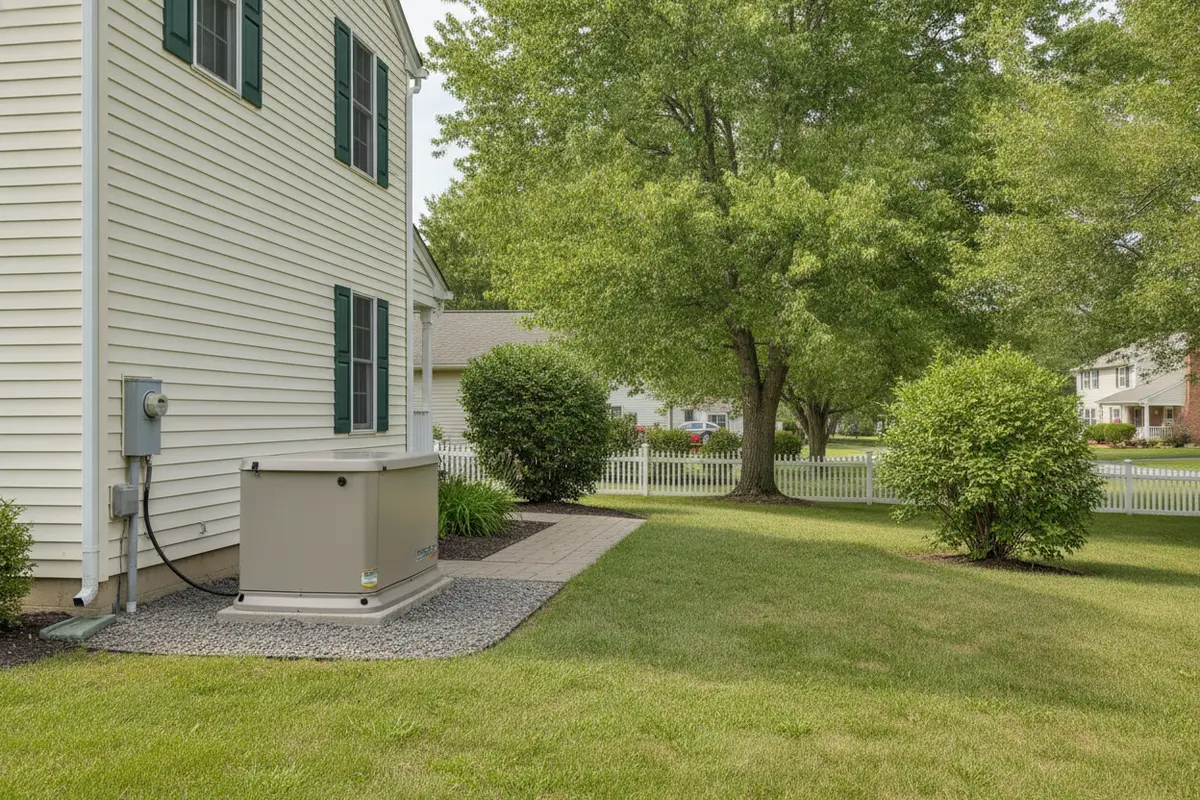
A permanently installed standby generator is different from a portable unit. Consumer Reports describes whole-house or standby generators as systems that can power an entire home, although the capacity and setup of an individual installation determine what it can actually support. Do not assume that every appliance can run at once: review the equipment rating and your installer’s load plan.
- Read the model’s manual. Note its maintenance intervals, oil and filter specifications, exercise schedule, and service requirements. A schedule for one unit may not apply to another.
- Keep the equipment area clear. Look for leaves, brush, stored items, snow, or other obstructions near the enclosure. Follow the manufacturer’s clearance instructions and do not open panels or reach into the unit.
- Observe the status display. Check for indicator lights, fault codes, or alerts using only the steps described in the manual. Record the message rather than repeatedly clearing it.
- Arrange scheduled professional service. Ask the provider what inspection and maintenance tasks are appropriate for your model, age, operating hours, and fuel type.
- Review the backup plan. Confirm which circuits are covered, how the system transfers power, and how household members should respond when the generator starts.
How often should you service a whole home generator?
There is no single interval that fits every whole home generator. Bay Care advises owners to follow the maintenance calendar supplied with their specific equipment and to ask a qualified provider to confirm the schedule. Usage, environment, fuel, alerts, and the manufacturer’s instructions can all affect when an inspection or service is due.
Many standby units have an automatic exercise feature, but the day, duration, and operating behavior are model-specific. The exercise run is not a substitute for the service listed in the owner’s manual. If the unit fails to exercise, runs unusually, or displays a warning, note what happened and contact the provider rather than trying to adjust internal settings.
A practical record can make service simpler. Keep the manual and installation paperwork together, and write down:
- Generator make, model, serial number, and installation date, if available.
- Fuel type and any information the installer gave you about the fuel supply.
- Exercise dates, fault codes, unusual sounds, or changes in performance.
- Dates and descriptions of professional inspections or repairs.
- Questions about backed-up circuits, transfer operation, or household procedures.
For coastal Delmarva properties, also pay attention to the exterior enclosure and surrounding area. Salt air and weather exposure can make regular visual observation worthwhile, but do not apply coatings, cleaners, or lubricants unless the manufacturer specifically approves them. Bay Care’s Generac generator information can help start a conversation about backup-power options; the equipment manual remains the authority for care of a particular installed model.
What can homeowners check safely before an outage?
Bay Care suggests limiting homeowner checks to observations and routine actions the manufacturer explicitly identifies as owner-safe. You can confirm the area is unobstructed, check the display for an alert, and review your outage plan. Do not open electrical compartments, handle fuel connections, or attempt engine repairs; those tasks can expose you to serious hazards.
- Check from outside the enclosure. Look for visible damage, a displaced cover, or debris blocking the unit. Do not remove panels or touch exposed components.
- Look for a status alert. Use the normal display or approved app, if your unit has one, and write down the exact warning. Follow only the owner-level steps in the manual.
- Confirm the space is accessible. Keep vegetation and stored belongings out of the required clearances. Never place items on the generator or block ventilation openings.
- Review contacts and household instructions. Make sure occupants know whom to call and which circuits are expected to receive backup power.
- Schedule service if something has changed. A new noise, vibration, smell, leak, fault indicator, or failed exercise run merits professional advice.
Never use a portable generator indoors, in a garage, or near doors and windows; this article concerns permanently installed standby equipment and does not replace the safety instructions for any generator. If you smell fuel, see smoke, hear an alarm, or suspect an immediate hazard, move away and contact the appropriate emergency or utility service. Do not attempt to diagnose a potentially dangerous condition yourself.
Which warning signs mean you should call a technician?
Bay Care recommends calling a qualified generator technician when the unit signals a fault, does not exercise or start as expected, or shows a change that could indicate a fuel, electrical, or mechanical problem. Share what you observed and any alert code. Leave covers closed and do not keep restarting the system to see whether the symptom disappears.
| What you notice | Safer next step | Why it matters |
|---|---|---|
| Fault light, error code, or service reminder | Record the message and contact the service provider for guidance. | The code and model help a technician determine the appropriate inspection. |
| Generator does not complete its scheduled exercise | Check the manual for owner-level checks; if unresolved, arrange professional service. | The generator’s readiness is uncertain until the issue is understood. |
| New, persistent noise, vibration, smoke, or unusual odor | Keep away from the equipment and seek prompt professional advice; treat suspected immediate danger as an emergency. | These changes may point to a condition that should not be investigated by opening the unit. |
| Visible damage, loose-looking parts, or fluid beneath the unit | Do not touch or operate the generator; contact a qualified provider. | Inspection and repair may involve moving parts, fuel, or electrical components. |
| Generator runs but some expected circuits have no power | Use the household outage plan and call the installer or technician. | The issue may involve the transfer equipment, circuit configuration, or the utility supply. |
| Repeated shutdown or an alert that returns after an approved reset | Stop repeated reset attempts and request service. | Recurring warnings need diagnosis, not repeated clearing. |
When you call, provide the make and model if known, the alert or code exactly as displayed, when the symptom started, whether the utility is currently available, and what the generator was doing. Mention any recent service or changes near the equipment. These details help the provider prepare without asking you to inspect anything unsafe.
How should you prepare your home for a power outage?
Bay Care’s whole-home approach looks beyond the generator itself: comfort, ventilation, heating and cooling equipment, and electrical priorities affect how a household experiences an outage. Before severe weather arrives, learn which circuits are backed up, understand the automatic transfer process, and keep the generator’s service information easy to find.
- Know the coverage. Ask the installer which circuits are connected and whether the system is intended for selected essentials or a broader share of the home’s loads.
- Prioritize equipment. Discuss critical needs such as refrigeration, lighting, communications, or specific medical equipment with the installer. Do not assume every large load can operate simultaneously.
- Understand the handoff. Ask what normal transfer behavior looks and sounds like, and what occupants should do if the generator does not start or a warning appears.
- Plan for household members. Share the instructions with everyone who may be home during an outage. Keep contact details and the manual accessible without relying on a powered device.
- Consider comfort as well as power. Heating and cooling equipment may have distinct electrical and startup requirements. Ask a qualified professional whether your planned backup configuration can support the equipment and loads you prioritize.
A generator is one part of a resilient home, not a substitute for safe electrical design or a plan for all outage conditions. If comfort problems or uneven airflow are also concerns, Bay Care can discuss its broader residential HVAC and home-performance services. Homeowners can also review Bay Care’s Delmarva service areas to see the communities the company serves.
When is generator repair enough, and when should you consider replacement?
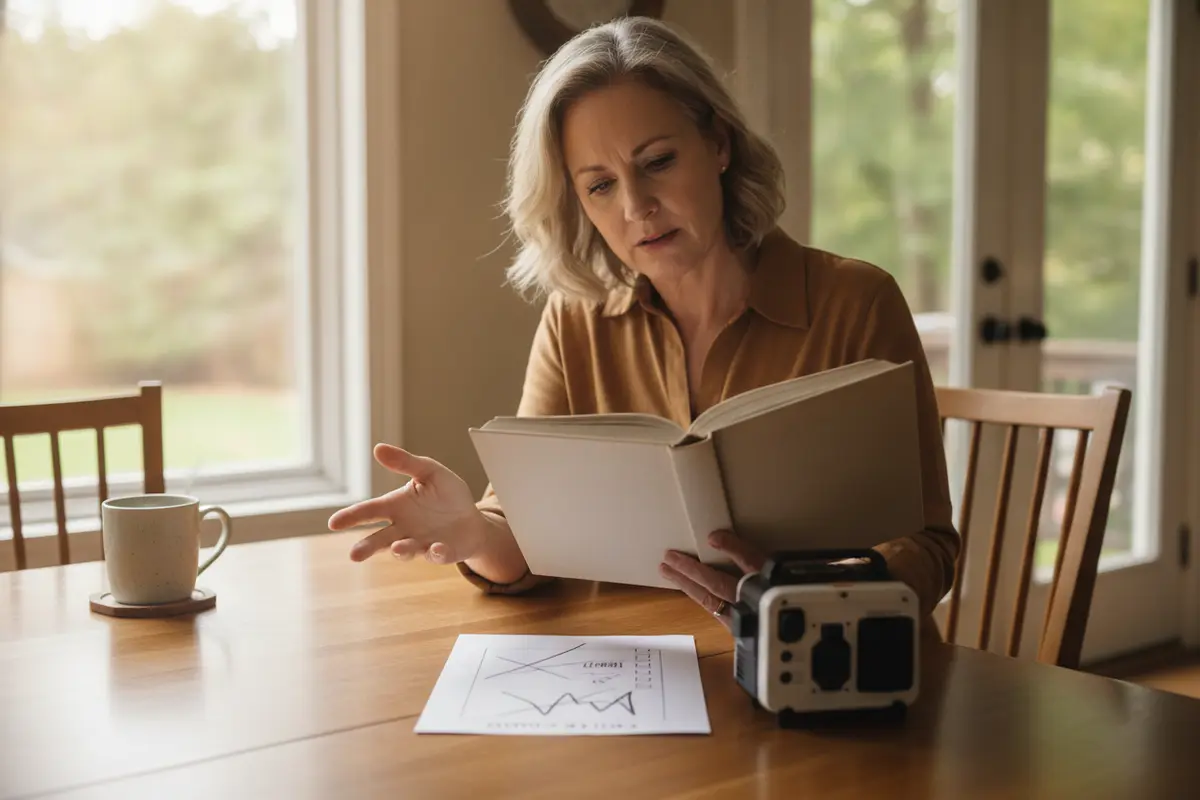
Bay Care cannot determine repair or replacement from age alone without inspecting the equipment and understanding its condition. Ask a qualified technician to explain the fault, the recommended work, the unit’s service history, and whether the system still meets your backup needs. Compare the repair plan with the cost and scope of replacing the system before making a decision.
Repair may be a reasonable path when a technician identifies a specific correctable problem and confirms the generator remains suitable for the home. Replacement may be worth discussing when problems recur, parts or support are difficult to obtain, the equipment has significant damage, or household power priorities have changed. These are reasons to request an evaluation, not a diagnosis or a fixed replacement rule.
| Decision factor | Questions to ask about repair | Questions to ask about replacement |
|---|---|---|
| Fault and condition | What failed, what caused it, and what does the repair address? | Is the unit’s condition or damage making ongoing operation impractical? |
| Service history | Is this an isolated issue or part of a repeated pattern? | Would a new unit address recurring reliability concerns? |
| Parts and support | Are the necessary parts and qualified service available? | What current equipment and support options fit the installation? |
| Backup needs | Will the existing capacity and circuit plan continue to meet priorities? | Would a different capacity or load plan better match the home’s needs? |
| Proposal clarity | What is included in the repair, and what remains uncertain? | What equipment, installation work, transfer equipment, and maintenance plan are included? |
Ask for a written explanation of the options, including what is included and what is excluded. If you are comparing a new installation, talk through the home’s electrical loads, fuel source, placement, clearances, and required permits or utility coordination with the responsible professionals. A system sized or configured without considering actual loads can leave important expectations unmet.
How does a generator fit into a whole-home comfort plan?
Bay Care Heating & Air approaches home performance as a connected system: heating and cooling equipment, airflow, insulation, air sealing, and ventilation all influence comfort. Backup power planning should account for the equipment and circuits a household needs during an outage. A generator consultation can clarify what the system can support and what questions require an electrician or generator specialist.
For example, if a homeowner wants a heat pump to operate during an outage, the conversation should include the unit’s electrical requirements, the generator capacity, and other simultaneous loads. If the goal is to maintain only a few essential circuits, the plan may differ. Do not assume that a unit described as whole-home automatically supports every appliance at once; the equipment and installation determine the actual coverage.
Other home improvements can help address comfort concerns independently of backup power. Bay Care offers home energy audits, attic insulation, and duct sealing as part of its home-performance work. These services do not replace generator maintenance, but they can be relevant when planning comfort improvements across a home.
Before arranging work, gather your generator model information, a list of circuits you want to prioritize, and any service records or fault messages. You can also review available rebate information for eligible home energy projects; rebate terms and availability depend on the program and project. For help deciding whom to contact, Bay Care’s contact page provides a path to ask about your needs.
Ask Bay Care about generator planning
Frequently asked questions about whole home generators
Can I maintain a standby generator myself?
Keep to the owner-safe checks in your specific manual, such as observing alerts and clearing the area around the enclosure. Leave engine, fuel, electrical, and transfer-switch work to a qualified professional. If you are unsure whether a task is safe for an owner, do not attempt it; ask the manufacturer or service provider.
Does the generator’s automatic exercise run mean it is ready?
An exercise run is one part of the system’s operation, not proof that every component and backed-up circuit will work as expected during an outage. Follow the model’s service schedule, pay attention to fault messages, and arrange professional checks as directed by the manufacturer.
Can a whole home generator power every appliance?
Not necessarily. Actual coverage depends on the generator’s capacity, installation, transfer equipment, and the loads operating at the same time. Ask the installer to identify supported circuits and explain any limits before relying on the system for particular equipment.
What should I do if the generator shows an error code?
Write down the code and the conditions when it appeared. Follow only owner-level instructions in the manual, and contact a qualified technician if the alert persists, returns, or is not explained by an approved simple check. Do not repeatedly reset the unit or open its panels.
When should I replace rather than repair my generator?
There is no universal age or fault that makes replacement the right choice for every home. Ask a technician to compare the unit’s condition, repair options, service history, available parts, and your current backup needs with a replacement proposal.
Following the manufacturer’s schedule, keeping a clear record of alerts and service, and knowing when to call a qualified technician can help you make a more informed backup-power plan before the next Delmarva outage.


