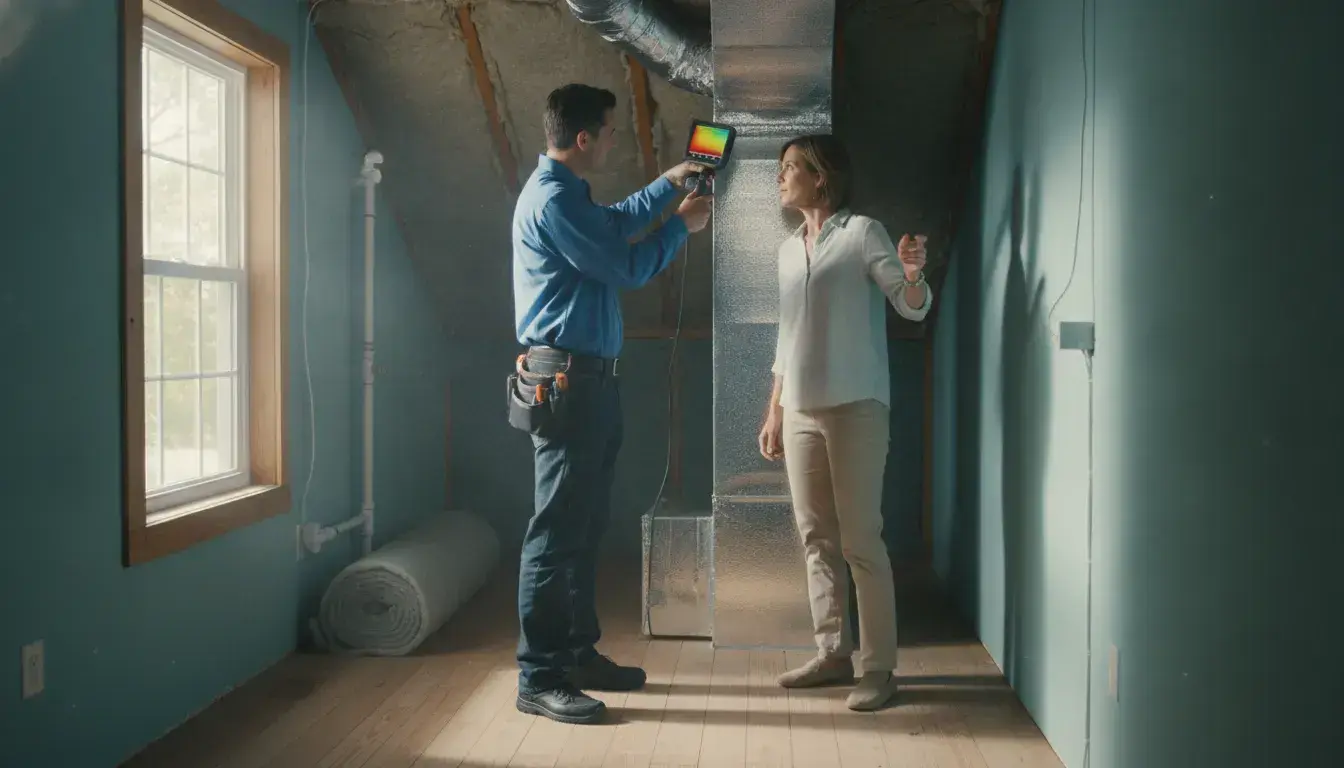
If some rooms stay hot or cold, utility bills keep climbing. Or your HVAC system seems to work harder than it should, the equipment may not be the whole problem. Airflow, insulation, air sealing, ventilation, and indoor air quality all influence how your home feels and performs.
Call Bay Care at 302-245-3365 to ask about a whole-home performance assessment.
A whole-home performance assessment gives Bay Care a connected view of those factors instead of treating one symptom in isolation. The goal is to identify likely root causes, explain practical options, and help you decide which improvements make sense for your home, priorities, and budget. Bay Care also offers whole-home energy efficiency on the Delmarva Peninsula.
For homeowners in Salisbury and throughout Delmarva, that means a more useful conversation than simply asking whether you need a new furnace or air conditioner. It starts with understanding what the assessment covers, what it does not promise, and how the findings guide next steps.
What Is a Whole-Home Performance Assessment, and What Is It Not?
A whole-home performance assessment looks beyond the furnace, heat pump, or air conditioner to understand how the house operates as a connected system. Bay Care uses this approach to connect comfort, airflow, insulation, air sealing, ventilation, and indoor air quality concerns. This helps homeowners investigate root causes instead of treating symptoms in isolation.
More than an equipment-focused HVAC visit
An equipment-focused service visit has an important purpose: a technician inspects, maintains, repairs, or evaluates a specific HVAC system. That visit may explain why a unit is not heating or cooling properly. It may not explain why one room stays uncomfortable, why dust returns quickly, or why the system seems to run longer than expected.
A whole-home assessment broadens the questions. Is conditioned air reaching the rooms that need it? Are duct pathways contributing to uneven temperatures? Could gaps in the building envelope allow outdoor air into the home or conditioned air to escape? Does insulation coverage support the comfort goals of the space? Are ventilation and indoor air quality concerns connected to how the home exchanges air?
What homeowner complaints can reveal
High utility bills and comfort complaints are useful clues, not automatic proof of one problem. Poor airflow can make equipment appear undersized or overworked. Inadequate insulation or air leakage can undermine otherwise capable equipment. Ventilation conditions can influence moisture and the indoor environment. These factors may overlap, which is why replacing equipment alone is not always the first or only question to consider.
Bay Care’s energy audit services follow that broader perspective. The assessment is intended to organize observations and identify areas worth investigating. It is not a promise of a particular savings amount, a guaranteed diagnosis, or a fixed set of improvements.
What the assessment does not promise
A whole-home performance assessment does not guarantee that every comfort or efficiency concern has one simple answer. It does not automatically recommend replacing an HVAC system, and it should not be presented as a predetermined test with a guaranteed result. The appropriate next step depends on the home, the symptoms, and the findings gathered during the evaluation.
In practical terms, the assessment gives you a more complete starting point. It helps separate equipment concerns from building-performance concerns, while showing how those pieces may interact. That information can support a more informed conversation about repairs, maintenance, air sealing, insulation, duct work, ventilation, or indoor air quality improvements.
| Visit type | Main focus |
|---|---|
| Equipment-focused visit | One HVAC system and its service needs. |
| Whole-home assessment | Equipment plus comfort, airflow, insulation, air sealing, and ventilation. |
Which Systems Does Bay Care Evaluate During an Assessment?
Bay Care evaluates the home as a connected system, not just the heating and cooling equipment. The review can include HVAC operation, ductwork, airflow, insulation, air sealing, ventilation, moisture indicators, indoor air quality observations, and visible safety concerns. The goal is to identify relationships between symptoms, such as a room that will not stay comfortable, persistent humidity, or unusually high utility bills. The assessment then considers the conditions that may be contributing to them.
HVAC equipment, ducts, and airflow
The assessment starts with the systems responsible for conditioning and moving air. Bay Care looks at how the heating and cooling equipment is operating, then considers whether the duct system distributes that conditioned air effectively. Duct leakage, restrictions, poor return airflow, or imbalances between rooms can affect comfort even when the equipment itself appears to be running.
This broader review helps separate an equipment problem from an airflow or distribution problem. It also gives you a clearer basis for deciding whether the next step involves maintenance, duct service, an equipment adjustment, or a larger home-performance improvement.
Insulation, air sealing, and ventilation
The building shell matters because conditioned air can be lost through gaps, penetrations, and under-insulated areas. Bay Care evaluates visible insulation conditions and looks for indications that outside air is entering where it should not, or that conditioned air is escaping. These observations are considered alongside the HVAC system rather than treated as unrelated construction details.
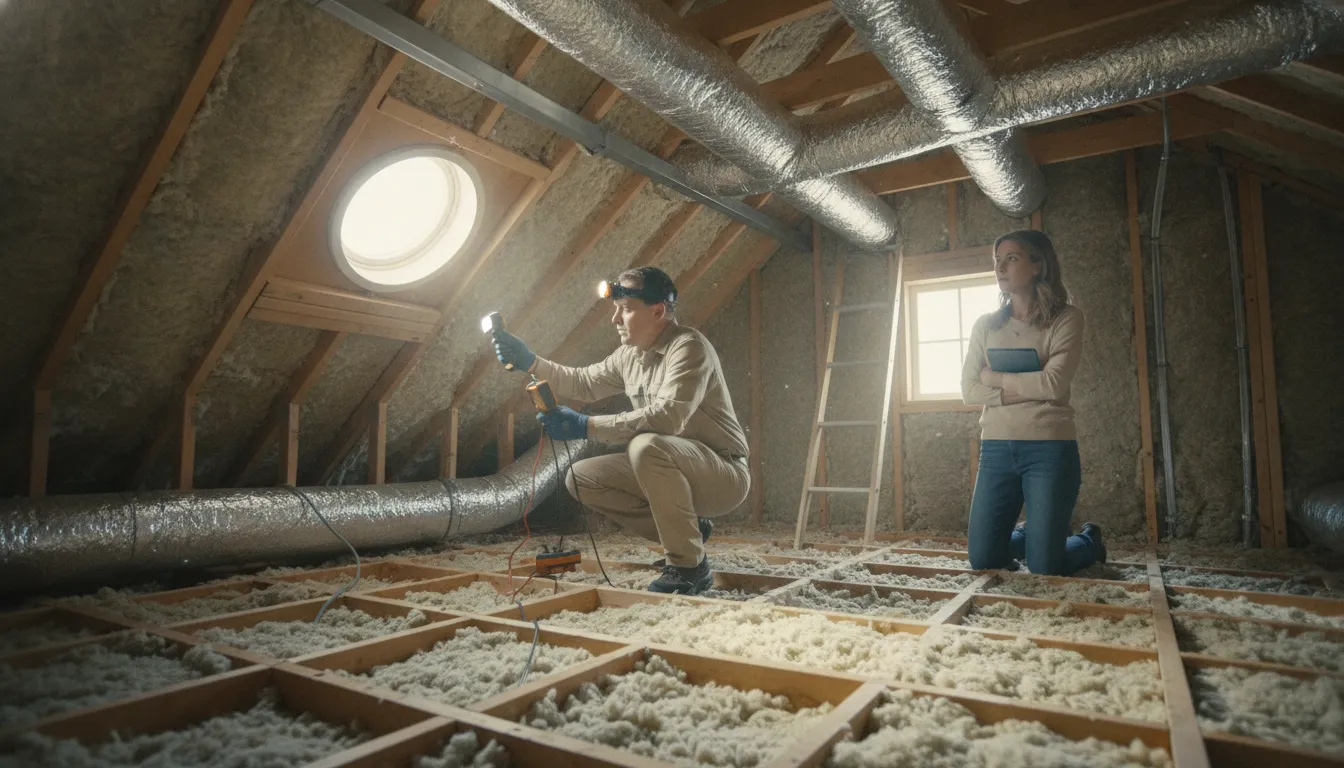
Ventilation is part of the same picture. A home needs appropriate air exchange, but uncontrolled air leakage can bring in heat, humidity, and outdoor pollutants. The assessment may identify areas where ventilation, moisture control, or air sealing deserve closer attention. It does not automatically diagnose mold or another indoor-air-quality condition. Instead, it documents relevant observations and helps determine whether further evaluation or an indoor air quality solution is appropriate.
Moisture, indoor air quality, and diagnostic tools
Bay Care also considers signs that moisture or air movement may be affecting the home. Visible concerns, odors, condensation patterns, and other observations can provide useful context, but they are not promises of a particular finding or result. Safety observations are handled with the same care. The team can note visible concerns and recommend the appropriate next step without inventing a reading or claiming a condition that was not confirmed.
When appropriate for the home and the questions being investigated, diagnostic tools may include blower door testing. Infrared imaging, moisture meters, smoke pens, or gas and carbon monoxide detectors. These tools are selected to answer specific questions. They are not presented as guaranteed inclusions in every assessment. Learn more about what blower door testing can reveal before insulating or sealing a home.
That combination of equipment review, building-shell observations, airflow investigation, and targeted diagnostics gives Bay Care a practical starting point for addressing root causes. It supports recommendations based on what the home is showing, rather than a one-size-fits-all replacement plan.
What Do You Receive After the Assessment?
Bay Care gives you a clear record of what was observed, what may be causing the problem, and which improvements deserve attention first. The report is a decision aid for your home, not a promise of a specific savings amount or a requirement to replace equipment.
Documented observations, not a guess at the problem
Your findings should connect observations from across the home. That may include comfort differences between rooms, restricted or unbalanced airflow, visible insulation gaps, air leakage, ventilation concerns, or how the HVAC system is operating. When diagnostic tools are used, the results add context to what you feel and see in the house.
This whole-home view matters because the equipment may not be the original cause of an uncomfortable room or a high utility bill. Air can move through the building shell, ducts can lose or restrict airflow, and insufficient insulation can affect how long a system must run. The report should explain those relationships in plain language.
Root causes and a practical order of operations
Rather than handing you an unrelated list of products, the assessment should identify likely root causes and organize possible next steps. A recommendation might address air sealing or insulation before, or alongside, a heating and cooling improvement. Another home may need ductwork or airflow corrections, ventilation work, or an indoor air quality solution. The right sequence depends on the home’s condition and your priorities.
That prioritization helps you weigh comfort, efficiency, airflow, equipment condition, and safety together. ENERGY STAR explains that a home performance assessment helps determine a home’s condition and energy performance: see the ENERGY STAR assessment overview.

Options you can discuss before choosing a project
A useful report gives you enough detail to ask informed questions. Ask which observations support each recommendation, what problem the work is intended to address, and whether one improvement should come before another. You can also compare an immediate repair with a longer-term upgrade when both are reasonable options.
For additional background on the types of findings this process may uncover, read what a home energy audit can find. Bay Care’s approach extends that conversation beyond energy use by connecting the building, airflow, indoor air quality, and HVAC equipment as one system.
How Do You Prioritize Whole-Home Improvements?
Bay Care uses a whole-home performance assessment to identify root causes before recommending isolated equipment changes. The goal is to address the conditions affecting comfort, airflow, safety, moisture, and system operation in the right order, rather than treating one symptom while another problem remains.
A practical sequence usually looks like this:
- Address safety and moisture concerns first. Start with conditions that could affect occupants or damage the home. This may include observed combustion-safety concerns, carbon monoxide risks, significant moisture, or ventilation issues that could contribute to persistent dampness. An assessment can identify warning signs, but suspected hazards may require a qualified specialist or immediate corrective action.
- Stop major air leakage and airflow problems. Large gaps in the building envelope and restrictive or leaky ductwork can make heating and cooling equipment work harder. Sealing the most consequential leakage points and correcting airflow restrictions can help the system deliver conditioned air more consistently throughout the home.
- Improve insulation and ventilation where the home needs it. Once major leakage patterns are understood, Bay Care can evaluate whether insulation levels, attic conditions, or ventilation deserve attention. These improvements should fit the home’s construction and moisture conditions, not follow a one-size-fits-all checklist. For a closer look at diagnostic methods, see what blower door testing can reveal.
- Evaluate HVAC repair or replacement in context. Equipment may be part of the solution, but it is not always the first or only step. Bay Care considers equipment condition, sizing, airflow, duct performance, insulation, and the home’s comfort patterns before discussing repair or replacement options. That context helps prevent a new system from compensating for problems elsewhere.
Delmarva Power rebates may be available for eligible customers and qualifying improvements, depending on current program rules. They should be treated as one planning consideration, not as the reason to select a project. The assessment findings and the home’s actual needs should lead the decision.
For more background on the process, read what a home energy audit can find, then discuss how those findings apply to your home with Bay Care.
How Do You Book a Whole-Home Performance Assessment with Bay Care?
Bay Care can help Delmarva homeowners start with a conversation about the home’s symptoms, goals, and current operation. As a full-service HVAC and whole-home performance contractor, Bay Care considers HVAC equipment alongside airflow, insulation, air sealing, ventilation, and indoor air quality. That connected approach helps keep the assessment focused on the conditions affecting your home, rather than assuming the equipment is the only issue.
Start with your home’s symptoms and goals
When you contact Bay Care, describe what you have noticed. Uneven temperatures, rooms that stay humid, weak airflow, persistent dust, unusual odors, or utility bills that seem higher than expected can all help frame the conversation. Also explain what you hope to accomplish. You may want more consistent comfort, better airflow, improved indoor air quality, lower energy waste, or a clearer plan before replacing equipment.
You do not need to diagnose the cause before reaching out. Note which rooms are affected, when the problem appears, and whether it changes with weather or equipment operation. A short record of those observations gives the technician useful context without turning your guess into a conclusion.
Gather useful information before the visit
Have recent utility-bill observations available if high energy use is part of the concern. You can also gather basic information about your HVAC systems and recent repairs or replacements. Note comfort complaints from household members and areas where insulation, ductwork, or ventilation may be difficult to access. Let Bay Care know about pets, occupants with sensitivities, crawl spaces, attics, or other conditions that could affect how the home is evaluated.
There is no need to prepare a technical report. Clear observations and practical access information are enough to make the initial discussion more productive. If you have photographs of problem areas or notes from previous service visits, keep them available so you can share relevant context.
Ask how the findings will be explained
Before booking, ask what the assessment will examine and how the findings will be presented. A useful discussion should connect observations to practical options, explain which issues may deserve priority, and distinguish building-performance concerns from equipment concerns. Bay Care’s documented whole-home positioning is supported by a broader service portfolio that includes HVAC, ductwork, insulation, and air-quality work.
Bay Care was founded in 2017 and identifies as a Bryant Factory Authorized Dealer with NATE-certified technicians and more than 50 years of combined team experience. Those are company qualifications, not a promise of a particular result. To discuss your home’s needs and next steps, call 302-245-3365 or use the contact form.
Frequently Asked Questions
Bay Care answers common questions about a whole-home performance assessment below. These answers explain the process, possible testing, recommendations, and follow-up services without promising a fixed result for every home.
Is a whole-home performance assessment only for older houses?
No. Any home can have comfort, airflow, insulation, air sealing, ventilation, or equipment issues that interact with one another. An assessment helps identify the contributing conditions, whether the home is older, recently renovated, or relatively new.
Will Bay Care inspect my HVAC system during the assessment?
Yes. Bay Care considers HVAC operation alongside ductwork, airflow, insulation, air sealing, ventilation, and indoor air quality. That connected review helps distinguish an equipment problem from a broader home-performance issue.
Does an assessment include testing for air leaks?
Bay Care may use diagnostic tools such as blower door testing, thermal imaging, and other appropriate instruments to investigate air leakage and performance concerns. The specific testing approach depends on the home’s symptoms and the conditions found during the evaluation.
Will I receive recommendations after the assessment?
Yes. The findings can help organize practical next steps, such as addressing air sealing, ductwork, insulation, ventilation, or HVAC equipment. Bay Care can explain which concerns should be addressed first, rather than recommending an isolated replacement without considering the rest of the home.
Can Bay Care help with improvements after the assessment?
Yes. Bay Care provides whole-home services that can address HVAC, ductwork, insulation, air sealing, ventilation, and indoor air quality. This allows the recommended improvements to be considered as part of one coordinated plan for your Delmarva home.
Ready to Understand Your Home as a Connected System?
Bay Care can help Delmarva homeowners connect comfort concerns with the home’s HVAC, airflow, insulation, air sealing, and ventilation conditions. A conversation is the next step toward deciding whether an assessment fits your needs.
A whole-home performance assessment can help connect comfort concerns, airflow, insulation, ventilation, and equipment operation into a clearer plan. Bay Care can help you take the next step with practical questions about your home and priorities.
Call Bay Care at 302-245-3365 or contact Bay Care to ask about a whole-home performance assessment.


